


More news on this day
Royal Caribbean Group is signaling that its booking momentum is extending well beyond the current year, with new financial disclosures indicating that early demand for 2027 sailings is already running ahead of historical patterns.
Get the latest news straight to your inbox!
Bookings for 2027 Already Pacing Ahead
In its second quarter 2026 results released on July 28, Royal Caribbean Group reported that its overall booking environment remains strong, with volumes running above last year and prices at record levels. Publicly available information from the company’s latest earnings release indicates that while it is still early in the booking cycle, reservations for 2027 departures are tracking ahead of comparable periods in prior years.
The company highlighted what it described as encouraging trends for 2027, with booking patterns that are already outpacing historical norms for that far into the future. That early strength follows a series of record booking periods through late 2025 and early 2026, when promotional events and the traditional Wave season generated the highest multiweek booking stretches in the group’s history.
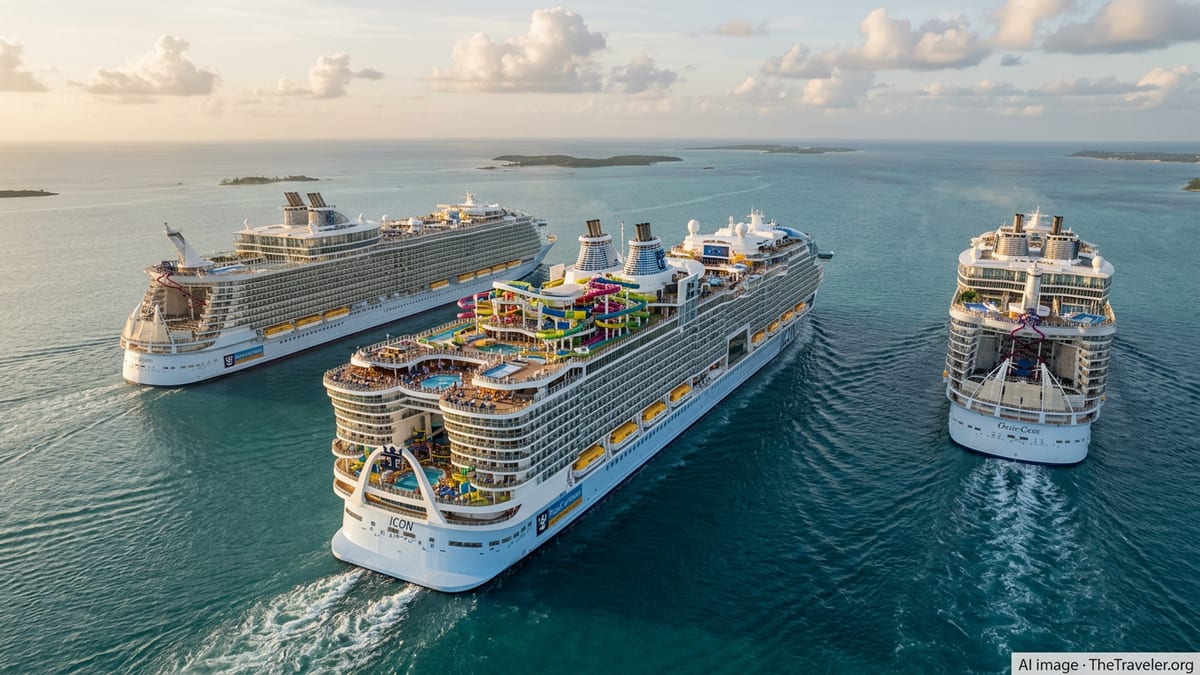
Booking visibility several years out has become increasingly important for cruise operators as they add capacity through larger ships and new brands. For Royal Caribbean, stronger-than-usual early demand for 2027 suggests that the order book for its fleet expansion, including new Icon class vessels and additional deployments across its brands, is finding support among travelers willing to plan long in advance.
The signals on 2027 demand also come as the group continues to refine its mix of itineraries in response to geopolitical developments, with published commentary noting some near-term softness in select regions. Despite these localized pressures, systemwide booking activity and pricing are described as resilient, supporting robust load factors and sustained interest through 2027.
Record Pricing and Capacity Expansion Shape the Outlook
Royal Caribbean’s latest guidance and prior financial updates show that the business is currently operating with a combination of high load factors and elevated pricing. Reports covering the company’s recent quarters describe ships sailing above typical capacity benchmarks and onboard spending trending well ahead of pre-pandemic levels.
At the same time, industry order book data compiled by trade publications indicates that Royal Caribbean Group has one of the largest committed newbuild pipelines among global cruise operators. Multiple Icon class ships are scheduled to enter service through the decade, along with additional tonnage for other brands within the group. This fleet growth is designed to support both near-term demand and longer-range interest, including the positive signals now emerging for 2027.
Financial presentations shared with investors outline multiyear performance targets running through 2027, including ambitions for double-digit earnings growth and higher returns on invested capital. Those goals rely heavily on strong booking curves that stretch several years ahead, which helps underpin both financing for new ships and long-term deployment planning across destinations.
The combination of record per-diem pricing and a growing fleet means that incremental bookings for 2027 carry particular weight. Strong advance sales help the group lock in revenue at current price levels, reduce reliance on last-minute discounting, and provide greater flexibility to adjust itineraries or capacity based on regional demand patterns.
Travelers Book Further Ahead as New Products Enter the Market
The trend toward stronger 2027 bookings appears to reflect a broader shift in traveler behavior toward planning cruise vacations further in advance, especially for marquee ships and peak-season sailings. Consumer-focused coverage and traveler forums point to high interest in Royal Caribbean’s newest vessels, with cabins on flagship ships often priced at a premium and sought after well before departure.
New products set to arrive around 2027, including additional Icon class ships and the launch of premium experiences such as river cruises under affiliated brands, are also drawing attention among travelers who follow deployment announcements closely. For many guests, booking early is seen as the best way to secure preferred stateroom categories, itineraries, and sailing dates on these high-profile ships.
As itineraries for 2027 continue to open, pricing data shared informally by cruisers shows that headline fares on certain popular routes remain elevated compared with pre-pandemic norms. This pattern is consistent with the company’s own description of being booked at record prices, reinforcing the idea that strong early demand is giving Royal Caribbean less need to rely on aggressive discounting.
For travel advisors and distribution partners, the forward strength of 2027 bookings may encourage a renewed focus on early-bird campaigns and long-range planning conversations with clients, particularly for family groups and milestone trips that are typically scheduled years in advance.
Implications for Destinations and the Wider Cruise Market
Royal Caribbean’s robust booking trajectory for 2027 has implications well beyond its own fleet. Port authorities, destination marketers, and shore excursion operators often build their plans around cruise deployment patterns several years into the future, and encouraging early demand can support investment decisions in terminals, attractions, and infrastructure.
Industry coverage notes that new and expanded private or exclusive destinations in the Caribbean and other regions are central to Royal Caribbean’s strategy, providing high-control environments that can accommodate growing passenger volumes. Strong advance bookings for 2027 help validate these capital-intensive projects by demonstrating sustained interest in itineraries that include these flagship stops.
For the broader cruise sector, Royal Caribbean’s comments on 2027 may serve as a bellwether. Other large operators have also reported healthy forward books into 2027, suggesting that the rebound in cruise demand is not only persisting but becoming structurally embedded in traveler preferences. That environment may encourage continued investment in new ships, technology, and sustainability initiatives designed to meet guest expectations through the latter half of the decade.
At the same time, the visibility provided by strong 2027 bookings could sharpen competitive dynamics, particularly in key drive-to and fly-to markets where multiple brands are vying for families and first-time cruisers. Pricing strategies, onboard offerings, and loyalty programs are all likely to remain under scrutiny as operators seek to capture a larger share of the growing long-range demand.
What Strong 2027 Bookings Mean for Future Cruisers
For travelers, the news that 2027 bookings are pacing ahead of historical trends sends a mixed signal. On one hand, it reflects confidence in the cruise vacation model and suggests that a wide range of itineraries and ship experiences will be available as Royal Caribbean’s fleet continues to expand. On the other, it points to a market where waiting to book may offer fewer bargains than in the past, particularly on the most in-demand ships and sailings.
Publicly available commentary connected to Royal Caribbean’s latest earnings results indicates that the company expects demand to remain healthy even as it brings additional capacity online. That could keep base fares firm while also supporting continued growth in onboard spending categories such as specialty dining, excursions, and premium experiences.
Travelers who are focused on specific 2027 itineraries, including school holiday periods or inaugural seasons for new ships, may therefore benefit from monitoring deployment announcements and acting quickly when sailings open. Booking further ahead can lock in preferred cabins and protect against potential price increases, even as promotional activity and sales continue to play a role in filling remaining inventory closer to departure.
As Royal Caribbean and the wider industry move through the second half of 2026, the strength of the 2027 booking curve will remain a key indicator watched by investors, destinations, and travelers alike, offering an early view of how cruise demand is shaping the next phase of global travel recovery and expansion.