


More news on this day
U.S. air travel faced another choppy day as live tracking data showed 2,904 flights delayed and 113 canceled within, into, or out of the United States, disrupting journeys through major airports including San Diego and Portland and complicating late-summer travel plans for thousands of passengers.
Get the latest news straight to your inbox!
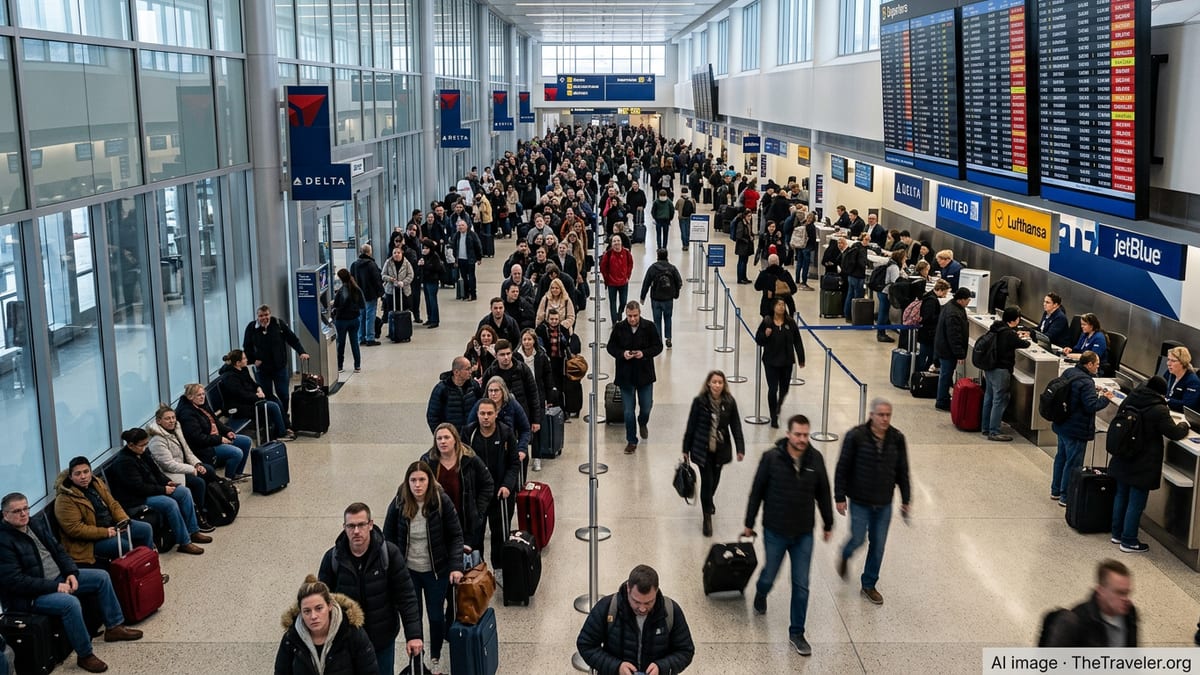
Nationwide Delays Pile Up Across the U.S. Network
Real-time statistics from flight-tracking platforms show that by mid-afternoon, more than 2,900 flights were delayed within, into, or out of the United States, alongside 113 cancellations. These figures sit within a larger global pattern of disruption, but they directly affect travelers relying on domestic hubs and regional gateways for late-summer and early fall trips.
The overall number of delayed flights worldwide is significantly higher, but the U.S. share signals how even a minority of systemwide interruptions can cascade into missed connections, lost vacation days, and reshuffled work plans. Publicly available data puts total worldwide delays above 17,000 flights for the day, underscoring how conditions in one region can ripple through the global network.
Travel analysts note that delays rarely stem from a single cause. Air traffic control constraints, weather disturbances, airline scheduling choices, and staffing shortfalls can intersect, leaving even airports with clear skies facing congestion. As these factors combine, travelers at otherwise reliable airports can find themselves caught in sudden operational bottlenecks.
For U.S. passengers, the numbers translate into longer gate holds, crowded departure areas, and tight or missed connections at downline hubs. With air travel volumes close to or surpassing pre-pandemic levels, relatively modest percentages of delayed and canceled flights still add up to tens of thousands of affected itineraries.
San Diego and Portland Show How Local Issues Ripple Nationally
San Diego International Airport and Portland International Airport offer a snapshot of how local conditions can amplify national strain. Both rank among the busier airports in the United States, with San Diego and Portland each handling hundreds of thousands of aircraft movements annually, including substantial domestic leisure and business traffic.
Recent operational records highlight how concentrated schedules and limited runway capacity in San Diego can make the airport particularly sensitive to disruption. Advisory reports from federal air traffic coordinators in recent weeks have documented periods of airport scheduling delays and arrival slowdowns, reflecting a pattern where dense banked departures meet constrained airspace and noise-curfew limitations.
Portland, by contrast, generally scores as a strong performer for reliability, with historical data indicating a high share of on-time departures and a cancellation rate below 1 percent across recent years. Even so, recent updates show that traffic through Portland can encounter short-lived departure delays, often in the range of minutes rather than hours, reminding travelers that even well-performing airports are not immune when national traffic flows tighten.
These two West Coast gateways serve as key links between smaller regional markets and larger national hubs. When schedules there start to slip, passengers heading onward to cities across the Mountain West, Midwest, and East Coast can experience knock-on delays, even if their final destination is not directly affected by weather or congestion.
Weather, Air Traffic Programs, and Airline Schedules Combine
Weather continues to play a central role in daily aviation reliability. Federal traffic management summaries and private meteorological feeds show that when storms, low visibility, or heat-related performance limits arise near busy hubs, air traffic managers can impose ground delay programs or arrival management initiatives that meter flights into constrained airspace. Recent examples include nationwide days in which more than a dozen major airports were subject to formal delay programs, significantly extending taxi and airborne holding times.
San Diego has recently appeared on lists of airports affected by such formal programs, with documented periods of volume-related ground delays and arrival congestion. While not always driven by local weather, these measures often reflect a broader need to balance runway capacity, airspace limits, and downstream air traffic control staffing. Published aviation bulletins describe how these programs can stretch across much of the operating day, leading to mounting pushbacks throughout airline schedules.
Portland’s most recent status updates show milder impacts, with general departure delays typically noted in the range of 15 minutes or less. However, even short, systemwide slowdowns can accumulate into significant knock-on effects once they propagate through tightly timed national schedules. As aircraft and crews arrive late into connecting hubs, later departures may push further into the day, even if weather at those airports has already improved.
Airline scheduling practices and network design also affect outcomes. Carriers that rely on dense banks of arrivals and departures at particular hubs can see larger swings in daily performance when one or two hubs are stressed. By contrast, airlines with more distributed operations may spread the impact across multiple cities, leading to a larger number of moderately delayed flights rather than severe disruptions focused on a single airport.
What Today’s Numbers Mean for Impacted Travelers
For passengers caught in the wave of 2,904 delays and 113 cancellations, today’s statistics translate into practical challenges at check-in counters, security lines, and boarding gates. Crowded terminal spaces, rebooking queues, and competition for limited open seats on later flights can quickly turn a moderate disruption into a full-day setback for individual travelers.
Federal consumer resources emphasize that travelers are generally entitled to refunds when a flight is canceled and a replacement itinerary is declined. Beyond refunds, a public-facing dashboard maintained by transportation authorities sets out which U.S. airlines have committed to specific customer service measures during controllable delays or cancellations, including complimentary meal vouchers, rebooking on other carriers, or hotel accommodations for overnight disruptions.
The same guidance notes that compensation practices differ widely by airline and by whether the cause is considered within a carrier’s control or driven by weather and air traffic constraints. Passengers are encouraged, through these public resources, to review their airline’s policies and to document their disruption, including delay length and any incurred expenses, when seeking remedies.
With delay and cancellation totals still climbing on busy travel days, recent experience suggests that travelers might benefit from building additional buffer time into itineraries, favoring earlier departures when possible, and monitoring both airline notifications and independent flight-tracking tools. As today’s figures illustrate, even a few percentage points of nationwide disruption can complicate plans for large numbers of people relying on U.S. airports such as San Diego, Portland, and other key nodes in the network.
Key Resources Travelers Are Turning To
In response to recurring days of elevated disruption, more travelers are turning to real-time tracking dashboards and government-run consumer tools before and during trips. Flight-tracking platforms publish live data on total delays and cancellations worldwide and within the United States, along with airport-specific snapshots that reveal whether particular gateways are currently facing minor slowdowns or more severe issues.
At the same time, federal transportation sites compile and present airline commitments regarding controllable delays and cancellations, allowing travelers to compare carriers on customer care promises such as rebooking options, meal support, and overnight accommodations. These tools have become part of trip-planning routines, especially for travelers whose journeys require tight same-day connections through congestion-prone hubs.
Airport-level performance dashboards add another layer of context by analyzing months or years of historical data. For San Diego and Portland, these records show that while both airports can experience difficult days, their typical operation still sees a strong majority of flights departing and arriving on time. Against that baseline, spikes in delays and cancellations stand out more clearly, helping travelers understand when they are facing an unusually stressed system rather than everyday variability.
Taken together, these resources provide a clearer picture of days like today, when 2,904 delays and 113 cancellations reshape the travel landscape across the United States. For now, they also highlight how quickly localized bottlenecks in cities such as San Diego and Portland can reverberate far beyond their own runways, affecting travelers across the national air network.
Live flight delay and cancellation statistics
U.S. airline cancellation and delay consumer dashboard