


More news on this day
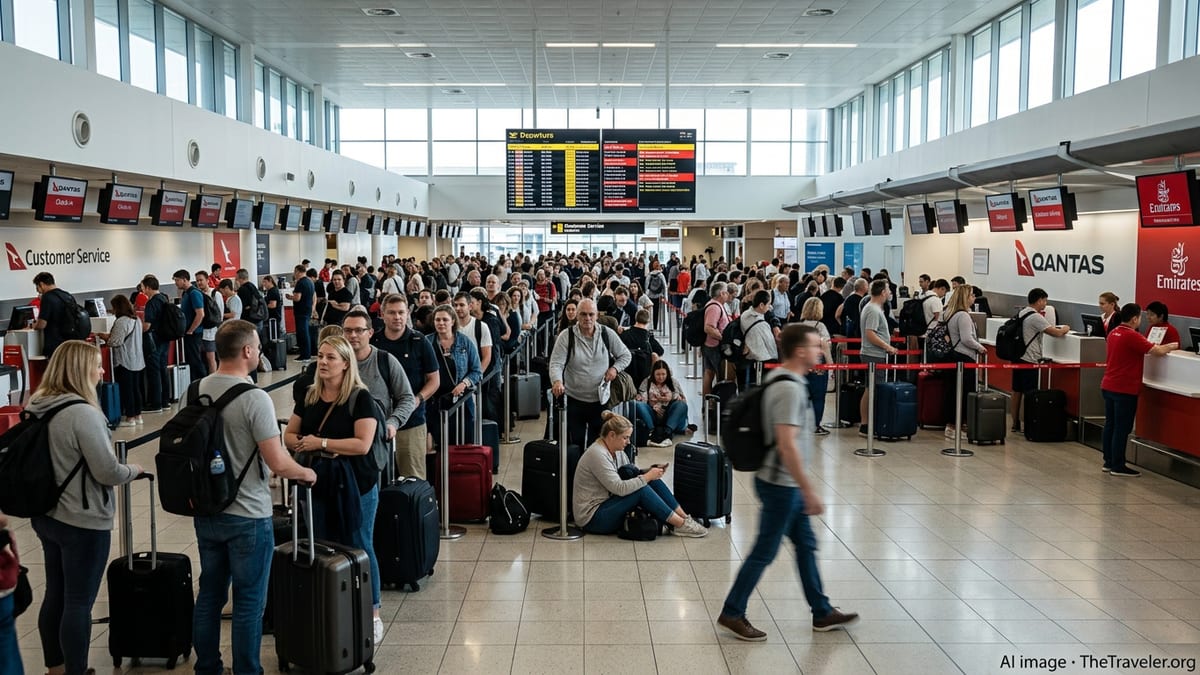
Flights in and out of Sydney Airport faced fresh disruption on September 11 as a shortage of air traffic controllers triggered cancellations and long morning delays, compounding weeks of mounting pressure on Australia’s busiest aviation hub.
Get the latest news straight to your inbox!
Morning peak hit by flow controls and schedule cuts
Publicly available operational updates indicate that Airservices Australia, the federal agency responsible for managing air traffic, imposed Air Traffic Flow Management measures at Sydney Airport on the morning of September 11 to cope with what have been described as roster constraints in the control tower. Those measures, which limit the number of aircraft that can land or take off each hour, led to flight cancellations and pushed some delays beyond an hour for early services.
Reports from multiple outlets state that at least a dozen inbound flights were cancelled and that delays persisted even after the flow restrictions were lifted, with airlines working through backlogs that rippled across domestic routes. While the formal flow controls were removed shortly after 8:15 a.m. local time, residual delays of around 10 minutes were still being forecast for parts of the morning as schedules were reset.
Sydney Airport, which operates under a night-time curfew and strict movement caps, has limited room to recover stranded flights when constraints are imposed during peak periods. Industry coverage notes that when early morning arrivals are curtailed, it can leave aircraft and crews out of position for the rest of the day, amplifying disruption across Australia’s domestic network.
Long running staffing gaps come back into focus
The latest disruption follows a series of recent weekends and public holidays where staffing shortages in Sydney’s control tower have forced reduced runway movements and ground delay programs. Coverage from Australian broadcasters in August highlighted more than 150 delays on some days as Airservices managed what it called roster challenges in the tower, asking passengers to check with airlines before heading to the airport.
A statement published in August by Airservices Australia acknowledged that controller staffing issues had contributed to recent delays at Sydney and outlined steps to build a larger pool of standby air traffic controllers, cut overtime and support more stable rosters. The agency said it had endorsed new tower controllers over the past 18 months and installed a dedicated simulator in Sydney to increase training capacity, but also indicated that demand on the workforce had grown significantly.
Separate submissions to government inquiries from Sydney Airport and airlines have described a structural shortfall in controller numbers that leaves limited spare capacity when short notice absences occur. These documents link staff shortages to recurring ground delay programs and note that even a small number of unplanned absences can significantly constrain the number of aircraft able to land and depart each hour at the Kingsford Smith hub.
Safety probes heighten scrutiny of operations
The renewed round of delays has landed amid ongoing scrutiny of safety and near miss incidents in Sydney’s airspace. In recent weeks, national broadcasters have reported on several runway and taxiway events at the airport that prompted questions over incident reporting thresholds and pressure on controllers working complex traffic flows.
Aviation safety investigators have highlighted an increase in confidential reports from controllers nationally in recent years, including multiple submissions referencing Sydney. Publicly available commentary from former pilots and safety specialists has warned that tight rosters, high traffic volumes and the complexity of Sydney’s runway layout can increase workload in the tower during peak periods.
Regulators and Airservices have repeatedly stressed in published material that safety takes precedence over punctuality and that reducing movements through formal flow controls is one of the tools used to keep operations within safe limits when staffing or weather conditions deteriorate. However, the overlap between controller shortages, delays and a series of high profile incidents has intensified debate about whether long term staffing and training plans are keeping pace with traffic recovery.
Rising demand collides with limited capacity
Industry data and government submissions indicate that passenger and flight numbers through Sydney are now close to, or in some cases above, pre 2020 levels on key domestic routes. Airlines have been rebuilding capacity on the busy Sydney Melbourne and Sydney Brisbane corridors, while international traffic has continued to grow through 2025 and 2026.
Sydney Airport and airline submissions to recent federal reviews describe how this rebound is colliding with infrastructure constraints, including a legislated movement cap, a night curfew and taxiway bottlenecks that can slow recovery after disruptions. They argue that when air traffic control staffing is not fully resilient, these structural limits mean even short lived issues can spill quickly into widespread delays and cancellations.
Network reports released by Airservices in recent years show efforts to cut the proportion of delays attributed to the agency across the national network, but also confirm that Sydney remains particularly sensitive to any constraint on available runway movements. For passengers, that translates into more variability around peak bank departures and arrivals, especially when weather and staffing pressures coincide.
What travellers should expect in the coming weeks
Travel focused coverage suggests that controller shortages and associated flow controls are likely to remain a risk factor for Sydney Airport operations while recruitment and training programs continue. Industry bodies have pointed out that it can take 18 months or more to fully train a new controller, meaning that immediate fixes are limited even when hiring is ramped up.
Airlines operating through Sydney have been advising passengers to monitor flight status closely, enable app notifications and allow extra time at the airport on days when delays are forecast or when media reports highlight staffing constraints in the control tower. Some carriers have also been adjusting schedules and building in longer turn times in a bid to improve resilience when early flights are pushed back.
Travel planners note that early morning and late afternoon peaks are often the most exposed to air traffic restrictions, given concentrated banks of domestic and trans Tasman flights. While many services still operate as scheduled, the events of September 11 underline how quickly disruption can spread through a hub that runs close to its capacity limits when staffing and safety margins tighten.
Reuters: Sydney Airport flights disrupted due to air traffic controller shortage
ABC News: Sydney Airport faces delays as passengers warned to expect queues
Airservices Australia: Statement from CEO on Sydney traffic disruptions
Australian Government: Sydney Airport submission on air traffic control staffing impacts