


More news on this day
Royal Caribbean is introducing a new generation of family-focused balcony cabins that aims to fix one of the biggest frustrations for parents at sea: how to share a single room without sacrificing space, privacy and sleep.
Get the latest news straight to your inbox!
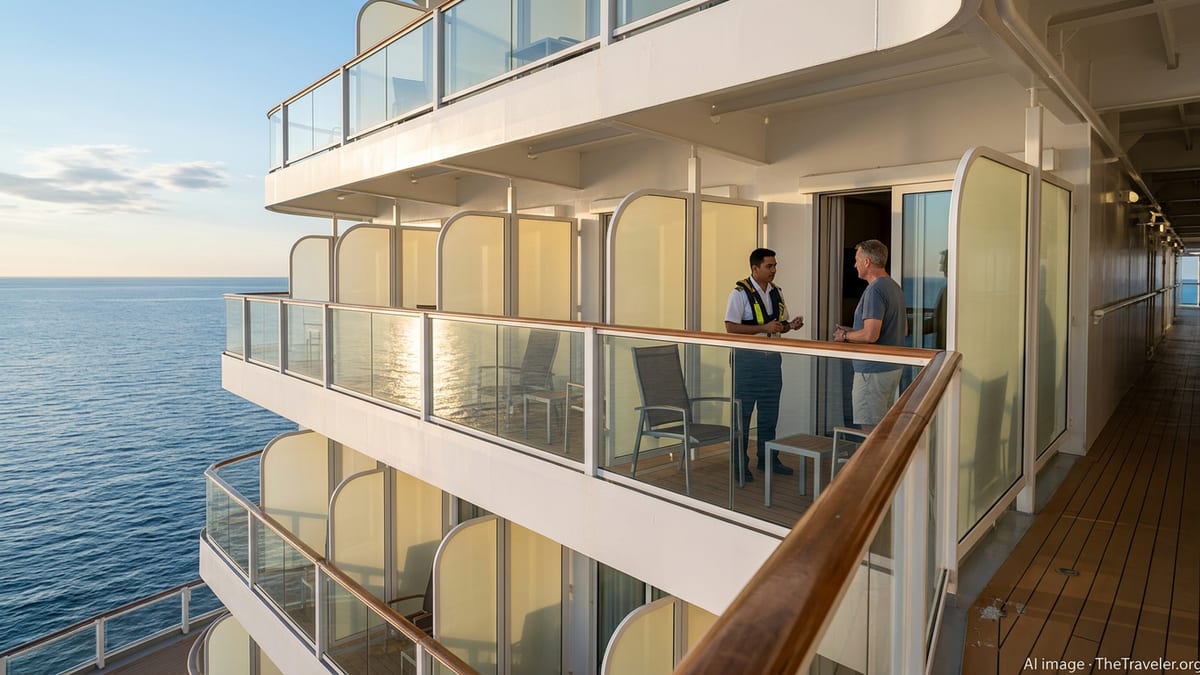
A New Take on the Classic Balcony Cabin
Balcony cabins remain the most sought-after room type on Royal Caribbean ships, and recent ship classes have added them in large numbers to meet demand. Traditionally, these rooms offer a bed that splits into twins, a compact bathroom and a small sitting area opening onto a private balcony. For families, that has often meant squeezing extra sleeping berths into an already tight footprint, with little separation between adults and children.
Recent ship designs, particularly on the Icon class and upcoming vessels such as Hero of the Seas, are reshaping that model with family-specific balcony layouts. Publicly available deck plans and marketing materials highlight “Family Infinite Ocean View Balcony” cabins and similar categories that are engineered from the ground up for groups of four or more, instead of simply adding a pull-out sofa or upper berth to a standard room.
These new cabins maintain the appeal of a balcony level category while introducing more thoughtful zoning inside the room. Reports from early sailings indicate that families are responding positively to the added flexibility, calling the extra defined space “priceless” when traveling with children.
The evolution reflects a broader industry shift toward cabins that double as living spaces, rather than just places to sleep, particularly on large ships where families may spend more time in their rooms between activities and shore excursions.
Split Bathrooms Tackle the Morning Rush
One of the most significant functional changes in Royal Caribbean’s newest family balcony categories is the introduction of a split bathroom design. Instead of a single compact wet room, the space is divided into separate compartments, typically one with a toilet and sink and another with a shower and additional sink or dressing area.
According to Royal Caribbean’s publicly available room descriptions for its latest family cabins, this split layout is intended to make “getting ready a breeze,” especially when multiple people are trying to prepare for dinner or disembarkation at the same time. Travel coverage and early cabin reviews suggest it directly addresses a longstanding pain point for families used to lining up for a single bathroom each morning.
In practical terms, the change means one child can shower while another uses the toilet or sink in privacy, and adults are less likely to be stuck waiting when the schedule is tight. For parents managing young children’s bedtimes and early-morning excursions, the split configuration offers a measure of flexibility that traditional balcony cabins have historically lacked.
This layout, previously reserved mostly for higher-end suites on many ships, is now being integrated into balcony-level categories aimed at families, subtly raising the day-to-day comfort level without requiring a jump into premium suite pricing.
Infinite Balcony Concept Adds Space and Flexibility
The second major change in Royal Caribbean’s newest family balcony cabins is the adoption of the “infinite” balcony concept. Instead of a conventional step-out veranda, floor to ceiling glass spans the width of the cabin, with a large window section that can be lowered at the touch of a control. When open, the outer part of the room functions as a sheltered balcony area, while curtains or partitions can separate it from the sleeping space.
Cruise reviewers and frequent Royal Caribbean passengers report that this configuration effectively pushes the exterior wall outward, offering more usable interior square footage. Families note that the additional space at the window end of the room can serve as a play zone during the day or a quiet nook for reading and relaxing while others sleep.
Parents also highlight that the ability to close curtains between the main sleeping area and the window zone helps create a pseudo second room. Children can wind down near natural light while adults maintain a darker, quieter space around the main bed, or vice versa. This flexibility addresses a common complaint with traditional balcony rooms, where a single overhead light and shared sightlines make it difficult to maintain different bedtimes.
While some cruisers still prefer a classic open-air veranda, feedback from families using the infinite balcony layout suggests the trade-off is worthwhile when several people are sharing a single cabin. The design maintains fresh air and sea views while creating a more adaptable footprint for busy family routines.
Dedicated Family Sleeping Areas Improve Privacy
Beyond the bathroom and balcony changes, Royal Caribbean’s latest family balcony categories focus on how and where everyone sleeps. Instead of simply adding a sofa bed or drop-down bunk above the main bed, many of these cabins integrate a semi-enclosed bunk or alcove that functions as a defined children’s area.
Booking information and passenger accounts describe small side zones with their own bunks or pullman beds, sometimes partially screened from the main living space. Families say this creates a sense of personal territory for kids, reducing nighttime disruptions and making it easier for adults to stay up later without feeling as if they are sitting directly at the foot of a child’s bed.
This arrangement also answers a persistent privacy complaint about standard balcony cabins used as family rooms. With clearer separation between sleeping zones, parents report feeling more comfortable changing clothes, reading or using devices after lights-out. In practical terms, it brings some of the advantages of connecting cabins or small suites down into a single balcony stateroom footprint.
The move toward more defined family sleeping areas fits with Royal Caribbean’s broader push into multi-room family accommodations, from large three level townhouses to surfside themed neighborhoods. The new family balcony cabins offer a midrange option for guests who want smarter space without paying suite level fares.
What the New Design Means for Family Cruisers
The rollout of these reimagined balcony cabins suggests Royal Caribbean is betting that families will continue to prioritize comfort and flexibility in their room choice, even on ships where the bulk of the entertainment lies elsewhere. By tackling practical pain points such as bathroom bottlenecks, cramped sleeping setups and limited interior space, the line is positioning its newest cabins as a meaningful upgrade over traditional layouts.
For parents weighing whether to book a standard balcony, an interior room with a virtual balcony or one of the new family-focused balcony categories, the decision increasingly comes down to how much time they expect to spend in the cabin and how many people are sharing. Families who prize separate sleeping areas and smoother morning routines may find that the new cabins align more closely with how they actually travel.
As more of Royal Caribbean’s upcoming ships enter service with these family balcony designs built in, industry observers expect other cruise lines to continue refining their own offerings for multigenerational groups. For now, the combination of split bathrooms, infinite balconies and purpose built family sleeping zones marks a notable step in how one of the world’s largest cruise brands thinks about its core balcony product.