


More news on this day
Eurostar passengers travelling between London and the Netherlands face days of disruption after a trackside fire near Rotterdam triggered widespread power failures and forced the cancellation of multiple international trains.
Get the latest news straight to your inbox!
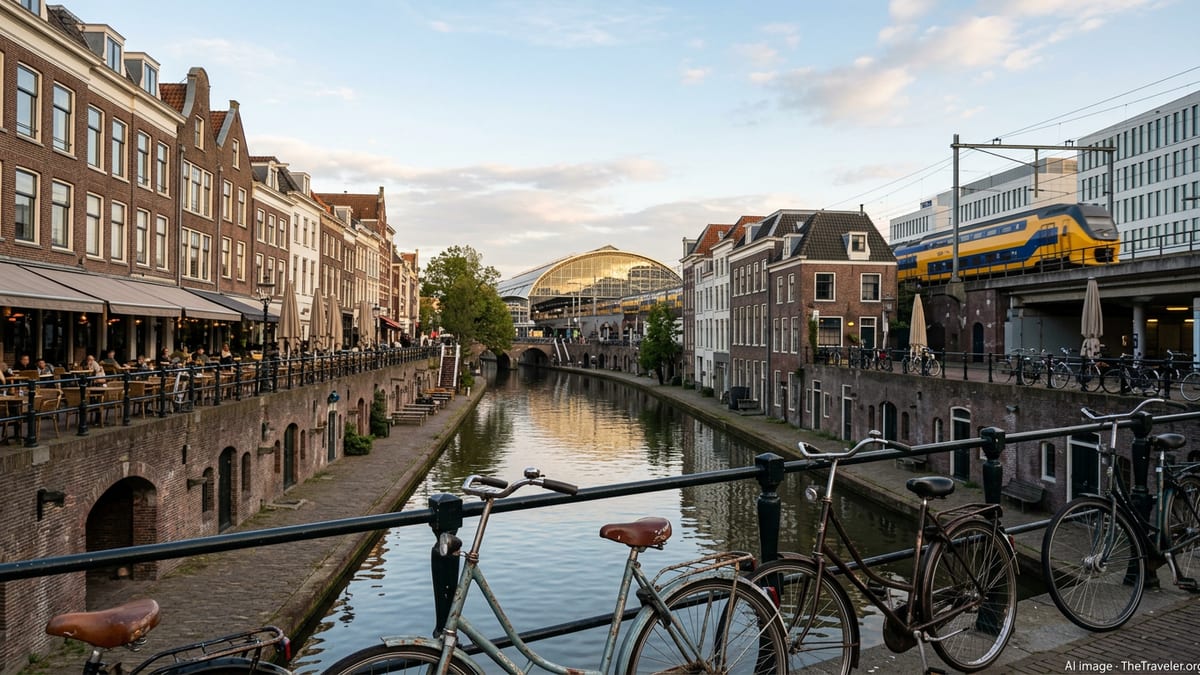
Fire near Rotterdam cripples cross-border rail links
Published reports from the Dutch rail network indicate that a fire in a cable duct near Rotterdam on Monday, 29 June, led to a major power failure on one of the busiest rail corridors in the Netherlands. The damaged infrastructure lies on the route used by high speed and international services linking Amsterdam and Rotterdam with Belgium and the United Kingdom.
The incident has left signalling and power systems out of service across a key stretch of track south of Rotterdam, limiting the number of trains that can operate and forcing operators to divert or cancel services. Domestic trains have been heavily affected, but the disruption is particularly acute for international connections that depend on precise timings and reserved paths across several countries.
Publicly available information shows that Eurostar, which runs high speed services between London, Brussels and the Netherlands, has been among the operators hit hardest. With the Dutch section of its route severely constrained, the company has had to withdraw trains from service, shorten journeys and warn passengers of ongoing uncertainty.
Rail incident reports from the region describe technicians working to assess and repair the damaged cable infrastructure, but forecasts suggest that restoring full capacity will take time. As a result, rail users have been advised to expect knock-on disruption well beyond the initial day of the fire.
Eurostar cancels and curtails London–Netherlands services
Eurostar’s travel updates page shows multiple cancellations and alterations on its London to Amsterdam and London to Rotterdam routes for 30 June and the days that follow. Several services that usually run the full distance are listed as cancelled in the Netherlands, operating only between London, Lille or Brussels, or not running at all.
According to recent coverage from Dutch media, London–Amsterdam trains have been among those most affected, with some services removed entirely from the timetable and others terminating in Brussels instead of continuing on to the Netherlands. In practice, this has left many travellers with bookings to or from Amsterdam and Rotterdam scrambling to piece together alternative journeys using domestic trains where available.
Eurostar’s own disruption notices describe “major disruption in the Netherlands” and warn that train services are “severely disrupted and extremely limited” on 30 June, 1 July and 2 July. The operator has indicated that the restrictions apply across the Dutch network it relies on, not just at a single station, making it difficult to reroute services around the affected section.
Passenger accounts shared on travel forums and social media point to cancellations issued at short notice, with some journeys disappearing from timetables or mobile apps while travellers were still en route. While Eurostar has been offering rebooking options and, in some cases, alternative routings via Brussels or Paris, capacity on those remaining services is limited and many passengers have reported long delays before they can secure a new seat.
Days of disruption compound earlier summer timetable pressures
The fire near Rotterdam comes at a time when Eurostar’s network was already operating under strain. In recent weeks the operator has adjusted parts of its summer schedule, citing a combination of operational restrictions and an early-season heatwave affecting infrastructure in several countries. Eurostar’s travel update pages reference schedule changes and intermittent cancellations across its network between mid-May and late July.
This latest incident has therefore landed on a system with limited spare capacity, particularly on sought-after holiday routes between the United Kingdom and mainland Europe. With train paths already tightly allocated through the Channel Tunnel and along busy high speed lines, Eurostar has less flexibility to add extra trains or lengthen existing ones to accommodate displaced passengers from cancelled Dutch services.
For travellers, this has translated into longer rebooking windows and, in some instances, the need to wait days rather than hours to find an alternative train. Personal accounts circulating online describe passengers in Amsterdam and Rotterdam being offered replacement Eurostar departures only from midweek onwards, or being advised to travel first to Brussels on domestic or regional services before joining the international high speed network there.
Rail industry observers note that international corridors such as London–Amsterdam are particularly vulnerable when infrastructure problems strike in a single country. Even when domestic services are able to run with reduced frequency around an affected area, international operators can struggle to secure the continuous path, customs arrangements and station slots needed to operate cross-border trains reliably.
Guidance for affected passengers and ticket options
Eurostar is directing customers to its website and app for the latest list of affected trains and service updates. Disruption notices advise passengers not to travel to the station if their train is shown as cancelled and instead to rearrange their journey before departure. The operator is offering the option to exchange tickets free of charge for a later date or, in many cases, to request a refund if travel is no longer possible or desirable.
Information shared via public channels suggests that passengers whose London–Netherlands trains are cancelled may be able to rebook on services between London and Brussels or Paris, then connect onwards on domestic rail where lines are open. However, the availability of such connections depends on the broader state of the Dutch and Belgian rail networks, which remain constrained in the vicinity of Rotterdam as engineers continue repair work.
Consumer advice features in European media remind rail users that, under European rail passenger rights regulations, travellers are typically entitled to assistance and, in some circumstances, partial refunds if their journey is significantly delayed or cancelled. The specific remedies can depend on the length of the delay, the nature of the disruption and whether the passenger chooses to continue their journey or abandon it altogether.
Travellers currently in the Netherlands are being encouraged by transport commentators to monitor national rail operator announcements alongside Eurostar’s updates, as domestic alternatives may evolve quickly once more infrastructure is restored. Those with imminent departures are also advised to check their Eurostar booking status repeatedly in the hours before leaving for the station, given the potential for last minute timetable changes.
Longer term questions for resilient international rail
The Rotterdam incident has renewed discussion among rail planners and passenger groups about the resilience of cross-border services that rely on shared infrastructure in several countries. A single fire in a cable duct has had consequences stretching from Amsterdam to London, highlighting how power and signalling failures at one point on the network can cascade across borders.
Recent months have already seen Eurostar and Channel Tunnel operations challenged by weather-related issues and power disruptions. Analysts following the sector suggest that repeated high impact events, whether caused by extreme temperatures, equipment faults or localised fires, underline the need for continued investment in redundancy, faster repair capabilities and clearer passenger communication protocols.
For many passengers, the immediate priority remains simply getting home or reaching long planned summer trips on time. Yet the pattern of disruption affecting one of Europe’s flagship international rail links raises broader questions about how quickly operators and infrastructure managers can adapt to the combined pressures of increased demand, ageing assets and more frequent climate-related incidents.
In the short term, Eurostar travellers connecting with the Netherlands are likely to face a period of cautious contingency planning, checking schedules more often and allowing extra time or flexibility in their itineraries. As repairs progress around Rotterdam and services are gradually restored, attention will turn to how lessons from this episode can be applied to reduce the impact of similar incidents in future peak travel seasons.