


More news on this day
Nonstop flights between Amman and Dallas Fort Worth are set to begin in May 2026, marking Royal Jordanian’s latest move to broaden its United States network and connect Jordan more directly with the American South.
Get the latest news straight to your inbox!
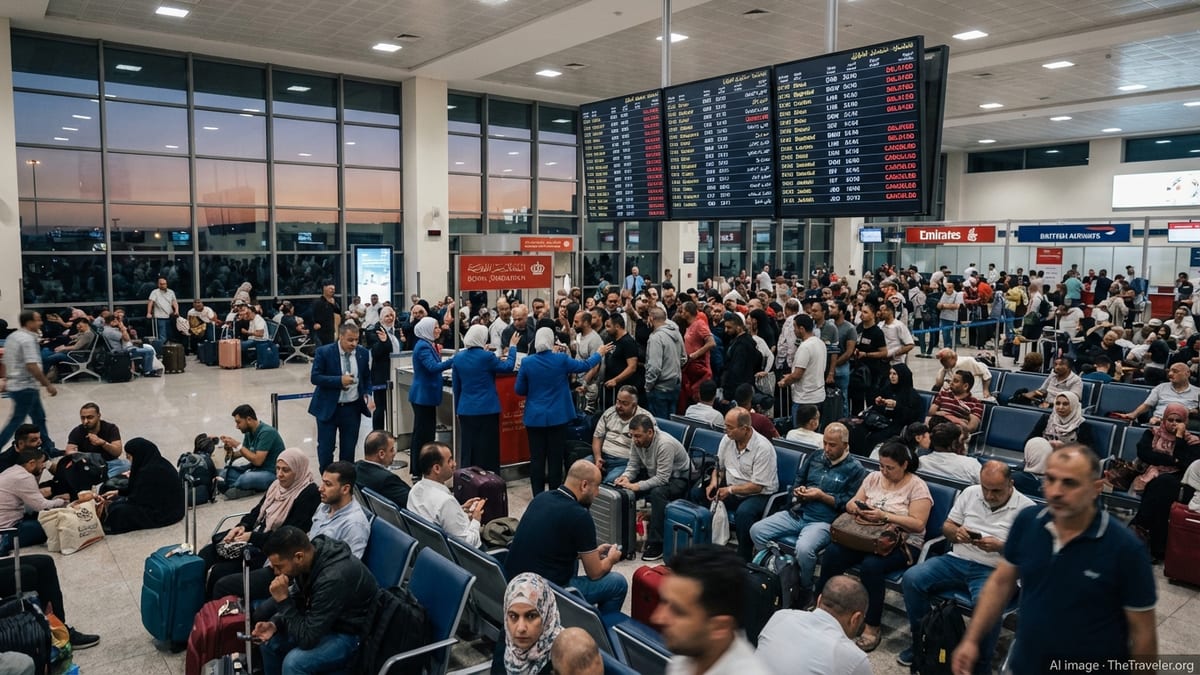
New Transatlantic Link Between Amman and North Texas
Publicly available information from Dallas Fort Worth International Airport and industry outlets indicates that Royal Jordanian will launch nonstop service between Queen Alia International Airport in Amman and Dallas Fort Worth International Airport on May 10, 2026. The route will operate four times per week, providing the first direct air connection between Jordan and the state of Texas.
Schedules published by route-tracking platforms show the flight operating with a block time of roughly 13 hours from Dallas to Amman, positioning it among the longer nonstop services out of North Texas. The service is expected to use Royal Jordanian’s Boeing 787-8 Dreamliner aircraft, configured with business and economy cabins suited to long-haul travel.
Information circulated by airport and airline sources presents the DFW to Amman route as part of a wider push to enhance connectivity between the Middle East and major U.S. gateways. For Dallas Fort Worth, the addition fills a gap in its growing long-haul network, adding a direct link to a capital city that serves as a key access point to the Levant region.
The launch timing in May 2026 aligns with the peak summer travel buildup, when transatlantic and East–West demand typically rises. Capacity on the route is expected to ramp up gradually as travelers and the travel trade become more familiar with Royal Jordanian’s presence in North Texas.
Strengthening Royal Jordanian’s Expanding U.S. Network
Royal Jordanian has been steadily building out its North American footprint over the past several years, adding U.S. destinations in phases. The carrier already offers nonstop flights from Amman to New York JFK and Chicago O’Hare, and more recent additions such as Detroit and Washington Dulles have broadened its reach into the Midwest and East Coast.
Industry analyses note that the upcoming Dallas Fort Worth service will become one of the airline’s longest U.S. sectors and its first direct link into the American South and central corridor. This expansion reflects a strategy focused on turning Amman into a competitive connecting hub for traffic between North America, the Middle East, and surrounding regions.
According to route announcements referenced in aviation publications and business media in Jordan, the Dallas Fort Worth addition is framed as both a commercial and diplomatic bridge, supporting tourism and business travel while also responding to the needs of Jordanian, Arab, and broader diaspora communities in Texas and nearby states.
By the time the route launches in May 2026, Royal Jordanian’s U.S. network will span multiple major metropolitan areas, positioning the carrier to compete more directly with larger Gulf and European airlines that already offer connecting options into Jordan and neighboring destinations.
DFW’s Role as a OneWorld Gateway to the Middle East
Dallas Fort Worth is one of American Airlines’ largest hubs, and publicly available schedules show that it handles hundreds of daily departures across the United States, Latin America, and beyond. The arrival of Royal Jordanian adds another oneworld partner operating a long-haul international service from the airport, reinforcing DFW’s status as a key alliance gateway.
Oneworld connectivity is expected to play a central role in the new route’s viability. Travelers originating in cities across the U.S. domestic network will be able to connect in Dallas Fort Worth onto Royal Jordanian’s flights to Amman using coordinated schedules and interline agreements. This structure mirrors how other alliance carriers have successfully built long-haul services out of major U.S. hubs.
From Amman, Royal Jordanian’s regional network reaches destinations across the Levant and broader Middle East, including cities such as Baghdad, Beirut, and Cairo, according to published route maps. The combination of American’s domestic feed into DFW and Royal Jordanian’s onward connectivity from Amman positions the route as a through-corridor for passengers traveling between secondary U.S. cities and regional Middle Eastern destinations.
Analysts commenting in aviation trade coverage suggest that DFW’s growing list of long-haul destinations and its central location within the continental United States give the airport a competitive edge as airlines look for hubs that can sustain point-to-point and connecting traffic on lengthy sectors like Dallas to Amman.
Passenger Experience and Schedule Details
Preliminary schedule data shows that Royal Jordanian will operate the Amman–Dallas Fort Worth route four times weekly, with departures structured to provide same-day or next-day connections on both sides of the Atlantic. Typical flying time is currently listed at just over 13 hours westbound, with slightly shorter durations on the return eastbound service.
The use of Boeing 787-8 Dreamliner aircraft places the new service in line with Royal Jordanian’s approach on other North American routes. The 787 offers larger windows, improved cabin pressurization, and enhanced fuel efficiency, features that airlines and travelers increasingly prioritize on ultra-long-haul flights. Published seating plans display a two-cabin layout comprising business and economy classes.
Travel platforms monitoring airfares and schedules report that tickets for the route have begun appearing in reservation systems, typically with options to book through either Royal Jordanian’s own channels or via codeshare arrangements with American Airlines and other partners. This is expected to simplify itinerary building for travelers combining domestic U.S. segments with the transatlantic leg.
While full seasonal capacity patterns will become clear closer to launch, observers anticipate that the route could attract a mix of business travelers, visiting friends-and-relatives traffic, and leisure visitors interested in Jordan’s historical sites and emerging tourism offerings. The schedule is likely to evolve in response to booking trends once operations begin.
Boost to Tourism, Trade, and Cultural Exchange
Jordan’s tourism sector has been rebuilding momentum, with Amman serving as the main gateway to attractions such as Petra, Wadi Rum, and the Dead Sea. Industry commentary suggests that a direct link from Dallas Fort Worth will make it easier for travelers from the central and southern United States to access these destinations without transiting European or Gulf hubs.
Business and trade ties could also benefit from the new connection. Texas hosts a diverse energy, technology, and healthcare economy, while Jordan positions itself as a regional center for logistics, services, and specialized manufacturing. Aviation analysts note that nonstop air service often supports bilateral investment and business travel by reducing journey times and improving reliability.
Demographic data and local media coverage highlight that North Texas is home to sizable Middle Eastern and Arab communities, many of whom currently rely on multi-stop itineraries to reach Jordan and neighboring countries. The Amman–Dallas Fort Worth route is expected to provide a more convenient option for family visits and cultural travel, which can be a significant and resilient traffic segment for long-haul carriers.
As Royal Jordanian integrates Dallas Fort Worth into its U.S. network in May 2026, the route is being watched as a test of how mid-sized Middle Eastern carriers can leverage alliance partnerships and growing demand patterns to open new long-haul markets beyond the traditional coastal gateways.