


More news on this day
Royal Jordanian has canceled five scheduled flights from Amman’s Queen Alia International Airport, disrupting regional connections across the Middle East and North Africa and adding fresh uncertainty for travelers relying on the carrier’s extensive short-haul network.
Get the latest news straight to your inbox!
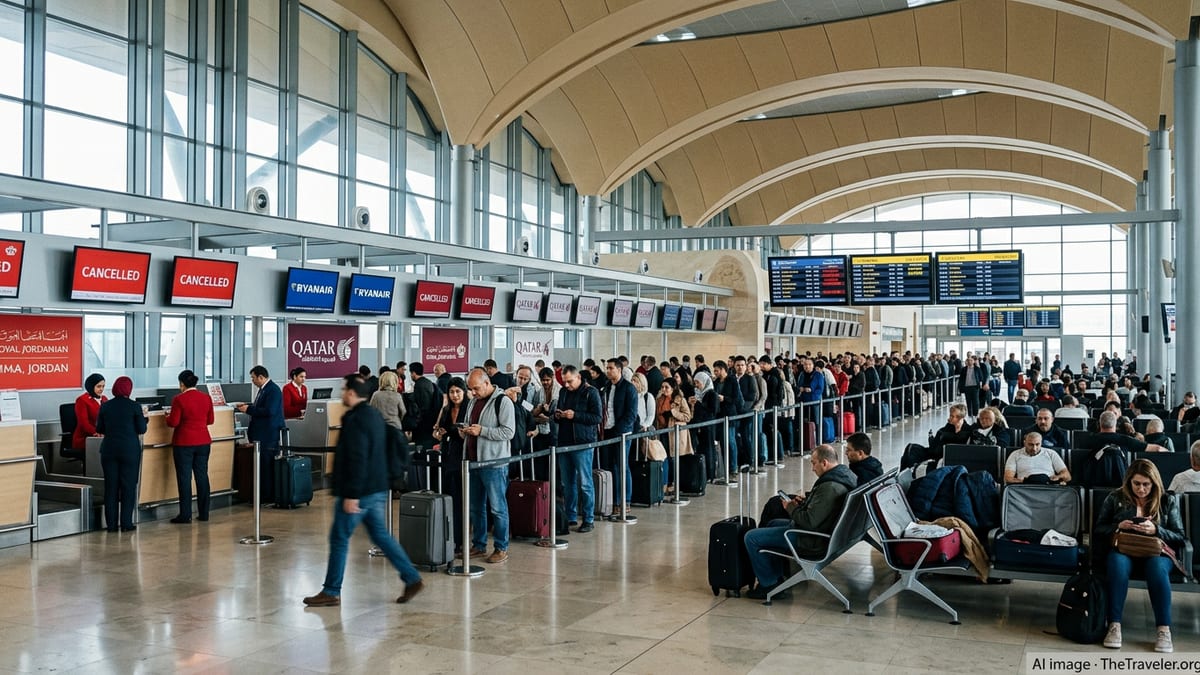
Multiple Cancellations Hit Short-Haul Network
Publicly available airport departure and arrival boards for Queen Alia International Airport on July 9 indicate that Royal Jordanian scrubbed five services from its schedule, primarily affecting short regional sectors. Data show cancellations on routes linking Amman with nearby regional cities, including Damascus and Tunis, alongside other short-haul operations that typically feed the airline’s wider network.
The cancellations occurred across different times of day, suggesting a broader operational adjustment rather than a single isolated disruption. While most other airlines at Queen Alia appeared to be operating on or close to schedule, the clustered Royal Jordanian cancellations stood out on airport information displays and third-party flight-tracking platforms.
The affected flights are part of Royal Jordanian’s dense pattern of departures from its Amman hub, where the carrier usually operates well over a hundred daily movements to the Levant, Gulf states, North Africa and Europe. Even a handful of cancellations can therefore create knock-on effects for passengers with onward connections, particularly those transiting through Amman from regional capitals onto long-haul services.
Available schedules for the same period show many other Royal Jordanian flights running normally, underscoring that the airline continues to operate the majority of its network from Queen Alia despite the targeted cancellations. Nonetheless, the removed services weakened same-day connectivity on several popular regional city pairs.
Regional Connections Disrupted for Transit Passengers
Queen Alia International Airport functions as Royal Jordanian’s primary hub, designed to channel passengers from neighboring countries onto medium and long-haul services to Europe, North America and Asia. When short flights are canceled, travelers arriving from or departing to regional cities can suddenly lose access to carefully timed connections.
Flight-tracking and booking platforms for July 9 show that one of the canceled services operated between Amman and Tunis, a link that commonly serves both point-to-point traffic and onward connections to the wider Middle East. Similar short-haul cancellations on Levantine routes effectively removed some of the day’s options for passengers planning same-day transfers through Amman.
Passengers booked on the affected flights have reportedly faced a mix of same-day rebooking and longer delays, depending on seat availability on alternative departures. Given the airline’s role as Jordan’s flag carrier and its concentration of regional routes, any reduction in daily frequencies can quickly compress capacity, particularly during busy summer travel periods.
For travelers whose journeys involved multiple legs, a single canceled regional flight often required complete itinerary changes, including revised departure dates or rerouting via other hubs in the Gulf or Turkey. According to published coverage and traveler reports from recent months, such changes can mean additional hours in transit and more complex logistics for those with time-sensitive plans.
Operational and Market Pressures Behind Schedule Changes
Royal Jordanian, like many regional airlines, has been adjusting its schedules in response to shifting demand patterns, airspace constraints and operational considerations. While no single official explanation has been published for the specific five-flight cut on July 9, the pattern aligns with broader trends of short-notice adjustments by carriers seeking to match capacity with demand and manage cost pressures.
Industry coverage over recent months has highlighted challenges facing airlines operating in the Eastern Mediterranean and wider Middle East, including fluctuating fuel costs, evolving security assessments on certain routes and competitive pressure from larger Gulf carriers. These factors can prompt airlines to consolidate lightly booked frequencies or temporarily trim services to maintain profitability.
Analysts note that cancellations are often concentrated on shorter regional legs where multiple daily frequencies exist, giving airlines some room to re-accommodate passengers without completely severing a route. The July 9 reductions appear consistent with this approach, targeting flights that could, in theory, be absorbed into other same-day departures, albeit with inconvenience to affected travelers.
Royal Jordanian has also been working on network growth and fleet modernization, publicly outlining plans for new destinations and aircraft types. Short-term cancellations of selected flights can occur even amid expansion efforts, as airlines rebalance resources and adjust crew and aircraft utilization during peak seasons.
Impact on Queen Alia’s Role as a Regional Hub
Queen Alia International Airport has marketed itself as a stable transit hub linking Europe, the Gulf, North Africa and the Levant, with Royal Jordanian as its anchor tenant. The cancellation of multiple short-haul flights in a single day adds strain to that hub-and-spoke model by reducing the number of available connection banks that passengers can use to build efficient itineraries through Amman.
Airport departure and arrival data for July 9 show that other carriers serving Queen Alia, including regional and low-cost operators, largely maintained their schedules, helping cushion the impact on overall airport activity. Nevertheless, the lost Royal Jordanian frequencies diminished connectivity on routes where alternative carriers either do not operate or offer fewer daily options.
Aviation analysts observe that sustained reliability is a key factor in a hub’s competitiveness. Even limited waves of cancellations can prompt frequent travelers and corporate buyers to consider alternative routings if they perceive an increased risk of disruption. For a mid-sized hub like Amman, maintaining a high level of on-time performance and schedule stability is particularly important in competing with larger hubs such as Doha, Dubai and Istanbul.
For now, the disruptions appear focused on a single day’s schedule rather than a long-term suspension of particular routes. However, regular monitoring of airport boards and timetable updates over the coming days will offer a clearer picture of whether the July 9 cancellations mark a one-off adjustment or signal a more sustained recalibration of Royal Jordanian’s regional operations.
What Passengers Can Expect in the Coming Days
Travelers planning to use Royal Jordanian and Queen Alia International Airport for regional connections in the near term are likely to face a more fluid operating environment, with the possibility of further same-day schedule changes. Publicly available guidance from airlines and airports generally encourages passengers to monitor their flight status closely and to check booking details regularly in the 24 hours before departure.
Industry practice in similar cases suggests that passengers on canceled flights are typically offered rebooking on the next available service or, where possible, rerouting through alternative hubs. However, during busy travel periods, spare capacity can be limited, increasing the likelihood of longer delays or overnight stays for some travelers.
Consumer advocates often recommend that passengers build longer connection windows when traveling on multi-leg itineraries through regional hubs where short-haul legs are subject to late operational adjustments. Flexible tickets, travel insurance that covers missed connections and careful review of minimum connection times can all help mitigate the risk of disruption.
As airlines across the region continue to fine-tune their schedules, the situation at Queen Alia International Airport on July 9 illustrates how a relatively small number of cancellations by a single carrier can ripple across a wider network of regional connections, affecting itineraries far beyond the immediate origin and destination of each affected flight.