


More news on this day
Runway operations at Cape Town International Airport have resumed after a disabled aircraft blocked the main runway, disrupting traffic across South Africa’s air network and forcing hours of delays, cancellations and diversions.
Get the latest news straight to your inbox!
Main runway reopens after disabled aircraft incident
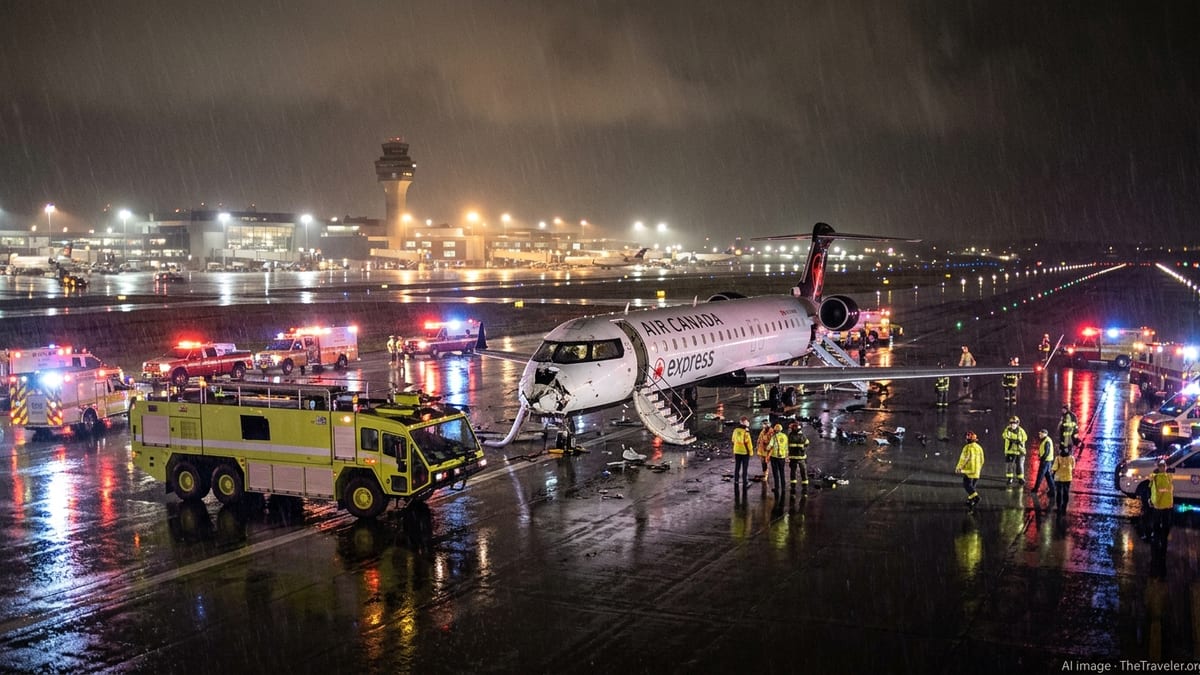
According to published coverage and real-time flight tracking data, Cape Town International’s main runway was closed on 4 August after a Kenya Airways jet experienced a tyre problem during landing and came to a halt on the strip. No serious injuries were reported, but the location of the aircraft on the only runway capable of handling larger long haul traffic meant that normal operations were quickly suspended.
Publicly available aviation discussions indicate that the aircraft remained on the runway for several hours while specialist teams worked to stabilise the jet, remove the damaged wheel assembly and prepare it to be towed. During this time, airport fire and rescue teams cleared rubber debris from the landing surface and carried out standard safety inspections before any reopening could be considered.
Tracking data shows that, as the blockage continued, an increasing number of domestic and regional flights began diverting to alternative airports including Johannesburg, Durban and Bloemfontein. Some services remained on the ground at their origin airports while airlines assessed available slots into Cape Town and the evolving runway status.
By the evening of 4 August, reports from passengers and live departure boards indicated that the disabled aircraft had been moved clear and that runway operations were gradually resuming, with a visible wave of delayed flights heading back toward Cape Town once the restriction was lifted.
Secondary runway and weather limit options
Cape Town International technically operates with a secondary runway that can be used by smaller aircraft in some circumstances. However, technical documentation and previous airport planning papers highlight that only one runway is long enough and fully equipped for larger code D and E aircraft, which include most widebody jets used on long haul and high density domestic routes.
Industry analysis notes that the secondary strip does not have the same instrument landing capabilities as the main runway. In periods of low visibility, including the heavy fog that often affects Cape Town in winter, this limits the number and type of arrivals that can safely be accommodated on the shorter runway.
Aviation commentators observing the 4 August disruption suggest that these constraints played a role in the scale of the delays. While some smaller aircraft were able to depart using the secondary runway, a combination of runway length, weight restrictions and visibility conditions significantly narrowed the options for arrivals, leading to extended holding patterns, diversions and tactical cancellations.
Operational planning documents produced in recent years already describe Cape Town as vulnerable to exactly this type of disruption when a large aircraft is disabled on the maneuvering area, underscoring how dependent the airport remains on its single primary runway for most commercial traffic.
Wide impact on airlines and passengers
Flight status information and social media posts paint a picture of cascading disruption through the day as the incident unfolded. Passengers reported delays of four to five hours on some domestic routes, with late night arrivals into Johannesburg and other cities after missed slots and required crew rest adjustments.
Several airlines began cancelling services once it became clear that the runway closure would extend into the evening peak. Travellers described long queues at Cape Town International’s domestic terminal as people sought rebookings for the following day, along with crowded baggage claim areas and limited seating.
Reports from affected passengers indicate marked differences in how carriers handled the disruption. Some airlines were praised for frequent app notifications and proactive rebooking, while others drew criticism for slow or confusing communication and long waits for assistance. In many cases, travelers used airline websites and public flight trackers to piece together the likely timing of the runway reopening.
Elsewhere in the network, airports that received diverted flights also experienced knock on effects. Travellers described being unexpectedly routed via Durban or Bloemfontein, missing onward domestic connections and having to arrange overnight accommodation at short notice as schedules were reset.
Spotlight on Cape Town’s runway resilience
The timing of the latest disruption comes as Airports Company South Africa pursues a multibillion rand upgrade program at Cape Town International that includes a long planned realignment of the main runway and expansion of apron and terminal capacity. Planning documents and corporate reports describe the project as essential to supporting forecast passenger growth and improving operational resilience.
Technical briefs related to the upgrade emphasise that the realigned runway is intended to optimise prevailing wind conditions, support more efficient aircraft movements and provide additional capacity for long haul operations. The current layout, with one primary runway carrying most of the large aircraft traffic, has long been identified as a bottleneck when incidents occur on the maneuvering area.
Aviation planners also highlight the importance of rapid disabled aircraft recovery capability in a single runways environment. Tender documents and prior studies for Cape Town International have called for enhanced equipment and procedures to remove stuck or damaged aircraft as quickly as possible, thereby limiting the duration of future closures similar to the 4 August event.
Regional aviation analysis suggests that increasing competition from new infrastructure projects, including the proposed expansion of Cape Winelands Airport northeast of the city, is likely to keep the focus on Cape Town International’s reliability and efficiency. Any perception of recurring runway bottlenecks could influence long term decisions by airlines on route development and aircraft deployment.
What travelers can expect in the coming days
With the main runway now back in use, airline schedules into and out of Cape Town are expected to stabilise gradually over the next 24 to 48 hours. Published timetables still show some residual delays and isolated cancellations as carriers reposition aircraft, clear backlogs and bring crew rotations back into balance.
Travel advisers recommend that passengers due to fly to or from Cape Town in the short term continue to monitor their airline’s app or website closely on the day of travel, as departure times may change while operations are normalised. Arriving earlier than usual for check in may help accommodate any gate or security congestion resulting from aircraft waves compressed into narrower time windows.
For travellers with tight onward connections, especially on separate tickets, experts advise building in additional buffer time or considering same day rebooking to reduce the risk of misconnection while the network resets. Those with flexible itineraries may find that shifting to off peak departures later in the week offers a smoother experience once the immediate effects of the disruption have worked through the system.
While the 4 August incident underlines the vulnerability of a single runway hub to rare but disruptive events, it also highlights the value of transparent, real time information for passengers. As Cape Town International moves ahead with its long term runway and terminal investments, the way the airport and its airline partners manage communication during irregular operations is likely to remain a central concern for both local travelers and international visitors.