


More news on this day
A newly highlighted 30-day travel warning window for popular cruise regions is prompting a fresh review of cruise identification rules, drawing attention to how quickly documentation expectations can tighten when advisories change close to departure.
Get the latest news straight to your inbox!
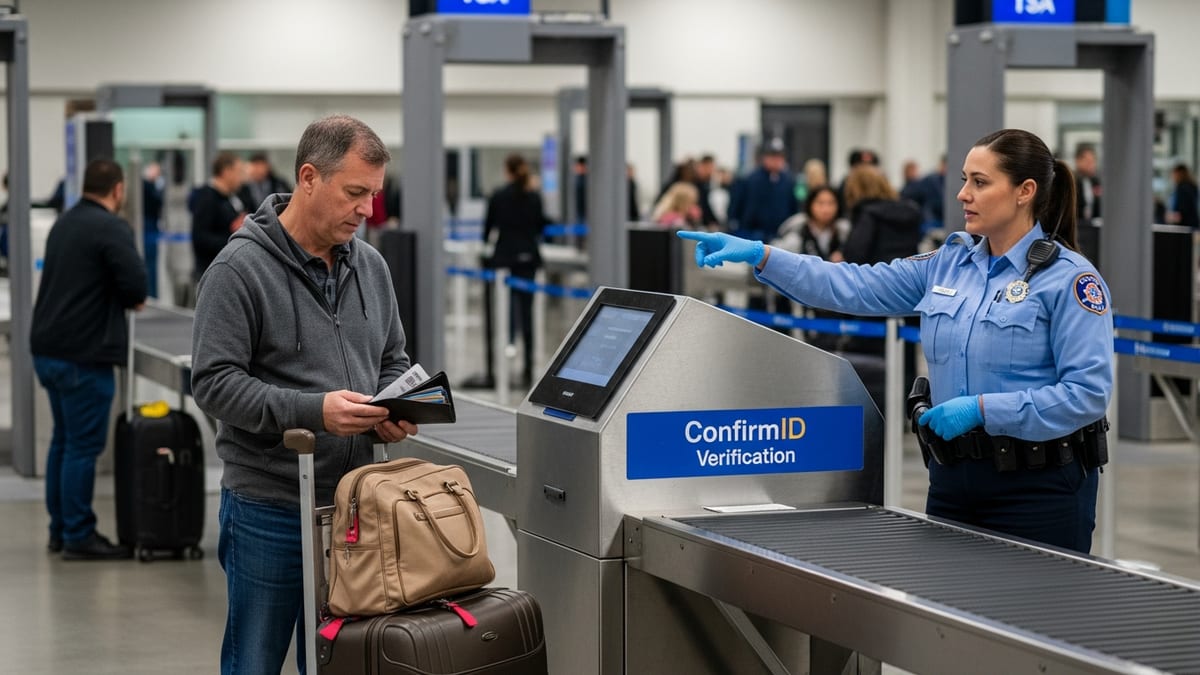
How the 30-Day Travel Warning Window Works
Recent coverage of a new 30-day travel warning window, tied to how travel insurance and risk alerts respond to upgraded government advisories, has put cruise documentation requirements back in the spotlight. When an advisory for a cruise region is raised within 30 days of departure, some insurance policies may limit cancellation benefits, and cruise travelers can see closer scrutiny of the documents they use to board, disembark in ports, and reenter the United States.
Publicly available information indicates that the window does not itself create new identification rules. Instead, it operates as a trigger: when a destination’s risk status changes shortly before sailing, cruise companies, insurers, and travelers often revisit what documents are on file and whether guests can still divert to alternate ports or fly home if needed. This has focused attention on guests who rely on birth certificates and driver licenses for cruises that remain largely within the Western Hemisphere.
Recent advisories for destinations such as The Bahamas and Mexico now incorporate explicit reminders that arriving by sea still requires travelers to carry Western Hemisphere Travel Initiative compliant documents. At the same time, U.S. guidance for cruise ship passengers continues to recommend that travelers hold a valid passport book, even where cruise lines and border rules still allow limited alternatives.
Current U.S. Rules for Closed-Loop Cruise Identification
Under the Western Hemisphere Travel Initiative and related policies, U.S. citizens boarding a cruise at a U.S. port, sailing only within the Western Hemisphere, and returning to the same U.S. port on the same vessel are categorized as taking a closed-loop cruise. Public guidance from U.S. Customs and Border Protection and congressional reports shows that these travelers may reenter the United States using a government issued photo ID together with proof of citizenship, such as an original or certified birth certificate, a consular report of birth abroad, or a certificate of naturalization.
This framework remains in force as of November 2026 and is reflected in travel document pages for major brands including Royal Caribbean, Holland America, and Carnival. These sources describe the combination of a birth certificate and government photo ID as acceptable for many itineraries in the Caribbean, The Bahamas, Mexico, Bermuda, Alaska, Hawaii, and Canada and New England that both start and finish in the same U.S. port. Some lines also list passport cards and enhanced driver licenses as alternatives for sea reentry.
The new 30-day warning window has not altered the underlying U.S. rules for closed-loop itineraries. However, it has highlighted the gap between what is legally permitted and what may be practical if a voyage is disrupted. Publicly accessible advisory material stresses that these non-passport options apply mainly to sea reentry scenarios and may not cover situations where a traveler must fly home from a foreign port or divert through a country with stricter entry rules.
Growing Momentum Toward Passports for More Cruises
While closed-loop exceptions remain available, several recent developments suggest regulatory and industry momentum toward broader passport expectations for cruise passengers. An entry in the federal regulatory agenda from the Department of Homeland Security and the Department of Justice describes work on a proposed rule that would require passports for most cruise passengers, including those traveling exclusively in the Western Hemisphere. The abstract notes that current exemptions allow certain cruise travelers to use alternative documents when entering the United States by sea from nearby destinations and indicates that officials are evaluating changes to this model.
At the same time, public documentation pages from major cruise lines increasingly frame passports as the preferred or best identification document. Royal Caribbean, for example, states in its travel document guidance that a passport is the best ID document for travel and highlights that on many sailings passports must be valid for at least six months beyond the cruise end date. Similar language appears in material from other large brands, even where they still list the birth certificate and ID combination as an accepted option for specific itineraries.
Travel guidance from the U.S. State Department’s cruise ship information pages reinforces this direction. The department strongly recommends that all cruise passengers travel with a passport book, pointing to scenarios such as medical emergencies, shipboard incidents, or itinerary changes where travelers may need to disembark early and fly home from a foreign country. In those circumstances, a full-validity passport typically remains the standard document for both entry abroad and reentry to the United States.
Destination Advisories and Documentation at Port
Destination specific advisories are also beginning to spell out documentation expectations more explicitly for cruise passengers. The current U.S. travel advisory for The Bahamas notes that visitors arriving by cruise may use Western Hemisphere Travel Initiative compliant documents instead of a passport, but also stresses that passports must be valid at the time of entry for travelers who do use them. Similar language appears in regional guidance for other Caribbean destinations that host large volumes of cruise calls.
These advisories sit alongside detailed cruise line requirements at embarkation. For instance, documentation guidance available from Royal Caribbean and Holland America explains that U.S. citizens using the closed-loop exception must present an original or certified government issued birth certificate, not a hospital souvenir version, together with a valid government photo ID such as a driver license. Several lines also note that name mismatches, older birth records, or non compliant IDs can lead to additional checks at the pier.
Reports from online traveler forums and recent news coverage indicate that the combination of changing advisories and strict document checks has already led to disrupted vacations. In some cases, travelers holding only birth certificates and driver licenses have encountered difficulties when attempting to fly home mid itinerary or purchase one way tickets from cruise ports after unexpected stays. These situations have been widely cited as examples of why passport recommendations are being repeated more frequently in 2026.
What the 30-Day Warning Means for Upcoming Sailings
For travelers holding bookings in the next 30 days, the new warning window acts as a prompt to verify both destination advisories and cruise line documentation rules. While there is no publicly available evidence that a blanket new identification rule has been introduced for cruises within this period, the elevated focus on risk has led many cruise brands to reiterate existing standards and remind guests that they are responsible for carrying valid documents throughout the journey.
Travelers are being encouraged, through public guidance and insurer communications, to review the exact wording of their cruise line’s identification policies before final payment and again as the departure date approaches. Particular attention is being given to minimum passport validity requirements, the distinction between closed-loop and open-loop or one way itineraries, and the limitations of relying solely on birth certificates and driver licenses if itineraries are modified.
Looking ahead, the combination of a 30-day advisory trigger, ongoing regulatory discussions about passport mandates for most cruise passengers, and increasingly detailed destination advisories suggests that documentation expectations will continue to tighten rather than loosen. For now, official rules still permit limited non passport options on many closed-loop cruises, but the landscape is shifting in ways that favor travelers who hold a current passport book with sufficient remaining validity for any international voyage by sea.