


More news on this day
In travel forums and social media threads, one desert nation is routinely flagged as a place solo travelers, especially women, should avoid. Yet recent safety data, evolving visa rules and on-the-ground accounts present a far more complicated picture than the stark warnings that dominate online discussions.
Get the latest news straight to your inbox!
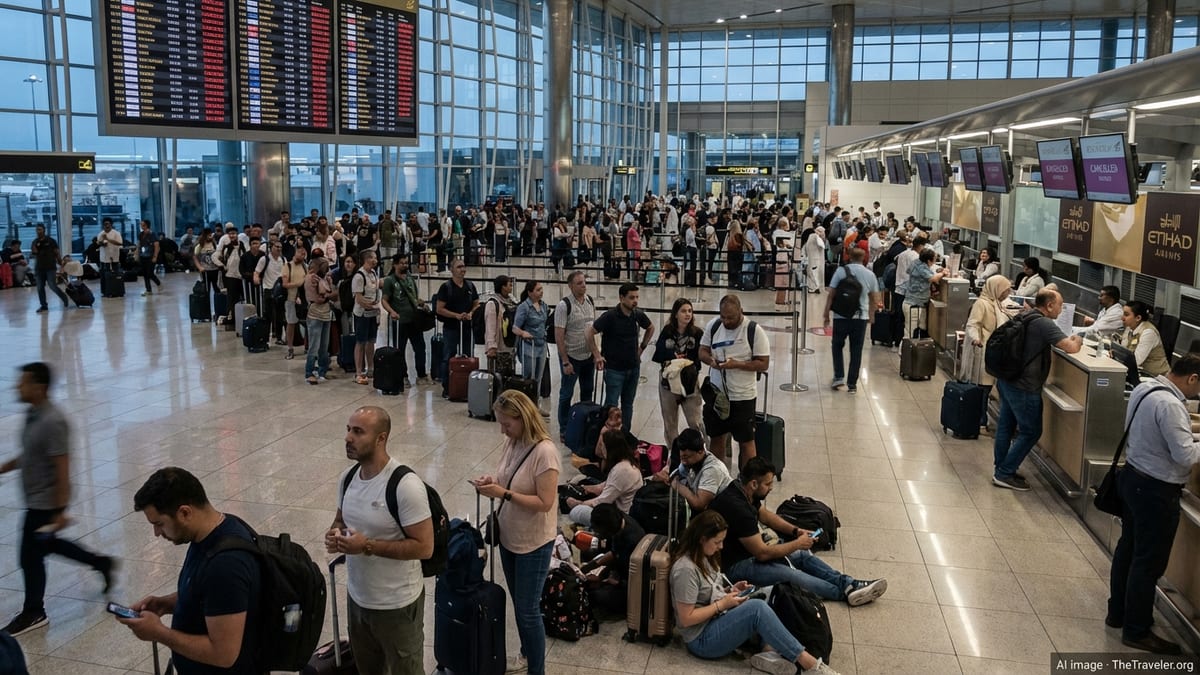
From Red-Flag Threads to Real-World Risk Maps
In many English-language travel forums, Saudi Arabia often appears in posts titled with variations of “countries I would never visit solo,” grouped with wider Middle East destinations during periods of heightened tension. Commenters cite concerns about conservative laws, media coverage of human rights issues and the risk of regional spillover from conflicts in neighboring states. Some threads go further, encouraging solo travelers to skip the country entirely in favor of Gulf destinations perceived as more familiar.
Recent official advisories, however, reveal a more nuanced risk profile. As of October 23, 2026, the United States categorizes Saudi Arabia at Level 3, advising travelers to reconsider travel because of the threat of terrorism and missile or drone attacks that have periodically targeted airports and infrastructure. The advisory highlights restrictions on U.S. government personnel, including bans on using public buses and limitations on travel near the border with Yemen, reflecting specific security concerns that may not affect most tourist itineraries.
Other governments take a similar but calibrated approach, distinguishing between higher-risk border areas and major urban centers. Publicly available guidance generally encourages travelers to stay informed about regional developments, register with consular services where possible and keep flexible itineraries in case of flight disruptions linked to security incidents. These details point to elevated but localized risks that are different in character from the personal crime concerns that dominate many solo travel warnings.
The gap between forum narratives and official risk assessments is further widened by the rapid pace of change. Infrastructure and tourism projects have expanded in recent years, even as regional tensions have led to temporary evacuations of some diplomatic staff and repeated advisories urging citizens to reconsider nonessential travel. For prospective solo visitors, this means safety perceptions can lag months behind conditions on the ground and must be cross-checked against the most recent statements from multiple governments.
A Tourism Push Colliding With Regional Tensions
Saudi Arabia’s government has invested heavily in tourism, with high-profile projects around the Red Sea, the historic oasis of AlUla and urban hubs such as Riyadh and Jeddah. New e-visa systems and promotional campaigns have positioned the country as a destination for heritage, desert landscapes and large-scale events, targeting both group tours and independent travelers. Accommodation ranges from international hotel brands in city centers to tented desert camps attached to guided excursions.
This expansion is unfolding alongside a volatile regional security environment. In March 2026, publicly available coverage reported that Iran-linked actors targeted the U.S. Embassy compound in Riyadh with drones, prompting a temporary shelter-in-place alert across major cities. In the same period, crises in the wider Middle East led to a broad U.S. advisory urging citizens to leave several countries, including Saudi Arabia, and to expect sudden airport closures or flight cancellations.
In late October 2026, reports indicated that the United States ordered some diplomats and family members to depart Saudi Arabia following a series of attacks attributed to Yemen’s Houthi movement, which have included strikes on civilian airports and critical infrastructure. Such incidents have triggered intermittent disruptions at Riyadh’s main airport and prompted renewed scrutiny of travel to and from the kingdom, particularly for visitors on tight schedules or those relying on single-connection itineraries.
Despite this backdrop, major tourism corridors in central and western Saudi Arabia have generally remained open, with airlines adjusting schedules rather than suspending routes entirely. For solo travelers, the practical impact is a higher premium on travel insurance that covers security-related delays, flexible bookings and contingency plans if regional developments escalate during a trip. The result is a destination where personal safety in cities may be comparatively high, while strategic infrastructure remains exposed to risks that sit largely outside individual control.
Solo Safety: Street-Level Reality Versus Online Warnings
On-the-ground accounts from independent travelers describe a street-level reality that diverges sharply from the fear expressed in some online discussions. Many recent trip reports from solo visitors characterize central Riyadh, Jeddah and Medina as places where petty street crime appears uncommon, with visitors often remarking on low levels of harassment in commercial districts and large malls. Travelers frequently mention that taxis and ride-hailing apps feel organized and that cashless payments are widely accepted, reducing the need to carry large amounts of money.
Solo female travelers report a different set of concerns, but they often distinguish between social conservatism and physical danger. Some describe encountering restrictions on entering “family only” sections of restaurants or entertainment venues, which can complicate plans but seldom translate into overt hostility. Others point out that dress expectations are clearer than forum debates suggest, with publicly available information indicating that foreign women are no longer required to wear an abaya, though modest clothing that covers shoulders and knees remains a practical standard.
Online accounts also emphasize the importance of internal diversity. Experiences in cosmopolitan districts, new entertainment zones and historical sites differ noticeably from more conservative residential neighborhoods or small towns outside the main tourist routes. For solo travelers, this makes local context crucial: an outfit that feels unremarkable in a mixed-gender café near a major business district may draw unwanted attention in more traditional areas, regardless of legal requirements.
While many visitors highlight the rarity of violent crime against tourists, regional security alerts remain a background factor. Airspace disruptions and targeted attacks on infrastructure discussed in recent news coverage are largely unrelated to day-to-day interpersonal safety but can influence perceptions and contribute to forum narratives that present the entire country as uniformly unsafe for solo travel.
Practical Realities: Visas, Transport and Desert Logistics
For those who decide to visit despite online warnings, recent changes have streamlined some logistics while leaving others firmly in the “advanced planning” category. Saudi Arabia’s e-visa program allows citizens of dozens of countries to apply online for tourism entry, with processing often reported as taking minutes rather than weeks, though applicants are advised to verify current eligibility criteria close to their departure date. Fees are published in local currency and can fluctuate with policy updates and exchange rates, so up-to-date cost checks are essential.
Within the country, long-distance travel between major cities is shaped by geography and climate. Highways link Riyadh, Jeddah and Dammam across vast stretches of desert, and intercity flights remain the fastest option for most solo travelers. Public buses operate along several routes, but some foreign government advisories note that their staff are not permitted to use these services because of safety and maintenance concerns, an indication that standards can be variable outside premium private operators.
Desert excursions add another layer of complexity. Public information for travelers emphasizes the need for adequate water, sun protection and reliable vehicles when venturing away from urban centers, especially during the hottest months when temperatures in inland regions can climb well above 40 degrees Celsius. Tour companies based in Riyadh and AlUla offer guided trips that include 4x4 transport, licensed drivers and safety briefings, reducing the risks associated with mechanical breakdowns or navigation errors in remote areas.
For solo visitors, the main logistical trade-off is between independence and redundancy. Relying solely on public information and ride-hailing apps can work well in cities but is rarely sufficient for multi-day desert itineraries. Many experienced travelers recommend booking at least the most remote segments with established operators and building in additional time for potential schedule changes linked to weather or regional security developments.
Navigating a Polarized Reputation
The debate around solo travel in Saudi Arabia has become highly polarized, with some online voices depicting the kingdom as uniquely dangerous and others presenting it as one of the safest places in the world. The reality reflected in current advisories, tourism infrastructure and traveler reports sits somewhere between these extremes. Street crimes targeting visitors appear relatively rare in major cities, while the overarching risks stem from regional tensions and strict legal norms that differ significantly from those in North America or Europe.
Publicly available guidance consistently highlights the need to understand local laws on public conduct, expression and photography, which can carry serious penalties. Travelers are urged to familiarize themselves with restrictions on alcohol, public displays of affection and certain types of social gatherings before arriving. For solo visitors, especially women and LGBTQ+ travelers, this legal environment can influence decisions about what to share on social media, where to go after dark and how to interact in mixed-gender spaces.
At the same time, a growing body of personal accounts challenges the blanket advice found in some forum threads that urge people never to go. Many solo travelers describe positive interactions, high levels of everyday courtesy and a sense of physical safety in public places, particularly when they dress modestly and avoid political or religious discussions. These narratives suggest that, for some visitors, the country’s most tangible risks are logistical or regulatory rather than interpersonal.
For prospective solo travelers weighing the warnings against their own risk tolerance, Saudi Arabia exemplifies a new generation of destinations where tourism promotion, geopolitical volatility and online discourse intersect. The forums that once served as simple filters for “safe” and “unsafe” destinations now sit alongside real-time advisories and detailed traveler reports, all of which must be considered together before deciding whether this desert country belongs on a personal do-not-visit list or an upcoming itinerary.