


More news on this day
A Ryanair flight from eastern France to Morocco departed without its passengers after a reported no-show by private security staff left 192 travelers unable to clear screening, raising fresh questions about staffing resilience at regional European airports.
Get the latest news straight to your inbox!
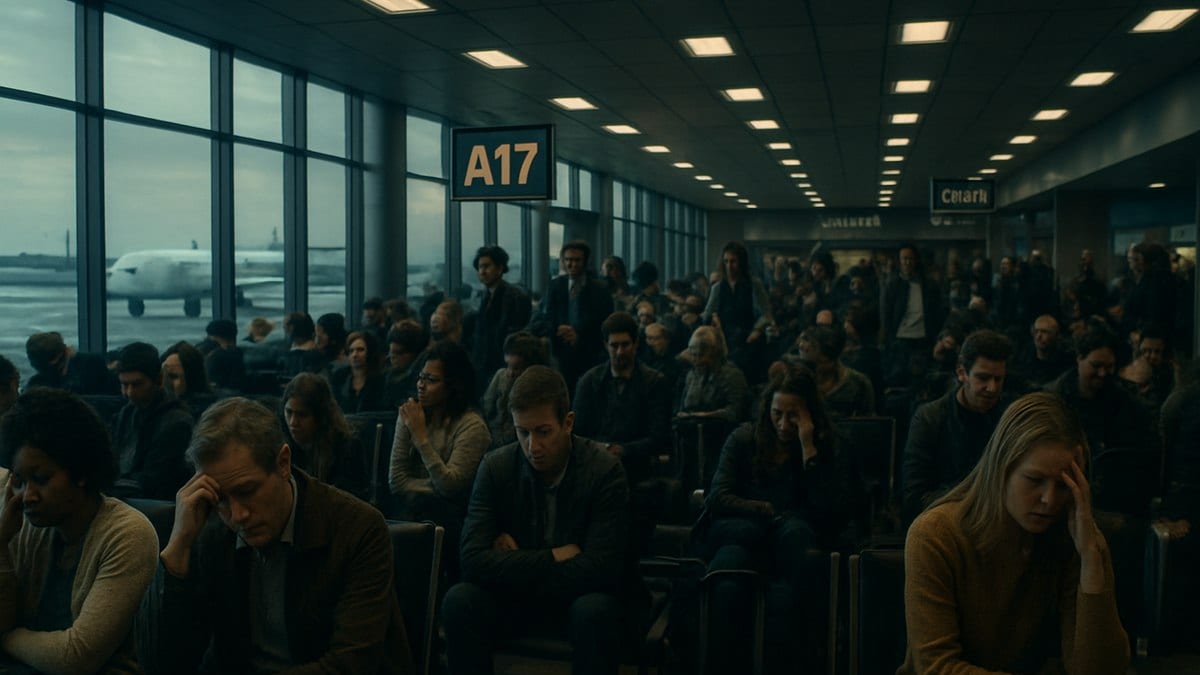
Flight Departs Empty After Security Bottleneck
Reports indicate that the incident occurred at Vatry Airport in eastern France on 14 April, when a Ryanair service to Marrakech left the terminal and took off with no passengers on board. According to published coverage, 192 ticketed travelers were prevented from proceeding through security because the contracted screening staff failed to report for duty in time for the scheduled departure.
Publicly available information shows that the flight had been due to operate as a roughly three-and-a-half-hour sector between the small French airport and the Moroccan city. With no security personnel available to screen cabin baggage and passengers, boarding could not begin, even as the aircraft and flight crew were positioned and ready to depart.
Accounts from the scene describe growing queues and frustration in the terminal as departure time approached and no screening lanes opened. Eventually, the aircraft pushed back and departed empty, leaving nearly two hundred passengers stranded airside and forced to seek alternative arrangements for their trips.
The episode has drawn attention because the aircraft was able to operate its scheduled rotation while the entire passenger load remained on the ground, an outcome that is unusual even in an industry accustomed to disruption and delays.
Airport and Airline Share Spotlight Over Responsibility
Coverage of the incident highlights an ongoing debate about where responsibility lies when ground-side staffing failures prevent passengers from traveling on a flight that operates as scheduled. Airport operators typically contract private companies to provide security screening staff, while airlines depend on those services to process their passengers in time.
In this case, reports indicate that the lack of security personnel at Vatry Airport meant passengers could not reach the boarding gate, even though the Ryanair aircraft and crew were present and prepared to operate. The situation has led to questions over contingency planning at smaller regional airports that rely heavily on external contractors for critical functions.
Public information from previous disruptions across Europe suggests that airlines often argue they have limited control over security and border staffing decisions, which are managed by airports and national authorities or private contractors. Passengers, however, experience the disruption as a single failure in the air travel chain, regardless of which organization is technically responsible.
Consumer advocates say such incidents underscore the need for clearer communication and better coordination between airport operators, service providers and airlines when operational bottlenecks emerge, particularly where passengers are left stranded despite an aircraft operating its scheduled flight.
Stranded Passengers Confront Travel Plans in Ruins
Accounts cited in French and international media describe passengers at Vatry Airport watching the Ryanair jet depart while they remained stuck on the ground, with some travelers reportedly in tears. Many had planned trips around family visits, holidays or pre-booked arrangements in Morocco, which became uncertain or impossible once the flight left without them.
Reports indicate that travelers faced the prospect of rebooking at short notice during a busy travel period, often at higher fares and with limited availability. Others were left to negotiate overnight accommodation, ground transport and the complex process of claiming potential reimbursement under European air passenger rules.
Publicly available information shows that European Regulation EC261 establishes certain rights for passengers when flights are canceled or significantly disrupted. However, the specifics of compensation and care can be contested when the aircraft itself departs on time, but passengers are unable to board due to airport-related constraints rather than airline-controlled factors.
In practical terms, stranded passengers often confront long waits at service desks, uncertain guidance about their options, and the challenge of documenting events to support later claims. The situation at Vatry appears to have followed a similar pattern, with travelers seeking clarity on who would cover additional costs and how quickly they could resume their journeys.
Staffing Shortages and Systemic Strain in European Aviation
The Vatry incident is the latest in a series of disruptions across Europe in which staffing shortages at airports, security providers or border control points have cascaded into missed flights and stranded passengers. In recent months, published coverage has documented queues stretching for hours at security and passport control in several European countries, including France, as operators struggle to match resources to demand.
Industry data cited in aviation media suggest that ground-based staffing has not always kept pace with the rapid rebound in post-pandemic travel. Security screening, baggage handling and border checks all require trained staff and, in many cases, additional vetting or clearances, making it harder to ramp up quickly when traffic surges.
Low-cost carriers such as Ryanair operate tight turnaround schedules that depend on passengers clearing airport processes within defined windows. When security or border checks are understaffed and queues lengthen, flights face the choice of departing late, risking knock-on delays across their network, or leaving on time without all ticketed passengers on board.
Observers note that these pressures are particularly acute at secondary and regional airports, which often run leaner operations and outsource key functions. The Vatry episode has therefore been interpreted by some commentators as a warning sign that more robust staffing plans and better contingency measures may be needed to avoid similar breakdowns in the months ahead.
Calls for Clearer Protocols and Passenger Safeguards
Following the events in eastern France, commentators and passenger-rights specialists have begun to focus on what concrete steps could reduce the likelihood of a repeat scenario. Suggestions discussed in public forums and media analysis include stricter contractual guarantees on minimum staffing levels for security providers, and more conservative scheduling during known peak periods.
Analysts also point to the importance of real-time communication with travelers when bottlenecks develop. Clear announcements, updated departure information and proactive rebooking options can make a significant difference for passengers forced to navigate last-minute disruption. In the Vatry case, reporting suggests that information in the terminal was limited as uncertainty grew about whether the flight would wait.
Some aviation specialists argue that regulators could play a larger role by clarifying how passenger protection rules apply in cases where flights operate but travelers are blocked by airport processes beyond their control. Such guidance could help resolve disputes over compensation more quickly and create stronger incentives for all parties to prevent security staffing failures.
For now, the image of an aircraft departing Vatry Airport without its 192 passengers has become a potent illustration of the vulnerabilities that persist in Europe’s aviation system. As travel demand continues to rise, how airports, airlines and service providers respond to those vulnerabilities will be closely watched by both industry observers and the flying public.