


More news on this day
Europe’s peak holiday season is colliding with the full rollout of the European Union’s new biometric border regime, with Ryanair warning of “queue chaos” at passport control as the Entry/Exit System generates reports of multi-hour waits at some airports.
Get the latest news straight to your inbox!
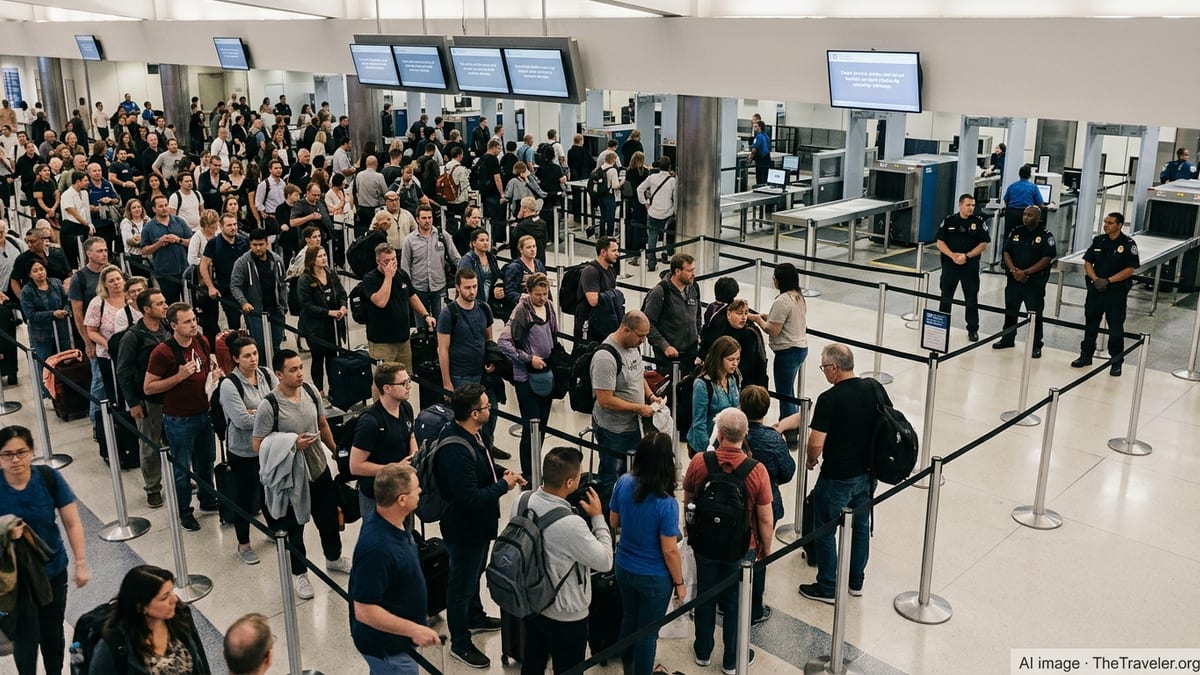
Budget carrier sounds alarm over peak-summer rollout
Ryanair has intensified warnings that families could face long passport queues and missed flights this summer as the EU’s new Entry/Exit System, or EES, is expanded across external Schengen borders. According to published coverage and the airline’s own statements, the low-cost carrier argues that several major leisure airports are not adequately staffed or equipped to handle the extra checks required for non-EU nationals.
The carrier has publicly highlighted airports including Tenerife South, Palma de Mallorca, Alicante, Malaga, Milan Bergamo, Krakow and Paris Beauvais as points of concern, citing recent instances of lengthy lines at passport control during busy periods. Reports indicate that similar scenes have already been seen at other European gateways since the system became fully operational in April 2026.
Ryanair has called on national governments to postpone full enforcement of EES until after the peak summer period, suggesting a September timetable would give airports more time to install additional kiosks and reconfigure border-control areas. The airline argues that without short-term flexibility, passengers will bear the brunt of what it describes as foreseeable disruption at the border.
What the Entry/Exit System changes for travellers
The EU’s EES replaces the traditional stamping of passports for most non-EU citizens entering or leaving the Schengen area with a digital record of each crossing. Publicly available information shows that on a first trip after the system’s launch, travellers from outside the bloc must be registered, with their fingerprints and facial image captured at the border alongside biographical details from their passport.
Once enrolled, passengers are meant to undergo a quicker verification process on subsequent trips, with biometric data checked against the database. The stated goal is to strengthen border security, automate parts of the process and build an accurate record of entries and exits to help identify overstays and security risks.
In practice, however, early implementation has involved extra steps at passport control desks or kiosks, especially for visitors who have not yet been enrolled. Airlines and airport groups have warned that this “first registration” bottleneck is occurring at the very moment when demand for European beach and city breaks is surging after the pandemic, amplifying the risk of congestion.
Reports of long queues and operational strain
Travel reports across Europe describe queues of several hours at some border checkpoints since EES began full operation in spring 2026, particularly at airports with limited space to expand passport-control areas. Media coverage has noted instances where aircraft have reportedly departed with empty seats because would-be passengers were still stuck in lines waiting for biometric processing.
Airport and airline associations have urged Brussels to allow more flexibility in how and when EES is applied, especially at the busiest times of day and during school holidays. In an open letter cited by European media, industry groups warned that without adjustments, border waits could stretch to four or even five hours for some passengers during peaks, undermining confidence in European travel.
Some national and regional authorities are already reconfiguring arrival halls, installing extra EES kiosks and reallocating staff to bolster border teams. Yet coverage from several holiday hotspots indicates that changes on the ground are uneven, with smaller and secondary airports appearing more vulnerable to crowding than large hubs that have invested heavily in automation.
Airports, EU institutions and industry seek fixes
European institutions maintain that the new system is essential to modernising border control, and that early congestion issues reflect a transitional phase while millions of regular visitors are registered for the first time. Officials cited in recent briefings have suggested that once the bulk of frequent travellers are in the database, processing times should gradually shorten.
According to recent travel-industry reporting, aviation groups and airport operators are pressing for temporary measures such as selectively suspending EES during the busiest hours, adding more staff at manned booths, and expanding the use of automated e-gates for eligible passengers. Some member states are also reviewing how data is captured at land and sea borders to avoid spillover disruption beyond airports.
Ryanair, meanwhile, has singled out countries where it says preparations lag, including Poland and Spain, and has previously urged national authorities to use existing legal provisions to pause EES during the summer rush. The carrier contends that better phasing, combined with clearer passenger information, would significantly reduce the risk of missed departures and knock-on delays.
What travellers should expect and how to prepare
For now, publicly available guidance advises non-EU travellers to allow significantly more time at departure and arrival airports in Europe, particularly when flying into or out of busy Mediterranean and city-break destinations. Industry bodies recommend arriving at the airport well ahead of normal check-in advice, especially for morning and evening peak waves when multiple flights converge on passport control.
Passengers on their first trip to the Schengen area since the system’s rollout are likely to face the most time-consuming process, as they will need to complete their initial biometric enrolment. Subsequent journeys should, in theory, be faster, although reports from some borders indicate that technical issues and inconsistent procedures may still generate delays.
Airlines and travel agents are encouraging customers to monitor airport and carrier updates closely and to be prepared for longer waits at border control even if flights themselves appear to be on time. For travellers planning European holidays in the coming months, the emerging picture suggests that the journey may now hinge as much on the capacity of passport-control lines as on the availability of seats in the sky.