


More news on this day
A norovirus outbreak aboard the Ruby Princess cruise ship has sickened 125 passengers and crew on a 20-day round-trip voyage from San Francisco to Alaska and Canada, according to publicly available health and media reports, drawing renewed attention to gastrointestinal risks on large cruise vessels.
Get the latest news straight to your inbox!
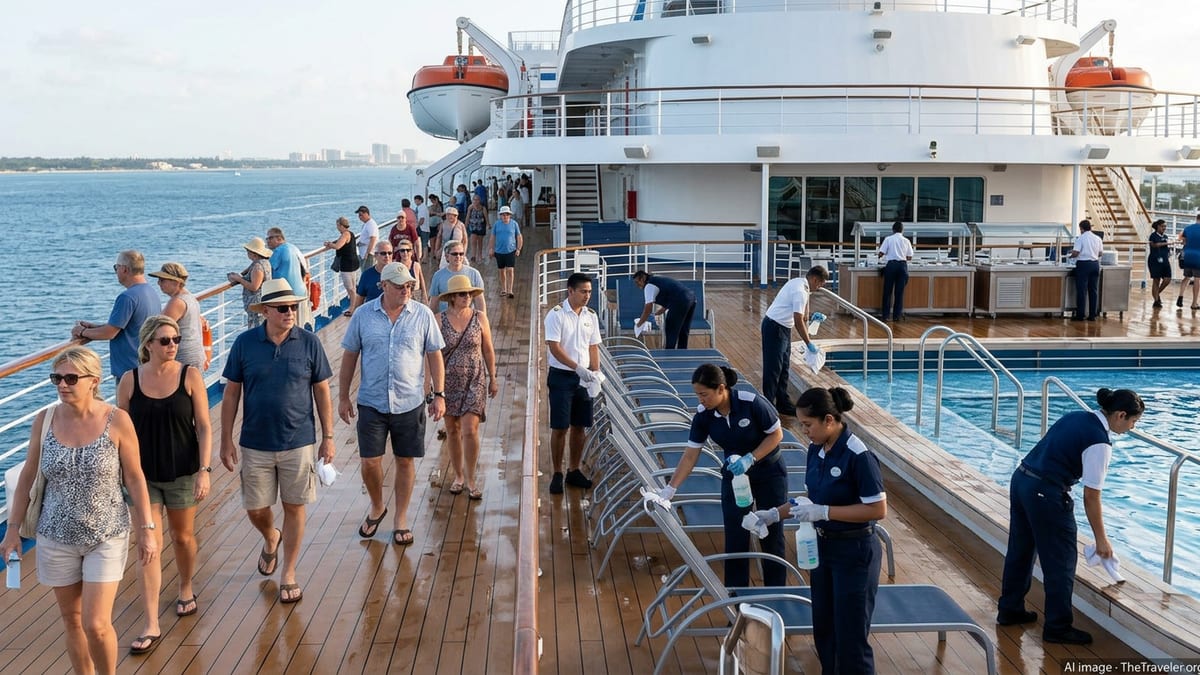
Outbreak Identified as Ruby Princess Returns to San Francisco
Publicly available information from federal health monitoring systems indicates that 102 passengers and 23 crew members experienced symptoms consistent with norovirus during the Ruby Princess voyage, which departed San Francisco on June 12 and returned to the city on July 2, 2026. The ship carried more than 3,000 passengers and over 1,100 crew members.
Reports indicate that the illness cases were spread throughout the 20-day itinerary and that not all affected individuals were sick at the same time. By the time the vessel arrived back at the Port of San Francisco, some guests were reportedly recovering while others were still experiencing symptoms.
The Centers for Disease Control and Prevention’s public cruise-ship surveillance data classify the event as a gastrointestinal illness outbreak, with laboratory testing identifying norovirus as the likely cause. The organism, often referred to as the “stomach flu,” is well known for spreading rapidly in contained environments such as cruise ships, schools, and care facilities.
Media coverage from San Francisco and national outlets describes the Ruby Princess docked at the city’s cruise terminal while enhanced cleaning and disinfection measures were carried out before the vessel’s next scheduled departure.
Highly Contagious Virus Exploits Close-Quarters Cruise Environment
Norovirus is one of the most common causes of acute gastroenteritis worldwide. Public health references describe it as highly contagious, spreading primarily through contact with contaminated food, water, surfaces, or direct person-to-person transmission. Symptoms typically include sudden onset of vomiting, diarrhea, stomach cramps, and nausea, often appearing within 12 to 48 hours of exposure.
On cruise ships, the combination of shared dining venues, crowded public spaces, and frequent contact with handrails, elevator buttons, and buffet utensils can facilitate transmission if a single infected person boards. The virus is known to persist on hard surfaces for extended periods and is relatively resistant to some routine cleaning agents, which can make containment challenging once an outbreak begins.
Health guidance cited in recent coverage stresses that handwashing with soap and water for at least 20 seconds is significantly more effective against norovirus than alcohol-based hand sanitizers alone. Travelers are also encouraged to avoid touching their faces, to skip self-service food options when feeling unwell, and to report symptoms promptly to onboard medical staff.
While the illness is typically short-lived, lasting one to three days for most healthy adults, it can pose more serious risks for older passengers, young children, and individuals with underlying health conditions who may be more susceptible to dehydration and complications.
Princess Cruises Implements Enhanced Sanitation Response
According to statements cited in multiple news reports, Princess Cruises indicated that crew on the Ruby Princess implemented elevated sanitation protocols once the pattern of illness became apparent. These measures reportedly included stepped-up cleaning of high-touch surfaces, isolation of symptomatic passengers and crew, and modified food-service practices designed to reduce contact points.
Publicly available information from the company and health authorities suggests that the ship remained operational, with the voyage continuing to its scheduled Alaskan and Canadian ports while containment efforts took place on board. The Ruby Princess was then scheduled for a rapid turnaround in San Francisco, with cruise-line communications indicating that comprehensive disinfection would be completed before new passengers embarked.
Cruise-industry practices for gastrointestinal outbreaks typically involve coordination with national health agencies, onboard medical surveillance, and standardized cleaning protocols using disinfectants proven effective against norovirus. The Ruby Princess response, as described in media coverage, appears to have followed this pattern, with a focus on limiting further spread and readying the ship for its next sailing.
Even with such measures, norovirus outbreaks can be difficult to fully eliminate in the short window between cruises, given the size of modern ships and the volume of guest cabins, dining areas, and recreation spaces that must be sanitized.
Third Norovirus Incident for Princess Cruises in 2026 Raises Questions
Travel and consumer reports note that this incident is the third norovirus outbreak linked to a Princess Cruises vessel in 2026, following earlier events on other ships in the fleet. That pattern has renewed scrutiny of how cruise lines manage gastrointestinal risks and communicate with prospective passengers.
The Ruby Princess itself has a documented history of high-profile health and safety incidents, including earlier pandemic-era concerns and operational mishaps reported in previous years. While norovirus is not unique to any one brand and can occur across the industry, the recurrence within a single cruise operator during a calendar year has drawn added attention.
Cruise analysts quoted in recent coverage suggest that rising passenger volumes, longer itineraries, and more complex onboard operations can all contribute to the likelihood of illness clusters. At the same time, improvements in surveillance and mandatory reporting mean that more outbreaks are formally documented and publicly visible than in decades past.
For travelers, the recent sequence of cases serves as a reminder to evaluate cruise health records, review cancellation and medical policies, and consider their own risk tolerance, especially for extended itineraries in remote regions where shoreside medical care may be less accessible.
What Passengers and Future Cruisers Should Know
The Ruby Princess outbreak, while disruptive for those affected, also illustrates how quickly norovirus events can emerge and resolve during a single voyage. Public guidance from health agencies emphasizes that most people recover fully with rest and adequate hydration, and serious complications remain relatively rare compared with the total number of cruise passengers sailing each year.
Travelers preparing for upcoming cruises are encouraged by health educators to adopt a few straightforward precautions: frequent handwashing with soap and water, avoiding shared utensils and self-service buffets when feeling unwell, promptly reporting symptoms, and following onboard medical instructions about isolation or room service when necessary.
For those already booked on future Ruby Princess sailings from San Francisco, media reports indicate that the ship underwent an intensive cleaning while docked and was scheduled to depart again shortly after. Industry observers note that such turnarounds now routinely include targeted disinfection efforts following any reported gastrointestinal cluster.
As the summer Alaska season continues out of West Coast ports, the Ruby Princess incident is likely to remain a reference point in discussions about cruise health safety, informed traveler behavior, and how quickly cruise operators can contain and recover from onboard outbreaks involving highly transmissible viruses like norovirus.