


More news on this day
In the tropical city of Sanya on China’s Hainan Island, a rubber-tyred tramway weaving between palm trees, new resorts and high-speed rail links is emerging as a key element of the destination’s tourism-focused transport network.
Get the latest news straight to your inbox!
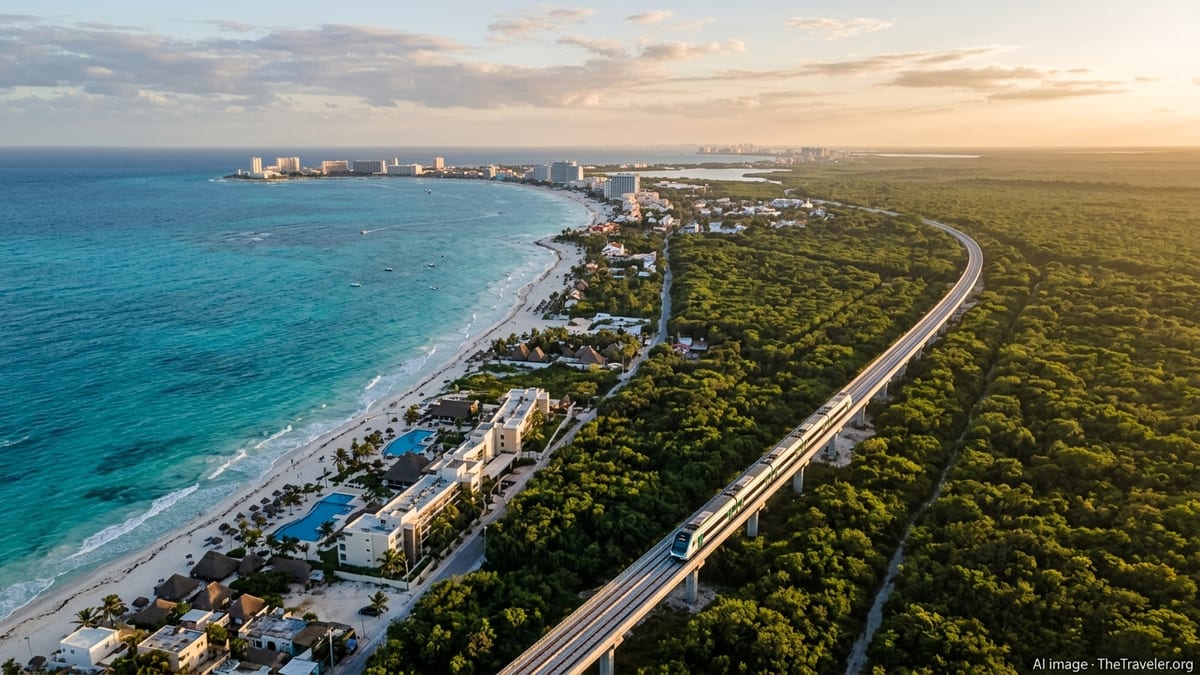
A coastal tram built for a tourism economy
The Sanya Tram operates within Jiyang District, serving as a surface link between Sanya Railway Station and Jiangang Road Station near the urban core. Publicly available information describes it as one of the southernmost modern tramways in China, positioned in a city that markets itself as a year-round beach destination with easy access to sea, forest and duty-free shopping.
The line uses a guided, rubber-tyred system running largely at street level, reflecting a design approach seen in several of China’s newer resort and new-town districts. Reports on the project highlight its role in connecting visitors arriving by high-speed rail with hotels and residential areas closer to Sanya’s coastline, easing pressure on taxis and conventional buses at peak holiday periods.
The tramway opened in stages, with trial operations beginning in 2018 and full opening reported in early 2019. More recent summaries of China’s urban rail systems indicate the Sanya line remains in service, forming part of a broader push across Hainan to expand rail-based public transport while maintaining the island’s reputation as a low-stress, resort-style destination.
Unlike heavier metro projects in larger mainland cities, Sanya’s single tram corridor reflects the city’s smaller population and tourism-driven demand patterns. Operations focus on providing frequent, relatively short trips that complement rather than replace existing bus routes along the urban waterfront and inland corridors.
Design that blends with tropical scenery
Tourism promotion materials emphasize the tram’s visual design, describing sleek vehicles with large windows intended to frame views of Sanya’s tropical landscape. The line passes through districts of mid-rise housing, resort hotels and landscaped boulevards, presenting the system as part of the city’s overall resort experience rather than only a utilitarian commuter route.
According to destination marketing information, the tramway incorporates island-inspired color palettes and streamlined car bodies that echo Sanya’s branding as a place of sun, beaches and casual leisure. This approach aligns with the city’s broader strategy of embedding tourism-friendly design into infrastructure, from seafront promenades to upgraded stations on the Hainan ring railway.
Stops are generally at street level, with platforms integrated into median strips and roadside spaces planted with greenery. While full technical specifications are not widely detailed in English-language sources, photos and descriptions indicate a focus on wide doorways, step-free boarding and shaded waiting areas, all intended to support visitors carrying luggage or beach gear.
Night lighting and illuminated signage also contribute to the line’s image, creating a recognizable transit spine through a district that increasingly targets evening shopping, dining and entertainment, including Sanya’s growing duty-free retail hub in Haitang district to the northeast.
Connecting rail, resorts and new tourist corridors
The Sanya Tram’s southern terminus at Sanya Railway Station provides a link to the island’s high-speed rail loop, which connects Sanya with Haikou and the rest of Hainan’s coastline. This layout allows travelers arriving from mainland China to transfer directly from intercity trains to the local tram for the final leg into urban districts and resort zones.
In parallel, Hainan has continued to invest in new tourist-focused railways, notably the Sanya–Ledong tourist railway that began operating in late 2024, connecting Sanya with scenic inland areas and coastal attractions further west. While this newer line is a separate project with different rolling stock and service patterns, it illustrates how the Sanya Tram fits into a layered network of rail options designed around leisure travel.
Policy documents and company reports on Hainan’s transport planning describe an intention to use rail and tram infrastructure to knit together beaches, theme parks, cultural sites and duty-free shopping areas. In that context, the Sanya Tram functions as a feeder and distributor for visitors, supporting both short urban trips and transfers to longer-distance tourist routes radiating out of the city.
Local travel guides indicate that the tram is particularly useful for reaching urban districts from the main railway hub without needing to navigate language barriers or seasonal fluctuations in taxi pricing. Combined with city buses serving Yalong Bay, Haitang Bay and Tianya, the tram helps diversify the ways tourists can move around Sanya.
Passenger demand, operations and visitor experience
While granular ridership figures for the Sanya Tram are not routinely highlighted in English-language reporting, urban rail surveys and Hainan transport updates indicate that the line has settled into regular operation as part of the city’s everyday mobility mix. Services generally run at moderate intervals suitable for both residents and tourists, with headways adjusted around morning and evening peaks and busy holiday periods such as Lunar New Year and national holidays.
Visitor accounts on travel forums often describe the tram as clean and straightforward to use, with clear signage and integrated fare payment options that are consistent with other Chinese cities. For international travelers, the system can be an accessible introduction to Hainan’s public transport, particularly for those familiar with tram networks in European or Asian destinations.
From a city management perspective, the tram supports efforts to limit congestion and emissions on key approach roads to Sanya Railway Station and nearby districts. Shifting a portion of trips from private cars and taxis to electrically powered vehicles aligns with broader environmental objectives promoted for the Hainan Free Trade Port and the island’s role as a showcase for low-carbon tourism.
Service reliability and maintenance standards are framed in official material as part of Sanya’s wider ambition to present a polished, international image. Combined with airport upgrades, expanded air routes and enhanced bus services, the tram represents one element in a suite of improvements aimed at making Sanya easier to navigate for both repeat visitors and first-time arrivals.
Role in Sanya’s long-term tourism strategy
Hainan’s development plans position Sanya as a core pillar of the island’s tourism economy, with goals to build an internationally competitive resort city anchored by high-quality services and infrastructure. In this vision, the Sanya Tram is less a standalone project and more a visible symbol of the city’s shift toward integrated, rail-based mobility.
Planning documents and public statements linked to the Hainan Free Trade Port highlight transport connectivity as a key factor in attracting international visitors and large-scale events. By providing a modern tramway that visibly improves access between intercity rail, urban districts and growing tourism zones, Sanya aims to demonstrate progress toward these long-term objectives.
The tramway also contributes to the city’s branding as a destination where everyday experiences, such as riding public transport, are framed as part of the holiday. For visitors, the line offers a practical way to move between stations, shopping areas and accommodations, while simultaneously offering views of a rapidly evolving tropical cityscape.
As Sanya continues to expand its portfolio of resorts, cultural venues and duty-free complexes, future adjustments to the tram’s service pattern, integration with bus networks or possible extensions may further shape how travelers experience the city. For now, the existing corridor stands as a case study in how a relatively small, tourism-focused city is using modern tram technology to support both mobility and destination appeal.