


More news on this day
Nantong Rail Transit is emerging as a key connector between this fast growing Yangtze River Delta city, its planned new international airport, and a rapidly expanding web of regional high speed rail lines, according to recently published planning documents and local reports.
Get the latest news straight to your inbox!
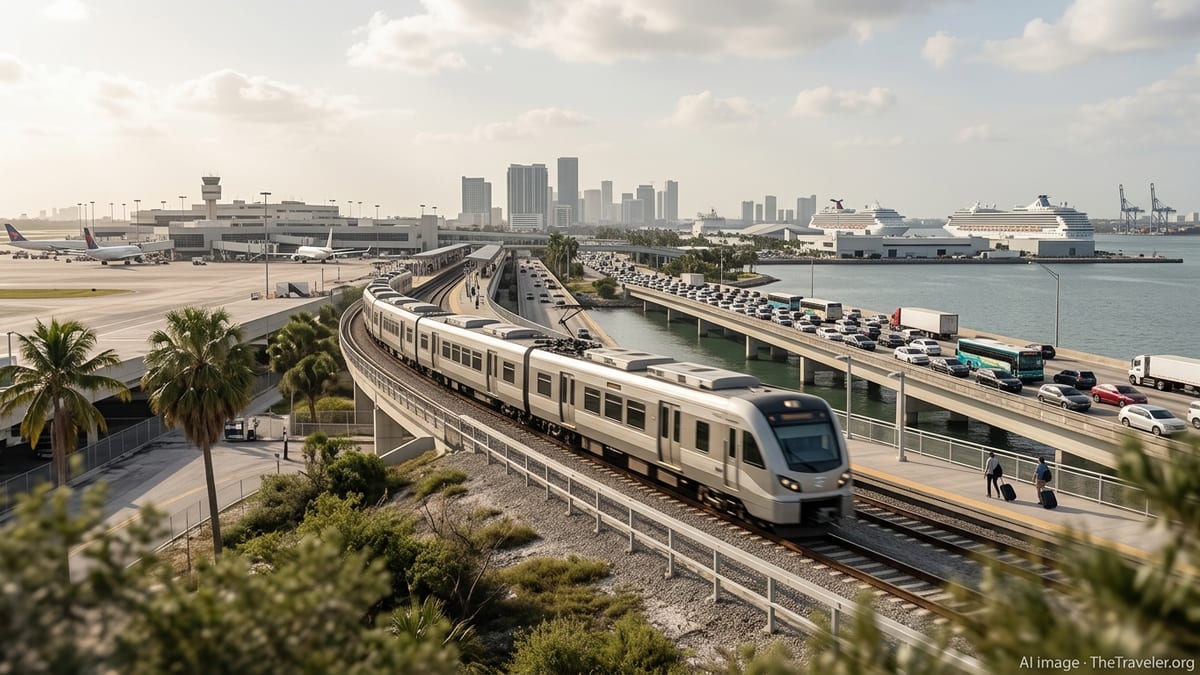
From first metro line to an expanding urban network
Nantong Rail Transit, often abbreviated as NRT, is still a relatively young system compared with the metros of nearby Shanghai, Nanjing or Suzhou. The city’s first metro corridor, Line 1, opened for initial operation in November 2022 after several years of construction, providing a north–south spine through the urban core. Publicly available summaries of the line show that it links key destinations including Nantongxi Railway Station, the central business districts and major educational institutions, bringing high capacity rail transit into daily use for local commuters.
Travel guides and operational overviews indicate that Line 1 already spans dozens of stations across urban districts, with operating hours designed to support both peak commuting periods and evening travel. The line has been described in local coverage as a catalyst for rebalancing traffic away from congested surface roads, improving access to employment zones and reshaping real estate development along its corridor.
Planning information summarized in industry publications suggests that Nantong currently has two urban rail lines either in operation or substantially completed, with a combined construction scale of around 60 kilometers. While Line 1 anchors the network today, subsequent phases are intended to create a grid that adds east–west capacity, improves riverfront access and strengthens links between the traditional city, newer development zones and intercity rail hubs.
The early years of NRT therefore mark a transition for Nantong from a city almost entirely dependent on buses, private vehicles and ferries to one where rail transit is expected to carry an increasing share of daily trips. For visitors, this shift is gradually making it easier to navigate the city’s expanding waterfront districts, cultural attractions and business parks using a single unified metro system.
Airport focused rail planning reshapes the map
One of the most significant drivers of future Nantong Rail Transit expansion is the planned new Nantong airport. Regional media in Jiangsu have reported that the new airport, to be located in the Tongzhou district, is expected to begin full-scale construction in 2027 and is designed as a major regional hub with multiple runways and a large terminal complex. Planning studies describe it as part of the broader Shanghai international aviation system, positioning Nantong as a secondary but strategically important node.
Transport research papers examining the adjustment of Nantong’s urban rail network note that the introduction of this new airport and its associated hub station is prompting a reconfiguration of metro alignments. Revised schemes increase the number of urban rail lines serving both the existing Nantong railway station and the future airport area, focusing on direct connections from southern urban districts and key functional zones.
According to these analyses, the goal is to ensure that the future airport is not a remote, car dependent facility but one that is closely integrated with the city’s rail transit grid. Proposed metro corridors are being aligned so that passengers from core residential districts, industrial parks and higher education clusters can reach the airport area using no more than one transfer. This is intended to shorten overall door to door travel times and make rail competitive with road based airport access.
For international and domestic travelers, the result is expected to resemble the patterns already seen in other Yangtze River Delta cities, where metro lines bring passengers directly into airport landside halls or nearby intermodal hubs. In Nantong’s case, planners are emphasizing not only airport access but also the role of the new rail links in supporting cross river integration with Shanghai and other cities along the Yangtze corridor.
“Air rail” integration with regional high speed lines
Beyond the city limits, the rise of Nantong Rail Transit is closely tied to a broader transformation of regional rail infrastructure. Recent coverage in provincial and national outlets highlights work on key high speed railway projects crossing the Yangtze River and the Hangzhou Bay area, including the Shanghai–Nantong corridor and the Nantong–Ningbo high speed railway. These lines are described as important components of China’s coastal high speed corridor, significantly reducing travel times between Nantong, Shanghai, Ningbo and other coastal cities.
In parallel, Jiangsu focused media have outlined plans for a new comprehensive hub at Haimen North station, envisioned as a critical node for “air rail” integration. The concept is that high speed rail passengers arriving at Haimen North would be able to transfer quickly to urban rail services that continue to the new Nantong airport in roughly ten minutes. Planning documents for related road and station works emphasize seamless transfers within a shared ground transport center, mirroring multi level interchange hubs already operating in Shanghai and Nanjing.
Academic articles assessing the updated Nantong rail transit network planning indicate that this integration requires careful adjustment of alignments and station spacing. New or modified metro lines are being routed to intersect with high speed railway stations on the northern bank of the Yangtze as well as with the airport hub. The intention is to build a hierarchy where long distance high speed services feed into NRT lines, which then distribute passengers across the urban area without the need for additional surface transfers.
For travelers, especially those moving between cities in the Yangtze River Delta for business, this pattern promises shorter and more predictable trip chains. A journey that previously involved a combination of intercity trains, buses and taxis could in the future be handled almost entirely by rail, with a sequence of one high speed segment followed by one or two metro segments, all within coordinated interchange complexes.
Network design aims at visitor friendly connectivity
While much of the discussion around Nantong Rail Transit centers on engineering works and construction milestones, the network is also being shaped with tourism and visitor experience in mind. Line 1 already places several cultural and commercial destinations within easy reach for first time visitors, including waterfront parks, a grand theatre district, university campuses and historic neighborhoods along the old canal system.
City transport guidance and independent travel resources present the metro as an increasingly practical alternative to taxis for accessing hotels, shopping streets and business centers. Stations on NRT lines are being designed with standardized signage, barrier free access and clear transfer passages, reflecting a broader trend in Chinese metro systems toward more intuitive layouts for occasional users and overseas travelers who may not read Chinese fluently.
Future lines that connect to the planned airport and additional intercity rail stations are expected to extend this visitor friendly pattern. As more stations open near exhibition centers, convention venues and new coastal leisure zones, itineraries that combine high speed rail arrival, metro transfers and short walks to attractions are likely to become the norm. This is in line with broader national policies encouraging public transport use for both daily commuting and tourism driven travel.
For TheTraveler.org readers planning trips in the coming years, the practical implication is that Nantong will increasingly resemble its larger neighbors in offering a coherent rail based mobility system. Keeping track of new line openings, station names and airport connections within the NRT network will become an important step in shaping efficient itineraries across this rapidly changing port city.
What to watch in the next construction phase
Looking ahead, the period between now and the start of full scale airport construction in 2027 is expected to be pivotal for Nantong Rail Transit. Provincial investment overviews and local government updates indicate that design and preparatory works are advancing across multiple transport projects, from high speed rail bridges to supporting road networks. Within this context, NRT’s next construction packages will determine how well the city can absorb rising passenger volumes and capitalize on its enhanced regional position.
Sector reports point to several priorities. One is the timely completion and commissioning of additional metro corridors that close gaps between existing Line 1 stations and emerging development zones. Another is detailed coordination between metro builders, high speed rail companies and airport planners on the exact location and configuration of key interchange stations, to avoid the fragmented transfer experiences that have challenged some older Chinese hubs.
Observers also note questions around financing models, ridership forecasts and land use integration. Academic work on transit oriented development in Chinese secondary cities suggests that careful alignment of station area planning with rail investments can help ensure that new lines serve compact, mixed use districts rather than scattered low density projects. How effectively Nantong applies these lessons in its expanding NRT network will shape both daily life for residents and the travel experience for visitors arriving by air and rail.
As construction moves forward, each milestone on NRT lines, intercity rail links and the new airport will feed into a single emerging narrative: Nantong’s evolution into a fully connected Yangtze River Delta city where high speed, metro and air services operate as parts of an integrated system rather than separate modes. For travelers watching the region, Nantong Rail Transit is therefore not just a local metro, but a window into how China’s next wave of mid sized cities are building their transport futures.