


More news on this day
The Tianshui light rail system in northwestern China is rapidly emerging as a key connector between high-speed rail stations, historic neighborhoods and famed grotto temples, signaling a new phase of transit-led tourism growth in Gansu province.
Get the latest news straight to your inbox!
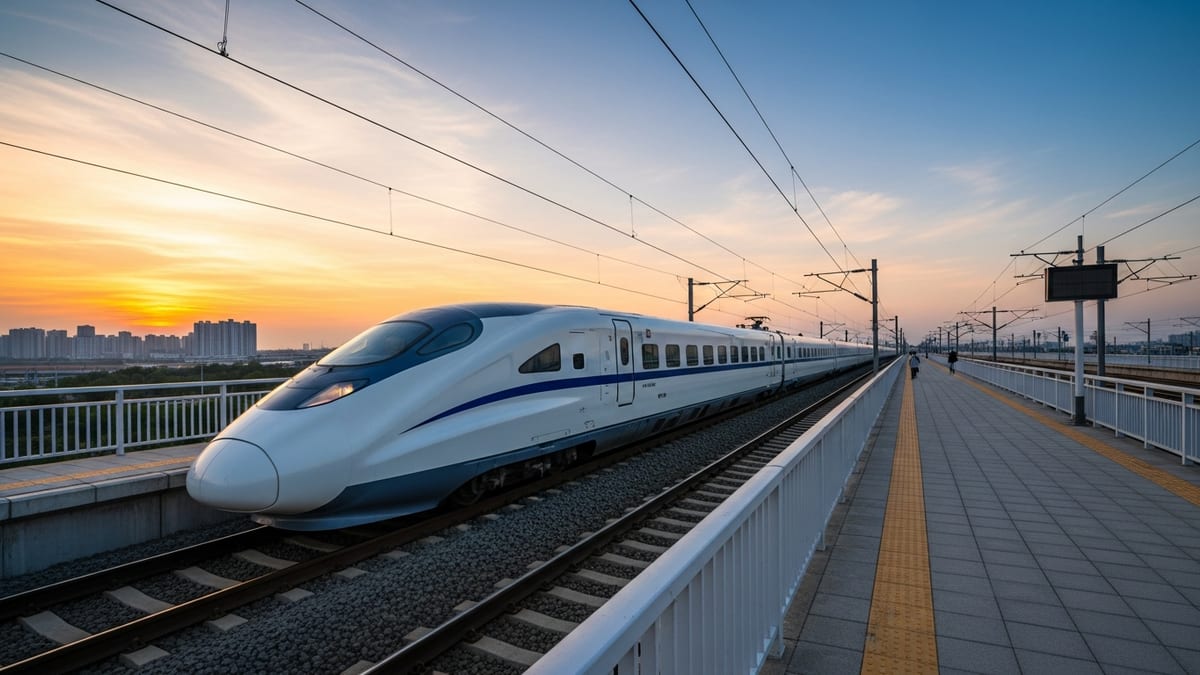
A Young Light Rail Network in a Historic City
Publicly available information describes the Tianshui light rail, often referred to as the Tianshui Tram, as a modern, surface-running system serving Qinzhou and Maiji districts on the banks of the Wei River in Gansu. The network is characterized as a light rail or tramway rather than a fully grade-separated metro, reflecting a focus on street-level accessibility and integration with the existing urban fabric.
The system was developed to connect new residential zones, industrial areas and transport hubs that have expanded around the city in recent years. Reports indicate that the first line has evolved from an initial trunk-and-branch design into a more clearly defined two-line operation, mirroring the shift in Tianshui from a rail junction and regional market town toward a city positioning itself as a tourism and logistics node on the Lanzhou to Xi’an high-speed rail corridor.
For visitors, the most notable feature of the Tianshui light rail is its role in linking the city’s conventional railway station and its high-speed Tianshui South hub with dense commercial streets and newer riverfront districts. This layout offers travelers a straightforward way to transfer from intercity services to local transit without relying exclusively on buses or taxis.
In contrast with the heavy metro systems of coastal megacities, the Tianshui lines operate with lower speeds and shorter consists, but compensate through closer stop spacing and surface alignments that keep stations within walking distance of shops, markets and hotels. This approach closely matches the scale of a city of around three million residents that is seeking to manage rapid visitor growth without overwhelming its historic core.
Line 1 and Line 2: Tying Into High-Speed Rail
Information compiled from open transport references shows that Line 1 of the Tianshui light rail now serves as the main spine of the system, running between Tianshui South high-speed railway station and communities in the southeast of the urban area. Earlier project descriptions referred to a main line between Jiekou and the Economic Development Zone with a branch to the conventional Tianshui Railway Station, but more recent operational summaries suggest that this configuration has been reorganized.
According to these summaries, the section serving Tianshui Railway Station has been redesignated as Line 2, forming a separate route that overlaps part of the original alignment. The rebranding is presented as a way to clarify services for passengers transferring from long-distance trains, while allowing Line 1 to function as a through corridor between the high-speed rail terminal and growing residential districts.
At Tianshui South, passengers can arrive from major cities such as Xi’an and Lanzhou on high-speed services and then board the light rail for a direct ride into the city. Travel guides and tourism operators increasingly highlight this connection, noting that the combination of high-speed rail and tram reduces overall journey times and provides a predictable, signposted route into town for first-time visitors.
Within the city, Line 2 serves dense urban districts in Qinzhou and connects with bus hubs that feed into outlying neighborhoods and industrial parks. Together, the two lines create a basic but functional grid that shortens cross-town trips and simplifies the task of reaching hotels, cultural venues and long-distance bus terminals from either of Tianshui’s railway gateways.
Boosting Access to Maijishan Grottoes and Scenic Areas
While the Tianshui light rail does not yet run directly to the Maiji Mountain Scenic Area, its emergence is reshaping the way travelers approach one of China’s best-known Buddhist grotto complexes. Travel guides indicate that visitors typically reach Maijishan by bus or taxi from central Tianshui, using city routes that link the railway stations and downtown corridors to the mountain area southeast of the city.
Because both Lines 1 and 2 serve the principal rail stations and intersect with multiple bus terminals, the light rail effectively shortens the urban portion of the trip to Maijishan. Tour itineraries increasingly describe a sequence in which travelers arrive by high-speed train, transfer to the light rail to reach the city center, and then continue by dedicated scenic bus or car to the grottoes.
The Maiji Mountain Grottoes, together with nearby temples and forested hiking areas, are widely cited as the main draw for international and domestic visitors to Tianshui. Tourism-focused coverage notes that the scenic area has recorded sharp increases in visitor numbers and revenue, supported in part by improved transport links across Gansu and the broader northwest. In this context, the Tianshui light rail functions as a distribution layer, moving tourists efficiently from intercity nodes to local departure points for excursions.
Urban planners and heritage specialists often highlight that such transit connections can help manage pressure on fragile cultural sites. By concentrating arrivals at specific interchange points in the city and providing clear onward routes to the scenic area, the light rail and bus network can reduce ad hoc traffic near sensitive cliffside grottoes and narrow approach roads, although detailed monitoring data on these effects in Tianshui is still limited.
Urban Revitalization and Visitor Experience
Beyond its purely functional role, the Tianshui light rail is also influencing how visitors experience the city itself. Street-level alignment and frequent stops encourage travelers to explore commercial districts, food streets and riverside promenades that might previously have been bypassed in favor of direct car journeys to Maijishan or onward trains.
Media features on Tianshui’s recent tourism boom describe a city that has become known for both its grotto art and its regional cuisine, particularly spicy malatang dishes that have attracted social media attention. In this narrative, the light rail forms part of a broader package of upgrades, including new pedestrian zones and cultural streets, that aim to keep visitors in the city longer before or after excursions to the mountains.
Residents benefit from the same improvements, with daily commutes between new residential clusters, older inner-city neighborhoods and industrial parks increasingly routed through light rail stations. Observers note that this dual focus on local mobility and visitor convenience is a common feature of recent light rail projects in smaller Chinese cities that sit along high-speed rail corridors.
As the system becomes more familiar to travelers, guidebooks and online forums are beginning to mention specific stations as landmarks in their own right, directing visitors to nearby markets, specialty shops and historic alleys. This trend suggests that, over time, the Tianshui light rail may serve not only as a connector to the region’s marquee attraction but also as a framework for discovering the city’s everyday life.
Future Prospects for Expansion and Integration
Planning documents and public statements about Tianshui’s development generally point to continued investment in transport infrastructure, from road improvements to intercity links. Within that context, analysts expect that the light rail network is likely to see further extensions and infill stations designed to keep pace with new housing and industrial projects on the metropolitan fringe.
Potential future priorities include stronger integration between light rail, bus services and regional rail lines, particularly along corridors that feed into Maiji District and other scenic areas. Transport observers suggest that clear wayfinding, multilingual signage and coordinated ticketing could make the system more intuitive for international visitors, complementing existing hardware investments in tracks and rolling stock.
For now, the Tianshui light rail remains a relatively compact network compared with coastal metro systems, but its role in knitting together high-speed rail, urban neighborhoods and the gateway to Maijishan is already evident in travel itineraries and tourism statistics. As Gansu continues to promote cultural and nature-based tourism, the performance of this young light rail system will offer insight into how mid-sized inland cities can leverage modern transit to share their heritage with a growing flow of travelers.