


More news on this day
The United States has tightened its travel advisory for Saudi Arabia following a series of deadly missile and drone attacks on Riyadh’s King Khalid International Airport, prompting fresh warnings over the risks of civilian air travel and transit through the kingdom’s capital.
Get the latest news straight to your inbox!
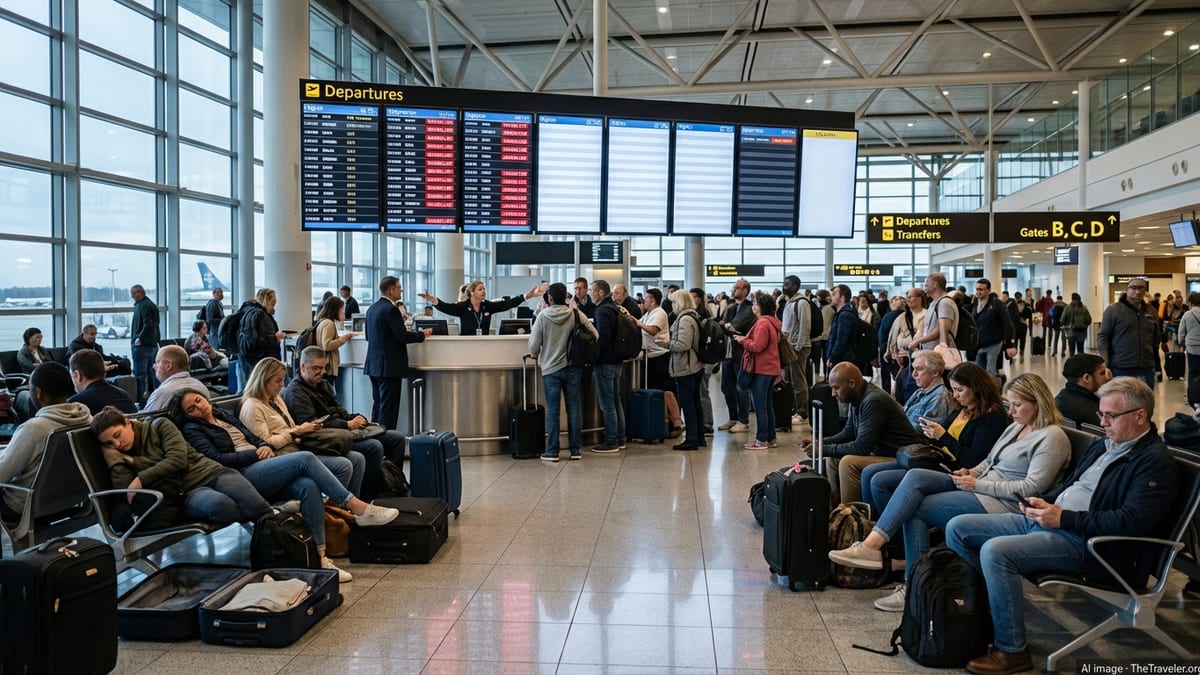
Deadly Strikes on Riyadh’s Main International Gateway
Riyadh’s King Khalid International Airport has been hit by multiple missile and drone attacks in recent days, part of a broader escalation by Yemen’s Houthi movement amid the wider regional conflict. Published coverage indicates that a strike on October 10 killed at least 12 people and injured more than 300, making it one of the deadliest attacks on civilian infrastructure in Saudi Arabia in years.
Reports from international outlets describe a projectile hitting a passenger terminal used for commercial flights, triggering fires, mass evacuations and the diversion of traffic away from the capital. Subsequent coverage indicates that a further strike on October 11 caused additional casualties, including at least one foreign national, and damaged parts of the domestic terminal complex. Airport operations were repeatedly suspended as emergency services responded and authorities carried out security sweeps.
Regional media and aviation-focused publications have documented a pattern of attacks on Saudi airports over the past week, including incidents at facilities in Abha, Jazan, Najran and Dammam. The Riyadh strikes, however, stand out because King Khalid International Airport is the country’s primary international hub and a key transfer point for long-haul passengers crossing the Gulf region.
According to publicly available information, Yemen’s Houthi group has claimed responsibility for the latest round of attacks, describing them as retaliation connected to the broader Iran war. Independent verification of specific claims about military targets has been limited, but images and video shared by global news organizations show smoke rising from terminal areas, damaged structures and emergency responses on the airfield.
What Has Changed in the U.S. Travel Advisory
The updated Saudi Arabia advisory on the U.S. State Department’s travel website now highlights the heightened risk to civil aviation in and around Riyadh. The notice continues to warn about the threat of missile and drone attacks across the kingdom, but recent revisions emphasize that airports, including King Khalid International Airport, have been directly targeted and struck in October 2026.
Publicly available information on the advisory page indicates that U.S. citizens are urged to reconsider or avoid nonessential travel to areas under frequent attack and to exercise increased caution throughout the country. The advisory references ongoing threats tied to the conflict with Iran-aligned groups and notes that projectiles have reached major population centers that were previously considered less exposed.
The guidance for U.S. government employees working in Saudi Arabia has also been adjusted. According to the text of the advisory, official travelers require special authorization to use any airport in the country, reflecting the elevated risk profile for civil aviation. The notice further points to an existing Federal Aviation Administration advisory that warns U.S. civil aviation operators about operating in the Persian Gulf, Arabian Sea and Gulf of Oman region because of the potential for miscalculation or misidentification of aircraft during periods of military activity.
While the advisory level for Saudi Arabia as a whole may not have shifted to the highest category in every section, the updated language makes clear that airfields, fuel facilities and associated infrastructure are among the locations considered vulnerable. Travelers are directed to monitor the State Department’s online resources frequently, since the situation can change with little warning.
Impact on Airlines, Routes and Passenger Travel
The strikes on Riyadh’s main airport have triggered a rapid response from international airlines and regional carriers. According to recent reporting, several foreign airlines, including at least one major European and one Indian carrier, have temporarily suspended flights to and from Riyadh after explosions and visible damage were recorded near passenger terminals. Other operators have opted to reroute aircraft, extend overflight distances or consolidate services into Jeddah or other Saudi cities perceived as less exposed.
Industry-focused coverage indicates that on the day of the deadliest attack, all flights were diverted away from Riyadh for extended periods, leaving transiting passengers stranded or facing lengthy delays. Some Gulf and Middle Eastern carriers have adjusted their schedules to reduce ground time in Riyadh, seeking to minimize the duration aircraft and crews spend at a facility that has been repeatedly targeted.
For travelers who have already purchased tickets involving Riyadh, airline policies vary. Public statements from carriers referenced in news reports suggest that many are offering free date or route changes for itineraries touching Saudi Arabia during the current period of heightened risk. Refunds may be available in cases where flights are canceled outright or where a significant schedule change occurs, but travelers are encouraged to check directly with their airline, as conditions differ by company and fare type.
Aviation analysts quoted in open sources note that the attacks could have broader implications for Gulf transit hubs if the threat expands beyond Saudi Arabia or if regional tensions continue to escalate. Insurers and corporate travel managers are reassessing exposure, with some companies temporarily restricting staff travel that would involve transiting Riyadh until the security picture becomes clearer.
Guidance for Tourists and Transit Passengers
The tightened advisory does not impose a blanket prohibition on all private travel to Saudi Arabia, but it significantly raises the bar for risk awareness and trip planning. Travelers considering tourism or religious visits that would route through Riyadh are now encouraged, in public guidance, to evaluate whether their journey can be postponed or restructured to avoid the capital’s main airport.
Transit passengers who cannot easily change routes are advised to limit layover times where possible, monitor airline and airport announcements closely, and maintain flexible contingency plans in case of sudden closures. Publicly available travel guidance stresses the importance of registering with the appropriate consular services before departure, ensuring that emergency contact details are current and keeping copies of key documents in digital form in case luggage is lost or left behind during an evacuation.
Open-source safety recommendations also emphasize situational awareness on arrival. Passengers are encouraged to follow posted security instructions, identify emergency exits in terminals and avoid congregating near large glass frontages or outdoor forecourts if tensions spike. Travelers driving to or from the airport are urged to allow extra time for checkpoints and potential diversions onto alternative routes.
For those traveling on to other parts of Saudi Arabia, publicly accessible advisories continue to distinguish between regions closer to the Yemeni border, which face long-standing security concerns, and areas in the central and western parts of the country that traditionally attract business and religious visitors. However, the recent attacks on Riyadh underscore that distance from the front line does not eliminate risk when long-range weapons are in use.
Monitoring a Fluid Security Situation
Security analysts and regional observers note that the pattern and frequency of attacks can shift quickly in response to developments on the battlefield or diplomatic moves related to the Iran war. The missile and drone strikes on Riyadh’s airport over the past week represent a marked escalation compared with earlier periods when most projectiles were intercepted before reaching heavily populated urban centers.
Publicly available coverage from international media documents that Saudi air defenses have successfully intercepted many incoming projectiles in recent years, but that the latest barrages have sometimes overwhelmed or evaded these systems. Investigations are underway, according to multiple reports, into how a mix of drones, cruise missiles and ballistic missiles were able to penetrate layered defenses and strike critical infrastructure.
Travel advisories from a range of governments, not only the United States, are being updated in response to these developments. Some European and Asian countries have revised their guidance to warn citizens specifically about the risk of transiting Saudi airports during periods of active missile fire, and have urged close monitoring of official updates before commencing travel.
Given the evolving nature of the threat, international travelers are being encouraged in publicly available guidance to treat advisories as dynamic documents rather than one-time checks. Frequent review of government travel pages, airline notices and credible news outlets is recommended for anyone planning to travel to, from or through Saudi Arabia in the coming weeks.