


More news on this day
Bangladesh’s Civil Aviation Authority has issued a seven-point directive to airlines operating routes to Saudi Arabia, seeking to ease the difficulties of thousands of passengers caught up in widespread flight disruptions following recent attacks on airports across the kingdom.
Get the latest news straight to your inbox!
Security crisis in Saudi Arabia ripples through Dhaka
Recent security incidents at Saudi airports, particularly at Riyadh’s King Khalid International Airport, have triggered days of cancellations and suspensions on routes linking Bangladesh and the kingdom. Publicly available data from the Civil Aviation Authority of Bangladesh (CAAB) and local media reports indicate that at least 51 flights, including both direct and transit services, have been disrupted since October 10, affecting more than 5,400 passengers travelling to and from Dhaka.
Earlier tallies showed at least eight Dhaka–Riyadh flights cancelled by October 11, impacting nearly 3,000 travellers, before the number climbed as restrictions extended and additional services were pulled from schedules.
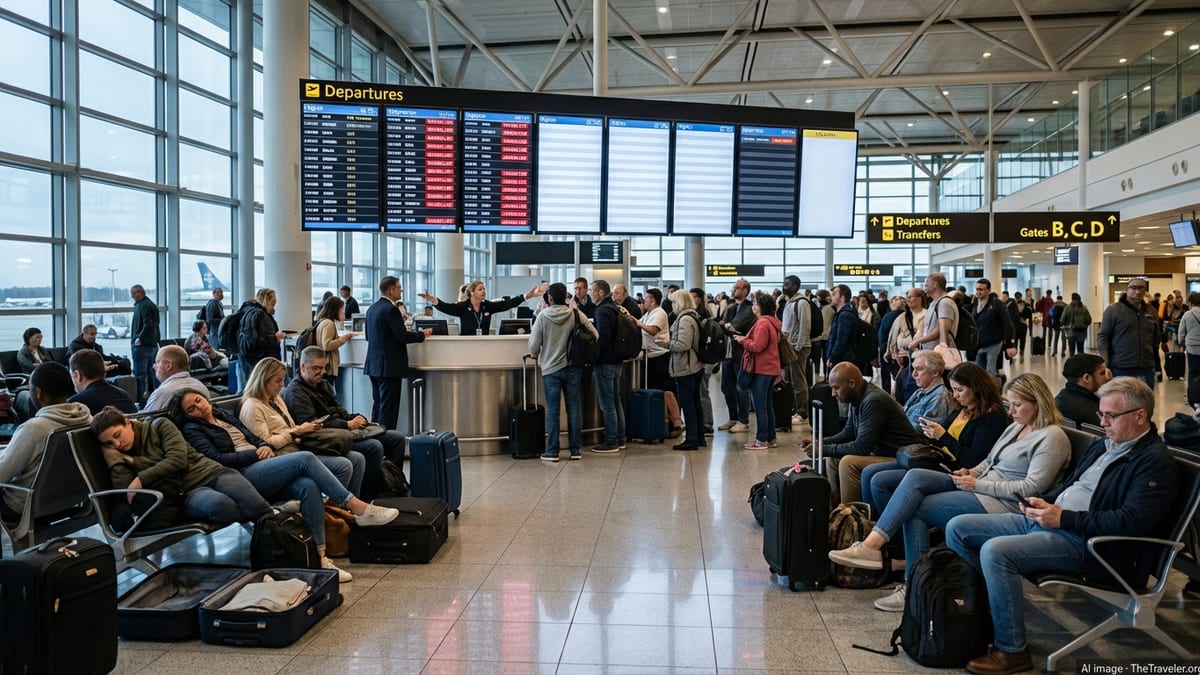
The disruptions have mainly affected flights using Riyadh, but knock-on effects have been reported across Saudi routes as airlines reassess operations and reroute traffic. Crowding at Dhaka’s Hazrat Shahjalal International Airport (HSIA) has increased as would-be migrants, workers and pilgrims arrive to find their flights delayed or cancelled at short notice.
Carriers serving the Dhaka–Saudi market, including Biman Bangladesh Airlines, Saudia, Riyadh Air and US-Bangla Airlines, have each cancelled or suspended services on Riyadh-bound routes since the attacks, according to recent airline statements and CAAB figures.
Seven directives aimed at better information and basic care
In response to the mounting disruption, CAAB issued a written order dated October 12 setting out seven directives for airlines operating direct and transit flights between Bangladesh and Saudi Arabia. According to publicly available summaries of the instruction, the regulator’s primary focus is to ensure that passengers receive timely information and basic care when travel plans are disrupted.
Airlines have been told to promptly inform affected passengers of airport closures, delays, cancellations and schedule changes using all available communication channels, including phone calls, SMS, email, websites and social media. The directive also calls for clear notification of revised departure times and routing, along with explicit guidance on rebooking and refund options so that travellers can make informed decisions before heading to the airport.
Another key element of the seven-point order is a requirement for airlines to discourage passengers from travelling to HSIA without first confirming that flights are operating. Publicly available coverage of the directive describes this as an attempt to reduce overcrowding and confusion in terminal areas, where large numbers of passengers from outside Dhaka often arrive many hours in advance.
CAAB has further instructed airlines to ensure care and assistance for stranded passengers waiting at HSIA, including the provision of food, drinking water, refreshments and medical help where necessary. The order specifically highlights the need to prioritise elderly travellers, children, people with disabilities and other vulnerable passengers during prolonged delays.
Visa support, focal points and coordination at HSIA
Beyond immediate airport services, the CAAB directive addresses the longer-term complications that disrupted Saudi travel can create, particularly for workers and pilgrims who may face expiring visas or overstays. Airlines have been asked to advise passengers who require visa extensions or other immigration support to coordinate with the Saudi Embassy in Dhaka, relevant Saudi authorities and appropriate government agencies in Bangladesh.
While the order does not impose new visa rules, it signals an expectation that airlines will actively guide passengers toward the correct channels rather than leaving them to navigate changing immigration timelines on their own. For many affected travellers, especially outbound workers, delays of several days can have significant consequences if entry permits or job start dates are tied to specific flights.
To improve coordination on the ground, each airline has been told to appoint a designated focal point, supported by adequate staff, to manage passenger assistance and operational communication at HSIA. According to descriptions of the directive, these focal points are expected to liaise with airport management on flight updates, terminal space needs and the handling of stranded passengers, creating a single contact window instead of fragmented ad hoc responses.
The focus on structured coordination reflects concerns raised in local coverage that earlier in the disruption, passengers struggled to obtain consistent information about revised schedules, alternative routes or entitlement to basic services while waiting overnight in the terminal.
Airlines suspend Saudi routes as passenger numbers mount
As the crisis has unfolded, individual airlines have announced temporary suspensions and schedule changes on Saudi routes, adding to the uncertainty for travellers. Biman Bangladesh Airlines confirmed the suspension of its Dhaka–Riyadh and Dhaka–Dammam services until October 17, citing the security situation at Saudi airports and the need to safeguard passengers.
US-Bangla Airlines has separately suspended its Dhaka–Riyadh–Dhaka flights until October 21 following the closure of King Khalid International Airport, with the carrier advising passengers to contact sales counters or travel agents for rebooking and alternative arrangements. Saudia and Riyadh Air have also seen multiple Dhaka–Riyadh flights cancelled in recent days, according to CAAB statistics summarised in Bangladeshi media.
Figures shared publicly by the aviation regulator indicate that at one point at least 10 Riyadh-linked flights from Dhaka had been cancelled over a three-day period, affecting more than 3,400 passengers, before the wider count of disrupted services rose past 50 as additional cancellations and suspensions were recorded.
For many travellers, particularly migrant workers headed to long-arranged employment in Saudi Arabia, the financial and personal impact of last-minute disruptions can be severe. The CAAB directives stop short of mandating compensation, which typically depends on ticket conditions and applicable regulations, but place clear responsibility on airlines to explain rights and options and to provide essential care while passengers wait for alternative travel.
What affected passengers should do now
Publicly available guidance from airlines and aviation authorities suggests that passengers booked on flights between Bangladesh and Saudi Arabia should avoid travelling to the airport unless flight status has been confirmed on the day of departure. Carriers have asked customers to rely on official contact centres, sales offices and verified online channels rather than informal messaging or social media rumours.
Travellers with urgent departure needs are being encouraged, where possible, to explore alternative Saudi gateways such as Jeddah or Madinah if airlines can provide seats on those routes. Biman, for example, has indicated that some passengers may be able to reroute via other Saudi cities while Riyadh and Dammam operations remain suspended, subject to available capacity.
Passengers whose visas or work permits are at risk of expiring are being advised, through airline notices and CAAB’s directive, to seek clarification from the Saudi Embassy and relevant authorities regarding extensions, reissuance or revised reporting dates. Such steps may be particularly important for workers who were scheduled to join employers on specific days, or for Umrah travellers whose package dates are tightly defined.
As the situation at Saudi airports continues to evolve, further schedule changes remain possible. The new seven-point framework issued by CAAB is intended to ensure that, even amid an unpredictable security environment, airlines serving the Bangladesh–Saudi corridor provide clearer information, more systematic assistance and basic support on the ground to the thousands of passengers whose journeys have been thrown into uncertainty.