


More news on this day
Saudi aviation authorities have extended the shutdown of Riyadh’s King Khalid International Airport until October 17, following a series of deadly missile and drone attacks attributed to Yemen’s Houthi movement that have triggered mass flight cancellations and diverted traffic across the region.
Get the latest news straight to your inbox!
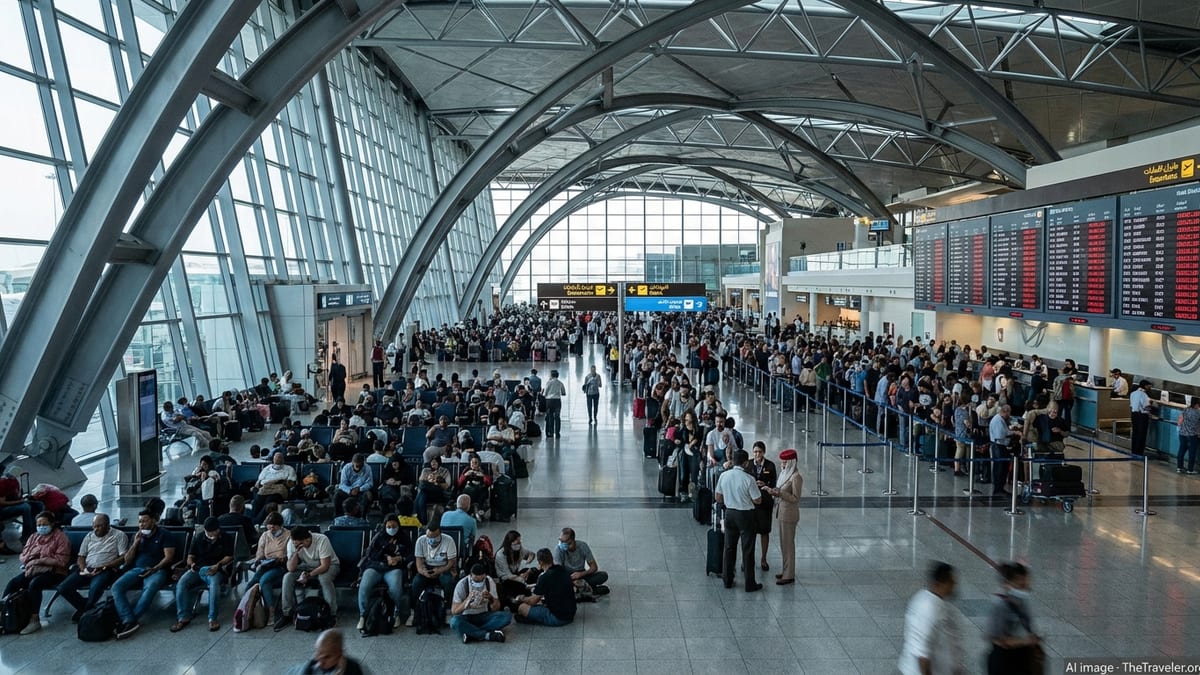
Closure Extended Through October 17
Publicly available aviation notices show that King Khalid International Airport, Riyadh’s main gateway, will remain closed to regular traffic until at least 2100 GMT on Saturday, October 17. The extension follows multiple strikes on the airport over the weekend, including an attack on October 10 that killed at least 13 people and injured more than 300, and a further hit on a passenger terminal the following day.
Reports indicate that Saudi Arabia’s General Authority of Civil Aviation issued updated notices to airmen formalizing the prolonged suspension of operations. Coverage from regional and international outlets notes that the airport has effectively been shut since the initial weekend attack, with flights either cancelled outright or rerouted to other Saudi gateways.
Travel industry reporting describes the closure as one of the most significant disruptions to civil aviation in the Gulf in years, affecting not only point to point travel to Riyadh but also connections that use the Saudi capital as a transfer hub.
Wave of Flight Cancellations and Airline Responses
Flight data cited in recent coverage shows that hundreds of departures and arrivals at King Khalid International Airport have been cancelled since the first explosions were reported on October 8, with some days seeing close to half of scheduled flights scrubbed. Services that did initially attempt to operate were quickly halted as the security situation deteriorated.
Airlines serving Riyadh have responded with a mix of suspensions, diversions and reduced frequencies. Reports from regional media and industry trackers indicate that carriers such as Lufthansa and Air India moved early to suspend services to the Saudi capital after explosions and missile alerts, while Gulf and South Asian airlines subsequently joined in cancelling or rerouting flights.
Travel advisories reproduced in public reporting urge passengers with bookings to or through Riyadh to verify their flight status directly with their airline before heading to any airport. Some carriers are offering free rebooking onto alternative Saudi gateways such as Jeddah or Dammam, while others are allowing passengers to postpone travel until after the current closure period.
Impact on Global and Regional Air Corridors
Riyadh’s King Khalid International is one of the Middle East’s key transit nodes, handling millions of passengers annually on routes linking Europe, Asia and Africa. Analysts quoted in open sources describe the sustained shutdown as unprecedented in scale for the Gulf region’s modern aviation era, given the airport’s central role in long haul connectivity.
Flight tracking snapshots published in recent days show most international carriers avoiding Riyadh’s immediate airspace while continuing to use other Saudi corridors, particularly along the Red Sea via Jeddah. Some long haul flights that would normally route near the capital are operating with detours, adding time and fuel costs to journeys between Europe and destinations in the Indian subcontinent and Southeast Asia.
Industry commentary gathered by travel and business outlets suggests that, if the closure were to extend beyond October 17, airlines might need to revise winter schedules, with knock on effects for seat availability and pricing on key routes through the Gulf.
Security Concerns at the Forefront
The attacks on Riyadh’s airport are part of a broader escalation of missile and drone strikes linked to Yemen’s Houthi movement, which has previously targeted airports and energy infrastructure inside Saudi Arabia. Recent coverage notes that King Khalid International has been struck several times in less than a week, with projectiles hitting or near passenger terminals and at least one aircraft reportedly damaged on the ground.
Regional and international reports state that Saudi authorities are examining how the country’s air defense systems failed to prevent the most recent barrage, despite significant investments in advanced missile interception technology. Analysts cited in global news coverage point out that the use of mixed salvos of drones and ballistic missiles can complicate interception and place additional strain on defense networks.
Travel and risk assessment firms referenced in publicly available analysis emphasize that the current measures, including the full shutdown of commercial operations at Riyadh’s main airport, are aimed at reducing the risk to civilian passengers and airline crews while the threat picture is reassessed.
What Travelers Need to Know Right Now
For travelers, the extended closure through October 17 means that itineraries involving Riyadh as either an origin, destination or connecting point remain highly uncertain. Travel industry reports advise passengers to monitor airline notifications closely and to expect last minute changes, even if flights are currently listed as operating after the planned reopening time.
Embassy and government travel advisories highlighted in recent coverage recommend avoiding non essential travel that requires transit through Riyadh for the duration of the closure and, where possible, rerouting via other regional hubs such as Dubai, Doha, Abu Dhabi or Jeddah. Some advisories also note broader security concerns in southern Saudi provinces near the Yemen border, which remain subject to separate movement restrictions.
Consumer advocates quoted in open reporting encourage affected passengers to make use of rebooking and refund options being offered during this extraordinary disruption. With aviation authorities and airlines focused on safety and airspace management, those planning upcoming trips through the Gulf are advised to remain flexible and to build in additional time and contingency plans if their journeys depend on Saudi Arabian air corridors.