


More news on this day
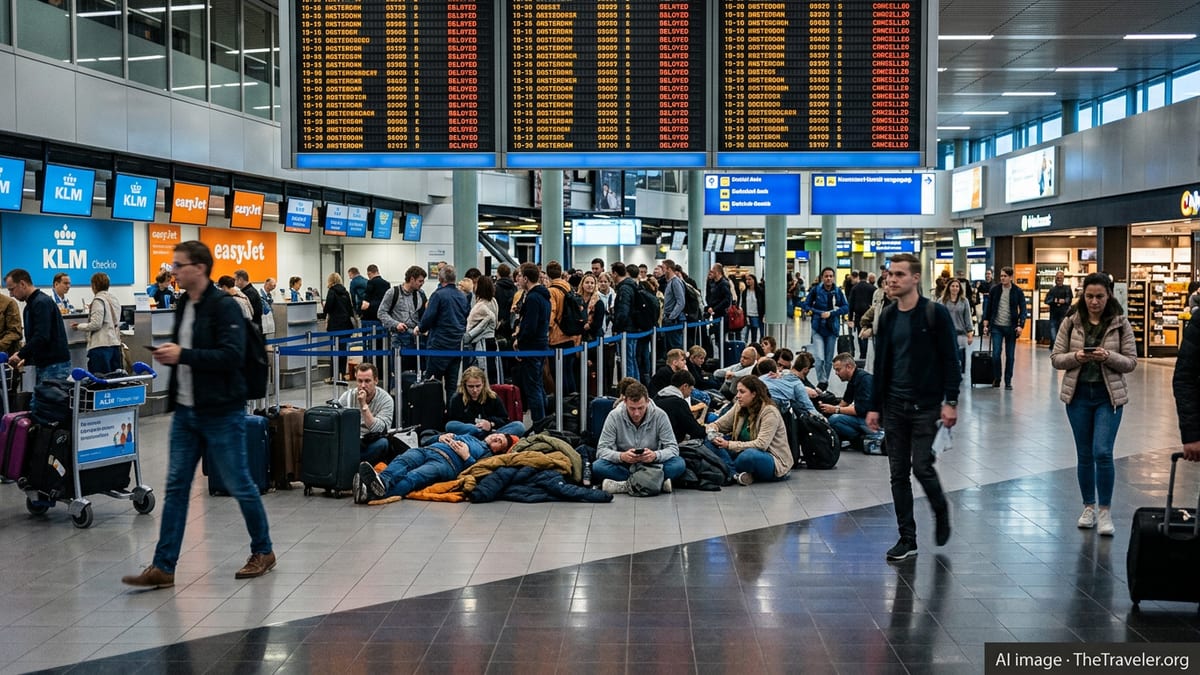
Hundreds of travelers were left stranded at Amsterdam Schiphol Airport as roughly 280 flights were delayed and 15 canceled in a fresh wave of disruption affecting KLM, Delta Air Lines, British Airways, Lufthansa, easyJet and other carriers on busy routes to London, New York, Paris and beyond.
Get the latest news straight to your inbox!
Operational Bottlenecks Ripple Through a Major European Hub
Publicly available flight tracking data and operational statistics indicate that Schiphol experienced a sharp spike in irregular operations, with around 280 departures and arrivals running behind schedule and about 15 services canceled in a single day. The disruption concentrated at peak morning and late afternoon periods, when the airport typically handles dense banks of European and long haul connections.
The pattern of delays shows both departing and arriving flights affected, suggesting knock on impacts across the airport’s tightly timed schedule. Even relatively short delays at a hub of Schiphol’s size can quickly translate into missed slots, aircraft out of position and extended turnaround times, compounding problems for airlines that rely on quick connections.
Schiphol serves as the primary hub for KLM and a key European gateway for partners such as Delta Air Lines, as well as an important station for British Airways, Lufthansa, easyJet and other low cost and network carriers. When operations slow at Amsterdam, the effect is felt on a wide network of routes across Europe and on transatlantic links.
The latest disruption follows a series of challenging months for Schiphol, where a combination of high summer demand, evolving security and border processes, and periodic weather or technical constraints have made the operation more vulnerable to cascading delays.
Key Routes to London, New York and Paris Affected
The disruption has been particularly visible on heavily traveled corridors linking Amsterdam with London, New York and Paris. Flights on these routes are often scheduled in tight waves to feed connecting traffic, so any delay at the hub can create a domino effect for passengers continuing to other destinations.
On services to London area airports, delays stretched from modest schedule slippages to multi hour hold ups, with some frequencies withdrawn altogether as airlines sought to stabilize rotation plans. This affected both full service and low cost operators, including British Airways and easyJet, whose Amsterdam London flights are popular with business travelers and weekend visitors.
North Atlantic routes also experienced disruption. Services between Schiphol and New York, shared across carriers such as KLM and Delta Air Lines in codeshare arrangements, saw altered departure times and rebooked passengers as aircraft and crews became misaligned with the planned timetable. Such changes can be especially problematic for travelers relying on same day onward connections within North America.
Links to Paris, an important short haul market and another major European hub, were also disrupted. Delays on the Amsterdam Paris corridor can cause further knock on issues as passengers miss connections onto long haul flights operated from Charles de Gaulle, adding another layer of complexity to recovery efforts.
Long Queues, Missed Connections and Stranded Passengers
Reports from travel platforms and passenger forums describe crowded scenes across Schiphol’s terminals during the latest wave of disruption. Travelers recounted long lines forming at airline service desks and transfer counters as they sought rebooking options, hotel vouchers or confirmation of revised itineraries.
Many passengers with onward connections through Amsterdam faced particular difficulty. Missed connections are a common consequence of rolling delays at hub airports, and a number of travelers reported being stranded for extended periods while waiting for available seats on later flights. For some, especially those traveling on the final legs of multi sector journeys, same day alternatives were limited or unavailable.
Families and leisure travelers departing at the start of the summer holiday period were among those caught up in the disruption, with some reports indicating overnight stays at or near the airport when cancellations left no same day options. Others described uncertainty over baggage handling when original flights were canceled and itineraries reissued at short notice.
The operational strain also placed pressure on airport services, from security and border queues to food and seating availability in departure halls. At times of large scale delay, passengers typically spend far longer in the terminal than planned, amplifying congestion in already busy areas.
Airlines Adjust Schedules and Offer Flexible Options
Airlines operating at Schiphol responded by adjusting schedules, consolidating lightly booked services and reassigning aircraft where possible in an effort to rebalance the day’s operation. Publicly available information from carrier advisories indicates that customers affected by cancellations or significant delays were offered rebooking on the next available flights, subject to seat availability.
KLM and its partners, including Delta Air Lines, have in recent months maintained dedicated travel alert pages outlining options for passengers whose flights have been disrupted. These options can include free changes to alternative dates or routes, as well as refunds in cases of long delays or cancellations, depending on the specific circumstances and ticket conditions.
Other major carriers at Schiphol, such as British Airways, Lufthansa and easyJet, typically follow similar protocols, providing online tools and app based notifications that allow travelers to self manage rebookings when airport service desks are busy. However, reports from recent disruption days suggest that not all travelers are able to secure suitable alternatives quickly, particularly during peak holiday periods when many flights are already heavily booked.
Travel industry observers note that airlines are also balancing their response against operational constraints. With aircraft and crew already programmed for dense summer schedules, there are practical limits to how many extra sections can be added on short notice to clear backlogs created by a single day of widespread delay.
What Passengers Should Know About Rights and Next Steps
The latest problems at Schiphol have once again drawn attention to passenger rights and the steps travelers can take when flights are significantly delayed or canceled. Consumer advice platforms emphasize that those departing from or arriving in the European Union are covered by a well established regulatory framework that sets out criteria for care, assistance and, in some cases, financial compensation.
Travel experts recommend that passengers start by keeping all boarding passes, booking confirmations and receipts for reasonable expenses such as meals or accommodation incurred while waiting for a replacement flight. These documents can be important when submitting claims directly to airlines or through third party claim services.
Passengers are also urged to monitor airline apps and official communication channels closely, as rebooking options sometimes appear digitally before they are visible at airport counters. For travelers with time sensitive plans or important onward connections, proactively searching for alternative routings from nearby airports can occasionally yield faster solutions, though these may involve additional ground transport.
For now, the latest round of delays and cancellations at Amsterdam Schiphol underscores the fragility of busy hub operations during the high season. As airlines and the airport work to stabilize schedules, travelers passing through the Dutch gateway in the coming days are being advised to allow extra time, remain flexible and prepare for the possibility of last minute changes.