


More news on this day
A light rail passenger was hospitalized and service on Houston’s METRORail Red Line was disrupted after a Houston Fire Department engine responding to a call collided with a train near downtown, derailing at least part of the consist and scattering debris across an intersection north of the central business district.
Get the latest news straight to your inbox!
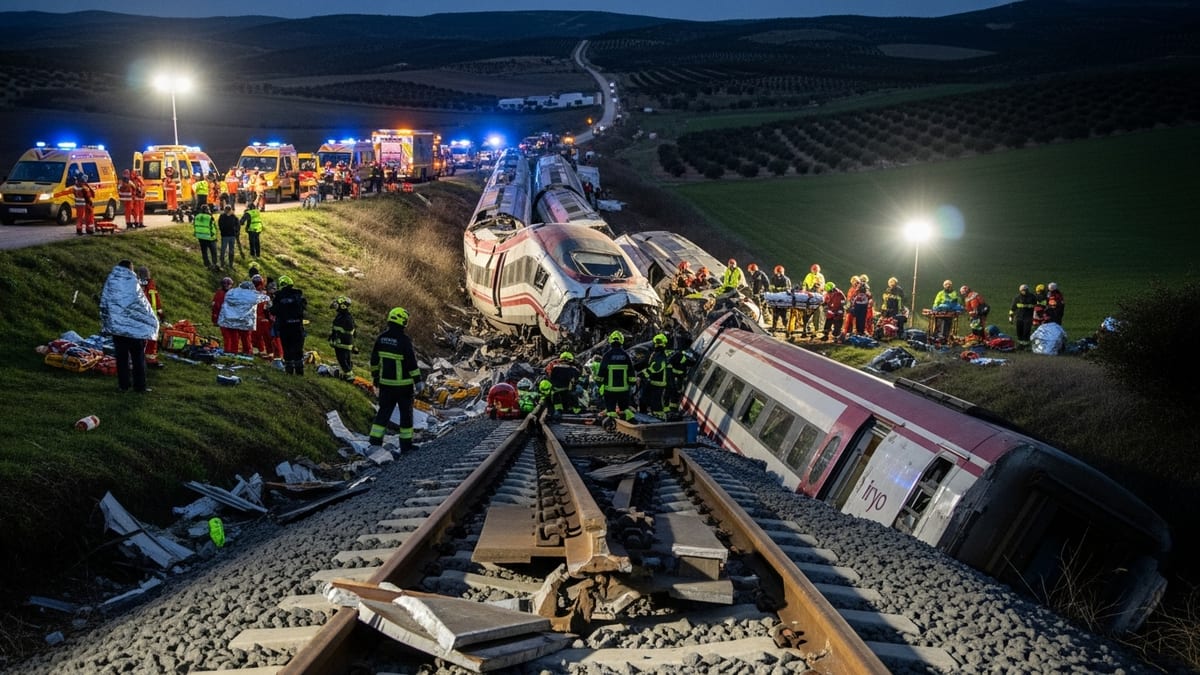
Collision near North Main and Hogan streets
Publicly available information indicates the crash happened Friday evening, July 3, at the intersection of North Main Street and Hogan Street, on the edge of Houston’s Near Northside neighborhood. The location sits along the busy Red Line corridor where trains operate at street level through a series of closely spaced signalized intersections.
Reports describe a Houston Fire Department unit traveling with lights and siren activated when it entered the intersection and struck the METRORail train. Coverage from local outlets indicates the impact was strong enough to push the light rail vehicles off the tracks and damage the front of the fire engine, but no fire personnel were reported injured.
According to information released by METRO and summarized in local news reports, one passenger aboard the train was transported to a hospital for evaluation with injuries described as non-life-threatening. Other riders and the train operator were assessed at the scene and did not require emergency transport.
Witness images shared through local media show the train sitting at an angle relative to the tracks, with emergency crews surrounding both vehicles and rail workers beginning preparations to re-rail the light rail car.
Service disruptions on METRORail Red Line
The crash prompted an immediate shutdown of train movements through the North Main and Hogan intersection while emergency crews secured the scene and evaluated the integrity of overhead power lines and track equipment. Riders heading between downtown and the Near Northside faced delays as METRO temporarily halted service in the area.
Published coverage indicates that rail passengers were escorted from the affected train and directed to alternate transportation, including bus shuttles staged to bridge the gap in Red Line service. The interruption affected evening commuters and visitors heading into downtown ahead of the holiday weekend.
Once emergency personnel cleared the scene, METRO maintenance teams began the slow process of re-railing the light rail vehicle, inspecting track components, and checking signaling equipment at the intersection. Restoration of through-service typically requires verification that both the rail infrastructure and the overhead catenary system are undamaged and safe for regular operations.
While official timelines for full service restoration had not been detailed in early reports, past incidents on the Red Line suggest that limited disruptions can often be resolved within several hours, depending on the extent of equipment and track damage.
Investigation into cause of the crash
Publicly available information shows that the Houston Police Department is leading the initial investigation into how the collision occurred, with METRO and the Houston Fire Department expected to conduct their own internal reviews of vehicle operations and emergency response protocols.
Early descriptions from transportation officials in news reports suggest that the METRORail train was traveling along its regular northbound alignment when it was struck at the intersection. Investigators are expected to examine signal timing, the status of crossing protections, dash or cab camera recordings, and the sequence of events as the fire engine approached while responding to a call.
Because the fire truck was reportedly operating with lights and siren activated, part of the review will likely focus on how emergency vehicles and trains coordinate at shared crossings, and whether existing procedures for entering intersections with rail lines provided sufficient safeguards.
Analysts often note that urban light rail systems rely on a combination of traffic signals, signage, and operator training to manage mixed-traffic environments. Incidents at at-grade crossings can involve complex questions around right-of-way, visibility, and driver expectations when emergency vehicles are present.
Safety record and at-grade rail challenges in Houston
Houston’s METRORail network operates largely at street level through dense urban corridors, a design that offers convenient access for riders but also requires trains to share space with cars, trucks, buses, cyclists, and pedestrians. Historical collision data for the system, highlighted in prior safety discussions, has often underscored the risks associated with at-grade operations in busy traffic conditions.
Transportation specialists point out that light rail vehicles cannot stop as quickly as road traffic, even at moderate speeds. When conflicts occur at intersections, the size and momentum of a train can produce significant damage, particularly when larger road vehicles such as trucks or emergency apparatus are involved.
Local media coverage has previously documented a series of crashes involving METRORail and motor vehicles at intersections along the Red Line, prompting periodic calls for improved signage, better driver education, and refinements to signal timing. The latest collision is expected to renew scrutiny of how Houston balances rail reliability, emergency response needs, and intersection safety.
Some safety advocates argue that additional physical separation, such as more robust barriers or dedicated rail medians, could reduce the likelihood of vehicles entering the right-of-way. Others emphasize technology-based solutions, including enhanced signal preemption systems that give emergency vehicles and trains clearer, non-conflicting movement phases.
Broader implications for riders and emergency response
For daily riders, the crash is a reminder that even relatively low-speed, urban rail systems can experience disruptive incidents capable of injuring passengers and halting service. While the reported injuries in this collision were not life-threatening, the derailment illustrates how quickly routine trips can be affected when heavy vehicles interact at complex intersections.
From an emergency response perspective, incidents like the Houston crash highlight the delicate balance between rapid deployment to urgent calls and the need to navigate infrastructure constraints such as rail crossings. Industry guidance generally emphasizes that emergency drivers must account for the limited maneuverability and braking distance of trains when deciding how to proceed through red lights and rail intersections.
Publicly available information suggests that investigators and agency leaders will review whether existing training and route-planning tools for fire crews adequately reflect the presence of light rail lines, particularly in corridors where multiple intersections and tracks lie between fire stations and frequent call locations.
As Houston heads into a busy summer travel period and holiday weekend, the collision has drawn attention from both commuters and transportation observers who view it as a test of the region’s ability to safely integrate expanding transit service with essential emergency operations on crowded city streets.