


More news on this day
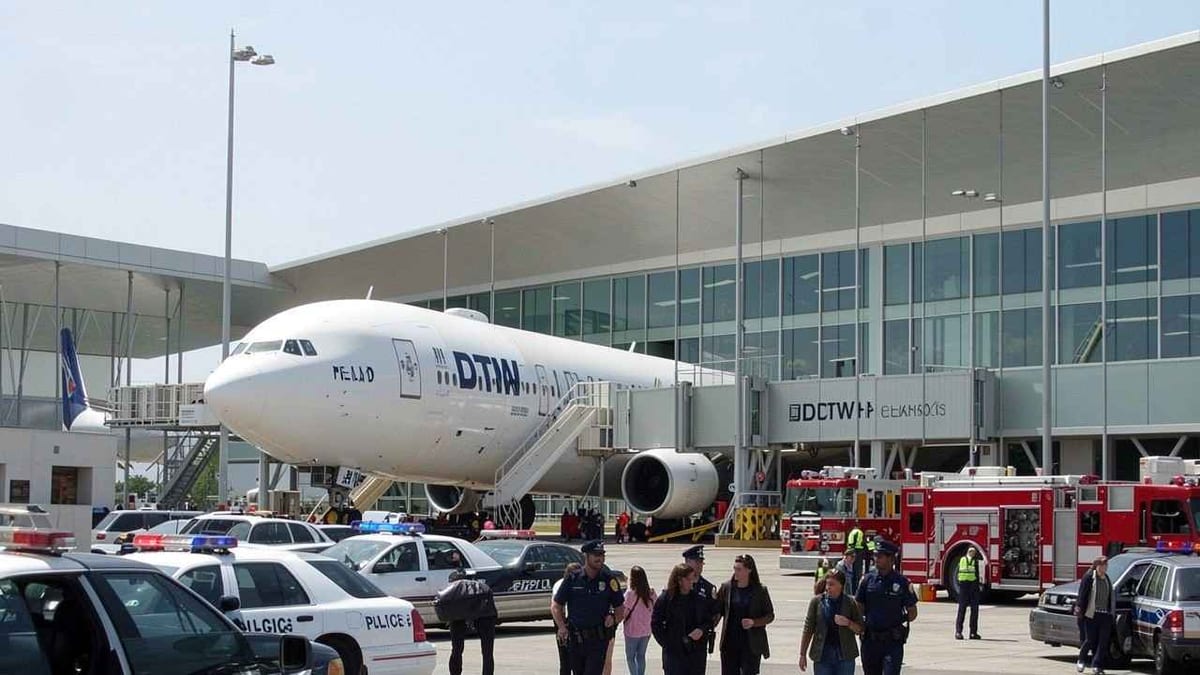
A SkyWest Airlines flight operating as SKW5606 between Charlottesville and Chicago O’Hare diverted to Detroit Metropolitan Wayne County Airport during its arrival phase, drawing attention to how saturated Midwest hub airspace and traffic management constraints can quickly alter regional flight plans.
Get the latest news straight to your inbox!
What Is Known About Flight SKW5606 and Its Route
Publicly available flight tracking data indicates that SkyWest Airlines Flight SKW5606 was scheduled to operate a regional service on the Charlottesville–Albemarle to Chicago O’Hare route using a Bombardier CRJ700, a common 70-seat regional jet used across the United States for hub feeder operations. The service forms part of the dense network of regional flights that connect smaller East Coast cities to major Midwestern hubs for onward domestic and international connections.
On the day of the incident, SKW5606 departed Charlottesville as planned and proceeded westbound toward Chicago, entering the broader Midwest air traffic system that feeds major airports such as O’Hare, Detroit Metro, and Minneapolis–St. Paul. As the aircraft approached its destination, congestion and flow-management restrictions affecting Chicago’s tightly choreographed arrival streams resulted in holding patterns and increasing pressure on available airspace.
Instead of completing its planned arrival into Chicago O’Hare, the CRJ700 ultimately diverted to Detroit Metropolitan Wayne County Airport, a major regional and national hub in its own right. The diversion shifted the aircraft out of saturated approach corridors into an airfield with sufficient runway capacity and ground infrastructure to receive an unscheduled regional jet arrival.
Flight status platforms categorize such events as diversions when an aircraft lands at a different airport than originally scheduled. In this case, the diversion unfolded during the critical landing phase, when pilots, dispatchers, and traffic managers must weigh fuel remaining, holding times, and overall traffic complexity in deciding whether to continue to the planned destination or seek an alternate.
Why a Charlottesville–Chicago Flight Would Divert to Detroit
The decision to divert a flight like SKW5606 from Chicago to Detroit reflects a combination of operational and safety considerations rather than a single cause. When airspace around a hub such as O’Hare becomes saturated, arrival rates can be reduced, forcing inbound aircraft into holding patterns and lengthening flight times. Airlines and flight crews rely on fuel planning that includes reserves for contingencies, but extended holding has clear limits.
Detroit Metro serves as a logical alternate for many Midwest-bound flights because it offers multiple long runways, robust air traffic control coverage, and established maintenance and ground-handling capabilities for regional jets. For carriers such as SkyWest that operate under code-share agreements with larger network airlines, Detroit is also a significant connection point where passengers can often be rebooked onto mainline or regional services once operations normalize.
From a route-structure perspective, the diversion from a Charlottesville–Chicago leg to Detroit adds a relatively modest detour within the Midwest airspace grid. The path keeps the aircraft within a dense network of airline hubs, giving operations teams more flexibility to reposition both passengers and crew. In high-traffic situations, routing an aircraft to a nearby hub with open arrival slots can be more efficient than continuing to push additional traffic into an already congested airspace funnel.
A diversion to Detroit can also help stabilize the broader flight schedule. By getting the aircraft on the ground at a large, well-equipped airport, airlines can refuel, inspect the jet if necessary, and decide whether to continue it to Chicago, turn it for another route, or hold it until capacity constraints ease at the intended destination.
How Diversions Are Managed in the Critical Landing Phase
The critical landing phase for a flight such as SKW5606 generally begins as the aircraft descends toward its top of descent and enters terminal airspace. At this stage, the margin for major route changes narrows because fuel levels are lower and weather or traffic patterns near the destination are evolving rapidly. Airlines and pilots work from pre-filed flight plans that include alternates, but real-time data from air traffic control and operational control centers can trigger last-minute changes.
When airspace saturation or extended holding becomes a concern, flight crews must assess remaining fuel, current and forecast weather, runway availability, and alternate options. A diversion to an airport like Detroit can be initiated when continuing to the original destination risks violating fuel reserves or when arrival delays threaten to become excessive. The decision process follows established procedures that place safety and regulatory compliance ahead of schedule convenience.
Once a diversion is initiated, controllers provide vectors out of the congested arrival stream and the aircraft is sequenced into the traffic pattern for the new destination. At a major facility such as Detroit Metro, the presence of multiple runways and parallel approach paths typically makes it easier to absorb an additional arrival without significant disruption. Ground teams then prepare to receive an aircraft that may not have been on the original gate plan.
Diversions during the landing phase can be unsettling for passengers, as the aircraft may already be in descent or approaching the destination area when the route change is announced. From an operational standpoint, however, such diversions are a standard part of airline contingency planning, designed to ensure that flights complete safely even when network conditions change unexpectedly.
Passenger Impact and Rebooking After an Unplanned Stop
For passengers on Flight SKW5606, the diversion to Detroit likely resulted in missed connections and longer overall travel times. When a regional flight operating into a hub such as O’Hare diverts, travelers expecting to connect onward often must be rebooked on later services, sometimes from the diversion airport instead of the original destination. This can mean switching to mainline flights, moving to alternative routings, or in some cases overnight stays if schedules are severely disrupted.
Detroit Metro’s role as a significant connecting hub can, however, mitigate the disruption. Airlines commonly use large hubs to consolidate passengers from disrupted flights and redistribute them onto a variety of onward services once operations stabilize. Customer service teams at the diversion airport typically handle rebookings, new boarding passes, and baggage coordination so that checked luggage is matched to revised itineraries whenever possible.
Regional diversions can also create downstream effects on airline schedules. Aircraft and crews may not be where they were originally planned to be for later flights, leading to additional delays or aircraft swaps. In a tightly scheduled regional network, a single aircraft’s diversion can ripple through multiple flights over the rest of the day. Operational planners monitor these effects and may adjust rotations, crew pairings, or gate assignments at short notice to restore network balance.
For travelers, the event underscores the value of allowing sufficient connection times at major hubs and maintaining flexibility in the face of dynamic conditions. While diversions stemming from airspace saturation are relatively infrequent compared with on-time arrivals, they remain an inherent possibility when flying through some of the busiest air corridors in the United States.
What the Incident Reveals About Midwest Hub Airspace Pressure
The SKW5606 diversion highlights broader pressures on Midwest hub airspace, particularly around Chicago O’Hare, one of the most heavily trafficked airports in the country. Multiple intersecting arrival and departure streams, combined with frequent weather systems and the volume of regional feeder flights, make this airspace especially sensitive to even small disruptions. Flow control measures and ground-delay programs can quickly cascade into holding patterns and diversions when demand outpaces available arrival capacity.
Detroit Metro functions as both a primary hub and a strategic relief point within this system. Its location, infrastructure, and existing role in regional airline networks make it a practical alternate when Chicago or other Midwest hubs experience temporary capacity constraints. For carriers such as SkyWest and their mainline partners, the ability to pivot flights to Detroit enhances resilience by providing a nearby option that can safely accept diversions without excessive detours.
The event also reflects how regional jets like the Bombardier CRJ700 are deployed within the national air transportation system. These aircraft connect smaller communities to major hubs, but they are also flexible enough to be rerouted when conditions warrant, preserving safety margins even as they operate in some of the most crowded segments of U.S. airspace. While most such flights conclude exactly as scheduled, the SKW5606 diversion illustrates how quickly route plans can change when traffic, weather, or airspace complexity intensifies near a major hub.
For the traveling public, the incident serves as a reminder that diversions are a planned safeguard rather than an anomaly. The decision to land at Detroit rather than continue to a saturated Chicago arrival corridor reflects risk management practices that prioritize safe, controlled outcomes over strict adherence to the original schedule, particularly during the critical final stages of a flight.