


More news on this day
Travelers at Seattle Tacoma International Airport are facing another round of disruption as at least nine flights are canceled and more than 170 delayed, snarling key tourism and business routes linking London, Taoyuan, Washington and major California cities.
Get the latest news straight to your inbox!
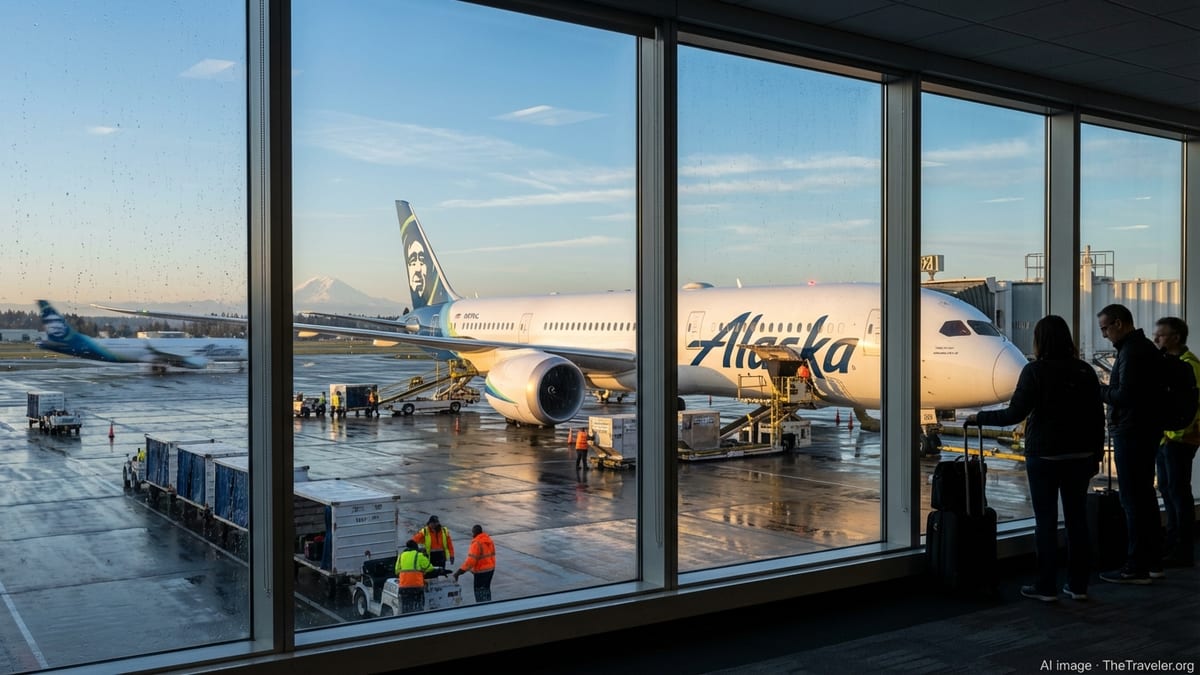
Fresh Disruptions at a Major West Coast Hub
Seattle Tacoma International Airport, a primary gateway for both domestic and international travelers in the Pacific Northwest, is again contending with an uneven day of operations characterized by a small cluster of outright cancellations and a far larger wave of delays. Publicly available tracking data points to at least nine canceled departures and arrivals alongside more than 170 delayed flights, affecting morning and evening peaks in particular.
The disruptions span short-haul and long-haul services, with Alaska Airlines, Virgin Atlantic and Delta Air Lines among the carriers most visible on the affected boards. Although the bulk of delays appear to be under an hour, a significant minority are extending beyond 90 minutes, creating missed connections and rebookings across the network.
Seattle Tacoma serves as a hub for Alaska and an important base for Delta, with a growing long-haul footprint that includes non-stop links to London Heathrow and East Asia, as well as high-density domestic routes to California and other parts of Washington state. On days when operations are constrained, even a limited number of cancellations can ripple outward into dozens of delayed flights as aircraft and crews fall out of position.
Operational strain at a single airport can also intersect with broader system challenges, from seasonal weather systems to airspace flow programs and staffing imbalances. Industry data on U.S. carriers shows that even in normal conditions, a modest share of flights are vulnerable to delays or cancellations, and passengers often experience these sporadic disruptions most acutely at busy connecting hubs.
Impact on London and Taoyuan Long Haul Links
Among the most closely watched services out of Seattle are long haul flights to London and Taoyuan, which play an outsized role in attracting visitors and business travelers. Seattle’s non-stop connections to London Heathrow, operated by a combination of full-service carriers, underpin a steady flow of transatlantic tourism and corporate traffic, with the route counted among the airport’s busiest international links in recent years.
Any extended delay or cancellation on these transatlantic departures can mean missed tours, rescheduled hotel stays and lost days for travelers whose itineraries are tightly planned around arrivals into the United Kingdom. Tour operators selling packaged visits that rely on timely arrivals into London’s morning bank of flights may be forced to rearrange airport transfers and first-day activities when aircraft depart Seattle late or are consolidated onto later services.
Similarly, flights connecting Seattle with Taoyuan, a major East Asian hub for both tourism and onward connections across the region, are critical for itineraries involving multi-stop journeys through Taiwan and neighboring destinations. When departure times slide or services are canceled, travelers may lose pre-booked connections onward to other Asian cities, facing rebooking challenges at the height of the northern summer travel period.
While on-time performance for long haul routes tends to be carefully managed because of their complexity and high yield, even a brief disruption window at a key origin airport can mount into hours of uncertainty for travelers already in the air connecting into Seattle from other U.S. points.
Domestic Tourism Routes Across Washington and California Affected
Beyond international connections, domestic tourism flows in Washington and California are also being squeezed by the latest wave of delays. Seattle Tacoma is a primary gateway for visitors heading to Washington’s national parks, coastal areas and wine regions, with many itineraries beginning with a short-haul hop onward from Seattle or a tight rental-car pickup schedule.
Delayed departures to cities such as Spokane, Walla Walla and other regional gateways can force last-minute changes to self-drive trips and guided tours. Travelers arriving late in the day may find themselves starting road journeys after dark or missing timed entries at popular outdoor attractions that now rely on advance reservations during peak season.
California-bound routes from Seattle, including high-traffic services to Los Angeles, San Diego and the San Francisco Bay Area, are also critical for tourism and visiting-friends-and-relatives travel. These markets routinely rank among the busiest from Seattle, supporting a constant shuttle of leisure visitors, cruise passengers positioning for West Coast sailings and business travelers.
When operational constraints at Seattle slow departures south, it can create bottlenecks at California airports already operating near capacity, as arrival waves are compressed and subsequent turnarounds take longer. The knock-on effect can be a sequence of delay increments that follow an aircraft through multiple legs over the course of a day, extending the impact beyond the original disruption in the Pacific Northwest.
Alaska, Virgin Atlantic and Delta Under Operational Pressure
The latest disruptions have placed particular attention on Alaska Airlines, Virgin Atlantic and Delta Air Lines, all of which have a strong presence at Seattle Tacoma. Alaska operates a large domestic and near-international network from the airport, while Delta has built up a substantial transpacific and transatlantic portfolio. Virgin Atlantic is a key player on the Seattle to London corridor through its link to Heathrow.
Operational data for major U.S. carriers indicates that cancellations typically account for a small percentage of total flights but can spike when weather, air traffic control programs or technical issues coincide. While the current episode at Seattle does not rise to the level of a widespread system outage, the combination of a handful of canceled services and a large pool of delayed flights is enough to create long queues at customer-service desks and increased demand for alternative routings.
For Alaska, which is closely associated with Seattle as a primary base, ensuring sufficient spare aircraft and crew reserves is essential to absorbing the shock of multiple delays without escalating into rolling cancellations. Delta’s combination of domestic feed and long haul departures means that a late-arriving inbound aircraft can jeopardize connections for hundreds of international passengers, especially on single-daily routes.
Virgin Atlantic’s Seattle operations, though more limited in overall volume, remain highly visible because of their role in connecting the Pacific Northwest with the United Kingdom. Any disruption on this route reverberates among premium leisure travelers and corporate clients who often depend on fixed meeting schedules and pre-arranged ground transport in London.
Travelers Adapt as Summer Peak Nears
The latest operational turbulence at Seattle Tacoma arrives as the airport heads into the heart of the summer travel season, when passenger numbers traditionally swell and tourism demand peaks. Even isolated periods of disruption during this window can erode confidence among travelers planning complex itineraries involving multiple stops across North America, Europe and Asia.
Publicly available advisories from airlines typically encourage passengers to monitor flight status closely, arrive at the airport earlier than usual during periods of irregular operations and remain flexible with connections where possible. For travelers relying on Seattle as an international gateway, building longer connection buffers into itineraries has become a common strategy to mitigate the risk of missed long haul departures.
Tourism stakeholders in destinations such as London, Taoyuan and key cities across Washington and California are sensitive to these patterns. Even modest rises in delays and cancellations at feeding hubs can translate into lower-than-expected arrivals on specific days, uneven hotel occupancy and short-notice rebooking of tours and activities.
While airlines and airports generally move quickly to restore normal operations after a disruptive spell, the experience serves as another reminder of how interconnected global travel has become. A limited number of cancellations and a spike in delays at a single Pacific Northwest hub can, over the course of a day, upend travel plans spanning multiple continents and tourism regions.