


More news on this day
A Hong Kong bound flight was delayed after a security concern prompted additional checks on passengers and baggage, underscoring how quickly precautionary measures can disrupt tightly timed aviation schedules at one of Asia’s busiest hubs.
Get the latest news straight to your inbox!
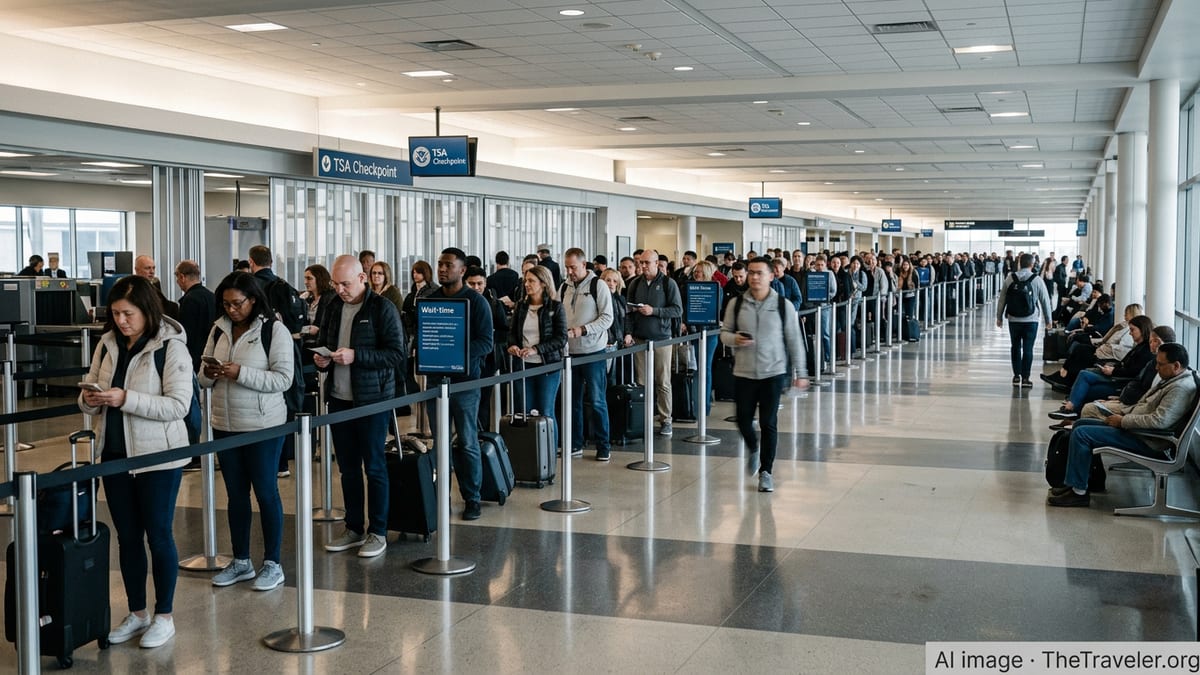
Incident prompts precautionary delay at busy gateway
Reports from flight tracking platforms and airport information services indicate that a Hong Kong bound service was held at the gate while security teams carried out extra screening. The delay affected passengers who were already at the departure gate, with boarding paused while the situation was reviewed.
Publicly available aviation data for recent days shows several Hong Kong related services operating with longer than usual turnaround times following security and screening bottlenecks. While most disruptions were measured in minutes rather than hours, even short halts can complicate aircraft rotations, crew duty limits and onward connections for travelers.
Information from airport notice boards and third party tracking tools suggests that the affected flight ultimately departed after the additional checks were completed and ground handlers received clearance to proceed. There were no indications from open sources of any physical damage to the aircraft or injuries among passengers or crew.
The event adds to a pattern of operational bumps at major Asian hubs, where high passenger volumes, complex transfer flows and evolving security requirements frequently intersect. For travelers heading to Hong Kong, a city that relies heavily on its role as a global aviation gateway, such incidents can quickly cascade into missed meetings and disrupted itineraries.
Heightened vigilance in an era of evolving threats
Recent notices from aviation regulators and airport operators in the region point to a continued focus on cargo and passenger screening around Hong Kong. Updated guidance for regulated cargo facilities and ground handlers has emphasized more detailed documentation, tighter chain of custody requirements and additional verification steps before consignments are loaded onto passenger aircraft.
Airports across Asia have also rolled out upgraded scanning equipment and refined procedures for both checked and cabin baggage. These measures are designed to detect prohibited items more effectively but can occasionally lengthen the time needed to process a full long haul departure, particularly when flights leave within short windows of peak traffic.
Industry analyses note that air carriers serving Hong Kong are balancing the need for robust security with pressure to maintain on time performance as international demand recovers. When a specific security concern emerges for a single aircraft or passenger group, the safest option is often to stop boarding or delay pushback until checks are complete, even if this creates downstream operational challenges.
For travelers, the result is greater unpredictability. Even a relatively brief delay attributed to a security review can push a departure into a congested takeoff queue, lengthen taxi times or affect available arrival slots at the destination airport.
Operational knock on effects for airlines and passengers
According to flight performance databases tracking Hong Kong related routes, minor delays have been common across a range of carriers in recent weeks, typically arising from a mixture of weather, air traffic congestion and airport processes. A security related pause, like the one affecting the latest Hong Kong bound flight, can accentuate these pressures by breaking carefully planned turnaround sequences.
When an aircraft remains on the ground longer than expected, airlines must evaluate crew duty time limits, refueling windows and connecting banks at the destination. In some cases, a delayed arrival into Hong Kong can force schedule adjustments on the next sector for the same aircraft, particularly on long haul runs onward to North America or Europe.
Passengers caught up in such incidents often face missed connections or revised itineraries, especially if they planned tight layovers or were traveling onward from Hong Kong to smaller regional cities. Travel insurance providers frequently highlight security related disruptions as an emerging trigger for claims, alongside weather and technical issues.
Analysts note that the financial impact of individual delays may be modest, but repeated events can weigh on airline operating costs through crew overtime, additional ground handling fees and compensation obligations under local consumer protection rules where applicable.
Hong Kong’s role as a regional hub under scrutiny
Hong Kong International Airport remains one of Asia’s key connecting hubs, handling large numbers of transfer passengers between mainland China, Southeast Asia, North America and Europe. Its efficiency and reliability are closely watched by airlines and corporate travel buyers who depend on smooth connections across tight timeframes.
Travel forums and passenger reports in recent months describe generally efficient security processing at Hong Kong, though some travelers note that peak periods and additional checks can create occasional surges in waiting times. The latest delay involving a Hong Kong bound flight fits into this broader picture of a system that usually runs smoothly but can still be vulnerable to short term disruption when security issues arise.
Industry commentary suggests that airlines may respond by building slightly longer ground times into certain schedules or by advising passengers to allow more generous buffers between flights involving Hong Kong. Some carriers have already adjusted frequencies or re timed departures on select routes to better align with connection banks and airport capacity.
For Hong Kong, maintaining confidence in its aviation hub is essential as it competes with other regional gateways. How quickly operations normalize after a security concern, and how clearly information is relayed through public channels, can influence traveler perceptions long after a specific flight has departed.
What travelers can do when flights are held for security
Travel experts and frequent flyers generally recommend that passengers build in extra time when planning itineraries that route through or terminate in Hong Kong, particularly during busy holiday periods or typhoon season. While airports and airlines work to keep flights on schedule, security driven delays are by nature hard to predict.
Monitoring flight status through airline apps and independent tracking services can provide early notice of gate holds or delayed departures. Travelers who see a Hong Kong bound flight held due to additional screening may be able to adjust onward plans, rebook connections or alert hotels and transfer services sooner rather than later.
Passengers are also encouraged to factor potential disruption into their choice of travel insurance, checking whether policies explicitly cover delays resulting from security measures. Such coverage can help offset costs linked to missed connections, overnight stays or rearranged ground transport.
The latest delay affecting a Hong Kong bound flight illustrates how even precautionary checks, carried out for safety reasons, can ripple through personal and business travel plans. As aviation traffic through the city continues to grow, both airlines and passengers are likely to keep a close eye on how security procedures are managed to balance safety with reliability.