


More news on this day
Regional Rail riders across the Philadelphia area are experiencing major delays and crowding after a SEPTA train derailed at a critical North Philadelphia junction overnight, disrupting multiple commuter lines through the morning rush.
Get the latest news straight to your inbox!
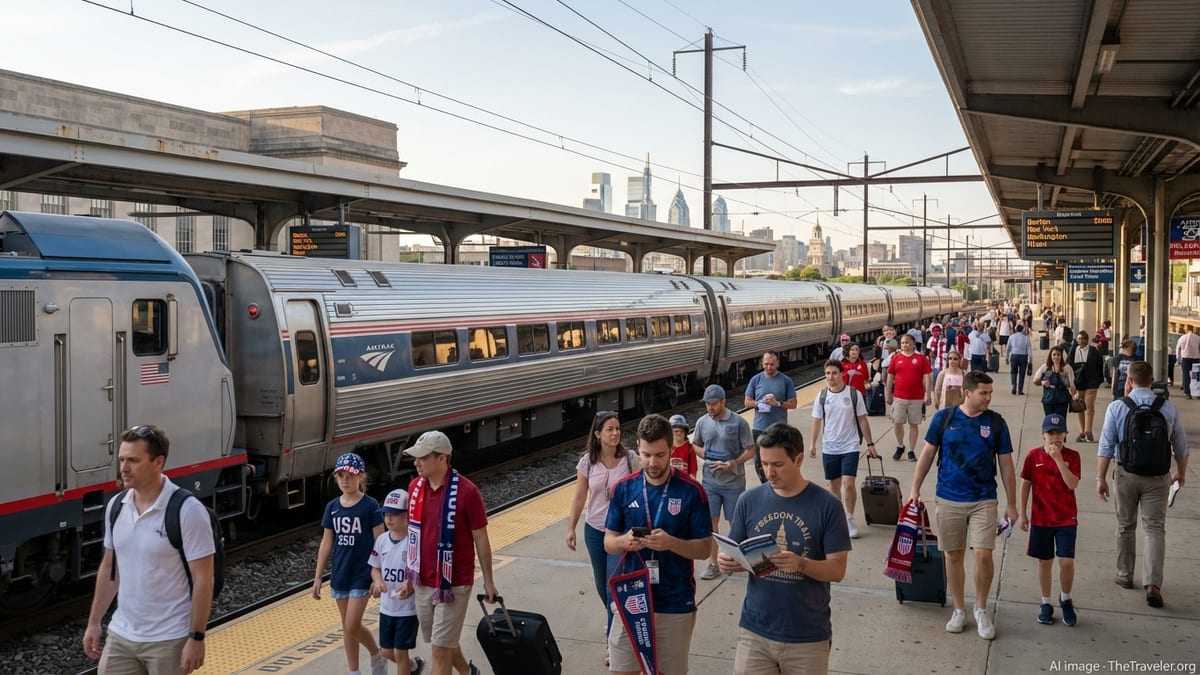
Overnight derailment at key junction cripples morning commute
Published coverage indicates that the derailment occurred shortly after midnight on July 1, when an outbound Manayunk Norristown Line train left the tracks near the 16th Street interlocking in North Philadelphia, just north of Center City. The location is described as a critical junction where several Regional Rail lines converge, meaning any disruption there can ripple across the entire system.
Initial reports describe at least one car leaving the rails near the complex network of switches that feed trains into and out of Center City. There were no immediate reports of life threatening injuries, but the incident left equipment blocking several tracks, limiting the number of trains that could move through the area at the start of the morning rush.
Publicly available information shows that the derailment effectively narrowed a multi track bottleneck down to a fraction of its normal capacity. With the rail corridor constrained, SEPTA reduced the number of trains allowed through, leading to cascading delays, packed platforms and altered timetables across the network.
The junction where the derailment occurred sits between Temple University and North Broad stations, on a busy stretch of railroad shared by multiple lines heading to destinations including Norristown, Chestnut Hill, Trenton and the Philadelphia suburbs. Because almost all Regional Rail trains pass through this area at some point in their journeys, it is one of the most sensitive locations on the system for potential disruption.
Suspensions, short turns and residual delays across the network
According to service alerts cited in local transportation coverage, three Regional Rail lines were initially suspended in both directions following the derailment, including the Manayunk Norristown Line where the incident occurred. Trains on several other lines were turned back before reaching Center City or rerouted around the affected junction, where possible.
Published reports list widespread delays across nearly every line feeding in to Philadelphia. Morning commuters reported trains running on irregular headways, with some services bunched together and others cancelled outright. Some inbound trains were held outside the constrained junction waiting for clearance, turning routine journeys of 30 to 40 minutes into trips lasting an hour or more.
In addition to full suspensions, trains on lines that remained in operation were frequently operating shortened trips. Many services terminated early at Temple University, 30th Street Station or other intermediate stops instead of completing their customary runs. This reduced the number of trains occupying the congested North Philadelphia junction at any one time but forced riders to transfer or complete their journeys by other means.
As the morning progressed, service was gradually restored, with some lines resuming limited through service as debris was cleared and track inspections were completed. However, by late morning, riders were still being advised to expect residual delays, altered schedules and crowded trains, as the network worked through the backlog created during the peak commuting hours.
Impact on airport, suburban and intercity connections
The disruption extended beyond city commuters and into the wider region. Coverage in local outlets notes that the Airport Line, which provides direct rail service between Philadelphia International Airport and Center City, experienced delays and some altered trips because many Airport Line trains are through routed with northern suburban services that pass the derailment site.
Travelers heading to or from the airport were urged to allow extra time, with some trains operating on modified schedules or making additional stops to compensate for suspended services elsewhere in the system. The uncertainty particularly affected early morning flights, as passengers accustomed to a predictable rail link weighed whether to shift to ride hail vehicles, taxis or private shuttles.
Riders in outer suburban communities, including those on lines that connect to Bucks, Montgomery and Delaware Counties, also reported longer journeys and more crowded trains. In some cases, station announcements indicated that trains would run only as far as intermediate hubs, where passengers could transfer to other services or buses into Center City.
The North Philadelphia rail corridor also handles Amtrak and freight traffic. While early accounts focused primarily on the commuter rail impact, the presence of multiple rail operators in the same area added complexity to managing traffic through the constricted junction. Dispatchers were required to sequence a mix of intercity, commuter and freight movements around the disabled train and the track crews working on site.
Travel advice for affected riders and visitors
Given the knock on effects of the derailment, travel advisories circulating on Wednesday encourage riders to check real time information before heading to a station and to build in additional time for transfers. For those with flexible schedules, off peak travel is recommended, as trains outside the busiest periods are generally less crowded and easier to re accommodate in case of further disruptions.
Visitors to Philadelphia relying on Regional Rail, especially those staying in the suburbs or traveling to and from the airport, are advised to confirm whether their specific line is operating through to Center City or terminating early. In some cases, using the Market Frankford or Broad Street subway lines within the city, combined with bus connections, may provide more reliable options for short urban trips while Regional Rail operations stabilize.
Reports from commuter advocacy groups highlight the value of carrying a backup route plan, such as identifying alternative stations served by different lines, or knowing which bus routes parallel key Regional Rail corridors. This can be particularly important when incidents occur at major junctions, where a single disruption can affect multiple lines simultaneously.
Local coverage also notes that riders planning longer distance rail journeys should verify their connections, especially if they are transferring between Regional Rail, Amtrak and airport services. Allowing a wider connection window can reduce the risk of missed trains while the system continues to absorb the aftereffects of the derailment.
Investigation and infrastructure questions ahead
As of the latest reports, crews remain focused on clearing the disabled train, inspecting tracks and switches at the 16th Street interlocking, and restoring normal service patterns. Once the site is stabilized and full service has resumed, attention is expected to turn to the cause of the derailment and the resilience of such a critical junction in the Regional Rail network.
Transportation commentators note that the North Philadelphia bottleneck has long been recognized as a vulnerability, because so many lines depend on a relatively small set of tracks and switches. Any failure at this location, whether due to equipment issues, infrastructure problems or external factors, can quickly lead to the kind of system wide disruptions seen after this derailment.
Published analyses of past incidents on the network suggest that detailed inspections, potential track or signal upgrades and operational changes may follow, depending on what investigators determine. Questions are likely to center on the condition of the infrastructure at the interlocking, the performance of the train involved and whether any warning signs emerged in the days or weeks before the derailment.
For riders, the incident is another reminder of how dependent daily travel in the Philadelphia region is on a handful of key rail chokepoints. While the immediate priority is restoring reliable service, the longer term conversation is expected to focus on how to make these critical junctions more robust, so that a single mishap in North Philadelphia does not once again bring much of the Regional Rail system to a halt.