


More news on this day
A SEPTA Regional Rail train derailed overnight at a major junction in North Philadelphia, suspending several lines and severely disrupting commuter service across the Philadelphia region on Wednesday, July 1.
Get the latest news straight to your inbox!
Derailment at Critical North Philadelphia Junction
Publicly available information indicates that the incident occurred shortly after midnight at a busy rail junction in North Philadelphia used by multiple SEPTA Regional Rail routes. Initial reports describe several cars of a Regional Rail train leaving the tracks, blocking key movements in and out of Center City and limiting options for routing other trains around the scene.
Early morning coverage from local outlets described crews inspecting the damaged rail infrastructure and assessing the condition of the derailed cars. There were no immediate reports of life-threatening injuries, but images from the scene showed tilted coaches and a heavy presence of emergency responders and maintenance teams working in the darkened right of way.
The location of the derailment, at a convergence point for several lines, amplified the impact. With track capacity suddenly constrained at one of the system’s busiest bottlenecks, SEPTA’s ability to move trains into and through Center City was sharply reduced during the critical morning rush.
Multiple Regional Rail Lines Suspended or Shortened
According to published coverage, at least three Regional Rail lines were fully suspended in the immediate aftermath of the derailment, while others operated on shortened routes that avoided the affected junction. Passengers on some lines were instructed to transfer to the Broad Street Line or Market Frankford Line to complete trips that would normally continue through Center City on Regional Rail.
Reports from the Philadelphia region describe a patchwork of emergency service patterns. Some trains turned back at outer terminals, others terminated at Fern Rock or Temple University, and several lines bypassed their usual Center City stops entirely. In many cases, headways stretched far beyond normal peak schedules as dispatchers attempted to move a reduced number of trains through limited available tracks.
Commuters checking trip planners and mobile alerts on Wednesday morning encountered a mix of cancellations, delays, and advisories. Rider accounts shared on social media and local forums indicated that some station departure boards displayed outdated or incomplete information, adding to confusion as travelers sought workarounds.
Systemwide Ripple Effects for Commuters
The derailment produced what several local outlets characterized as systemwide disruption for Regional Rail riders. Even lines not directly routed through the affected junction experienced significant delays, as dispatchers adjusted train movements to accommodate detours, equipment repositioning, and limited crossover availability near Center City.
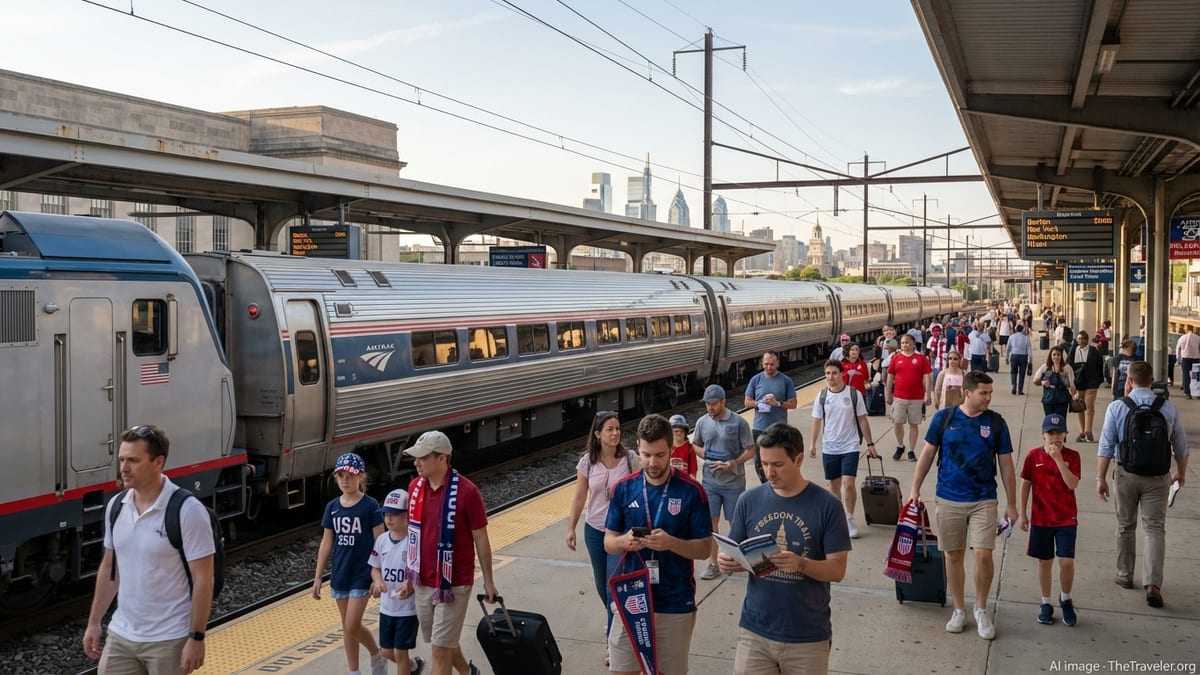
Morning commuters faced crowded platforms and packed trains on the routes that remained in operation. Riders arriving at usual boarding times reported watching multiple delayed trains arriving back to back, while others saw trains removed from schedules with little notice. Some travelers shifted to buses, subways, and ride-hailing options, placing additional pressure on the broader regional transport network.
Published coverage suggested that the impact extended beyond the immediate morning rush. Midday and afternoon riders were advised to anticipate residual delays as trains remained out of position and track inspections continued. Even as partial service was restored, modified timetables and ongoing slow orders around the derailment site hindered efforts to return to normal frequencies.
Investigation and Infrastructure Assessment Underway
As of Thursday, July 2, publicly available information shows that investigators and engineering teams were focused on determining what caused the train to leave the tracks and on evaluating the condition of the junction’s signals, switches, and rails. No official cause had been announced, but reporting noted that the affected area is a heavily used segment of SEPTA’s network where multiple lines converge, making track condition and maintenance particularly critical.
Infrastructure experts cited in regional coverage emphasized that derailments at complex junctions can be especially disruptive because they often damage not only rails and ties but also switch mechanisms and signaling components. This can require detailed inspections and repairs before full speed operations can resume, even if rolling stock damage appears limited.
Observers also pointed to wider concerns about the age and resilience of legacy rail infrastructure in the Philadelphia area. The derailment came at a time when SEPTA has been rolling out schedule changes and long term fleet upgrades, prompting renewed discussion about the balance between keeping current assets in service and investing in modernization.
Restoration Timeline and Guidance for Travelers
By late Wednesday afternoon, several news outlets reported that large portions of Regional Rail service had been restored, though some routes continued to operate with delays and altered stopping patterns. Updated advisories indicated that work at the derailment site was progressing, with some damaged equipment cleared from the tracks and additional inspections under way to verify that the junction could safely handle normal traffic levels.
Riders planning trips for the remainder of the week were encouraged, through public statements and service alerts, to check real time information before leaving for stations, build in extra travel time, and consider alternative routes where possible. Commuters using lines that had been suspended or shortened were advised to monitor announcements closely, as restoration efforts were expected to proceed in phases rather than all at once.
The incident has highlighted the vulnerability of a regional rail system in which a single junction can affect service for tens of thousands of daily riders. As investigators continue their work and repairs are completed, attention is likely to focus on whether additional safeguards, redundancy, or capital improvements are needed to reduce the risk and impact of similar events in the future.