


More news on this day
Raleigh-Durham International Airport experienced significant disruption on Wednesday after a small corporate jet and a box truck collided on a taxiway, briefly halting operations and delaying dozens of flights at the height of the summer travel rush.
Get the latest news straight to your inbox!
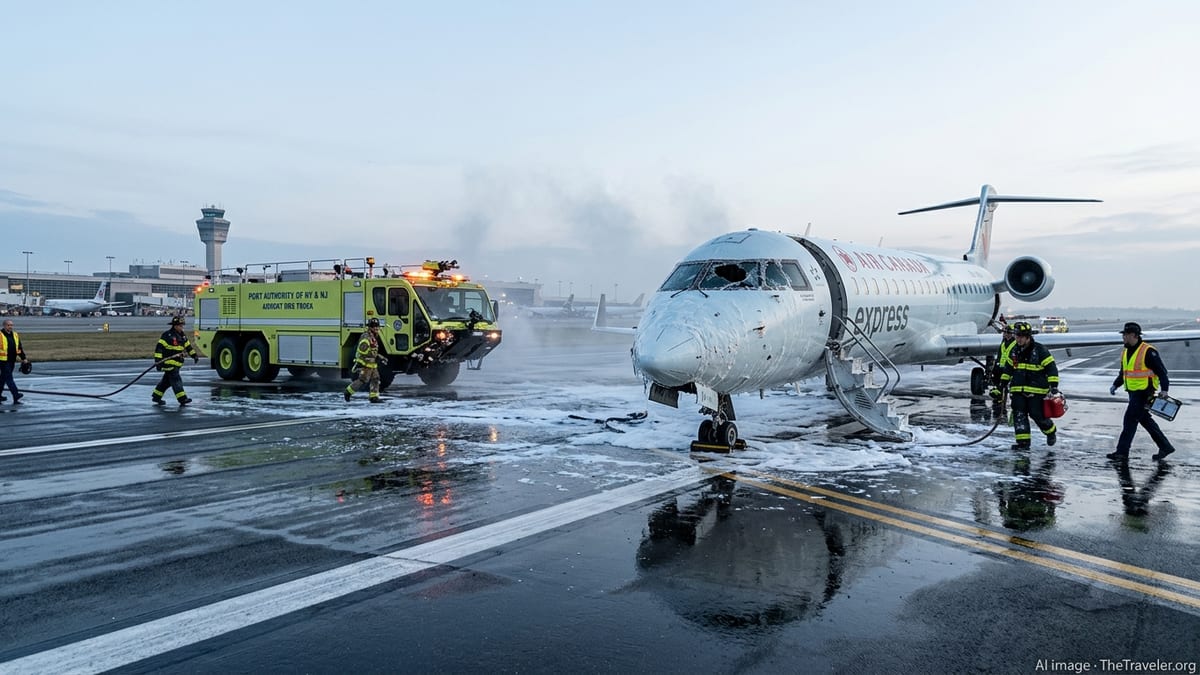
Taxiway collision prompts temporary airfield shutdown
Publicly available information from local news outlets indicates that the incident occurred on a taxiway at Raleigh-Durham International Airport on Wednesday afternoon, when a corporate jet made contact with a box truck. Images and video shared by regional media showed the small jet stopped on the pavement with visible damage to its nose area, surrounded by emergency vehicles.
According to published coverage, the aircraft involved was a general aviation or corporate jet rather than an airline-operated passenger flight. Initial reports describe two people on board the plane at the time of the collision, along with the truck driver, with no injuries reported among those involved. The truck also appeared damaged, and debris on the taxiway required cleanup before traffic could resume.
Airport statements cited in local reporting describe the event as a ground collision confined to a taxiway, not an active runway. Even so, standard safety protocols led to a pause in operations while responders secured the scene, checked for fuel leaks or fire risk, and assessed the jet and vehicle for structural damage.
Flight delays ripple across RDU amid busy travel period
Published reports from regional outlets and flight-tracking data services show that RDU temporarily suspended arrivals and departures after the crash, creating a ground stop that quickly cascaded into broader delays. Several inbound flights were diverted to other airports in North Carolina, including Greensboro and Charlotte, while others remained in holding patterns before receiving clearance to land.
Passengers posting on social media and community forums described gate holds of one to two hours, midair diversions, and re-routed connections as the shutdown unfolded. Those already in the terminal reported announcements describing an airfield closure while crews responded to an incident involving a small aircraft and a ground vehicle.
By early evening, airport operations had largely resumed, according to local news coverage, but residual delays continued into the night as airlines worked through a backlog of departures. Even a relatively short ground stop can disrupt dozens of flights at a hub-sized airport, as aircraft, crews, and gate assignments must be reset once the airfield reopens.
No injuries reported but investigation underway
Regional television and newspaper coverage notes that there were no reported injuries among the people on board the jet or inside the box truck. Emergency medical teams were dispatched to the scene as a precaution, consistent with standard airport response procedures, but early accounts did not indicate the need for hospital transport.
Federal and airport investigators are expected to examine how the jet and truck came to occupy the same space on the taxiway, looking at vehicle routes, aircraft movement instructions, and communications between ground crews and air traffic control. Publicly available information indicates that the focus will likely include whether the truck had appropriate clearance to cross or enter the taxiway and how ground traffic was being managed at the time.
In similar ground-collision cases at other airports, investigators typically review radar and tracking data, radio recordings, and security footage, as well as maintenance and training records for both aviation and ground support operators. Early coverage around the RDU incident suggests that such a process is already in motion, though no preliminary findings have been released.
Travelers face cascading impacts and rebooking challenges
The taxiway crash came during a busy summer travel period, magnifying its impact on passengers passing through Raleigh-Durham. According to publicly accessible flight-status boards, dozens of flights experienced delays, with some departures pushed back several hours as airlines adjusted aircraft rotations and crews reached their duty-time limits.
Travelers described a range of knock-on effects, from missed connections and overnight rebookings to extended waits on the tarmac. Some passengers reported being routed through alternate hubs or driving to nearby airports to salvage travel plans once it became clear that their original flights would be significantly delayed.
Consumer advocates often advise passengers affected by such disruptions to monitor airline apps closely, respond quickly to rebooking offers, and keep documentation of delay times. While incidents involving ground collisions are rare, they can trigger the same kind of schedule turbulence seen during weather events, leaving travelers to navigate limited seat availability and rapidly changing departure times.
Spotlight on ground safety at busy U.S. airports
The collision at RDU adds to a series of recent incidents nationwide that have drawn attention to safety on runways and taxiways. In other high-profile cases this year, investigations have focused on how aircraft and ground vehicles share constrained airport space, particularly during peak traffic periods or construction projects that alter normal taxi patterns.
Aviation analysts quoted in broader national coverage of ground incidents have noted that even non-injury collisions can carry significant consequences, from expensive repairs to disrupted schedules across multiple states. They often highlight the importance of clear communication protocols, robust ground-vehicle training, and technology that can alert controllers or drivers when a conflict is likely.
For travelers, Wednesday’s disruption at Raleigh-Durham serves as a reminder that delays are sometimes triggered by uncommon safety events rather than weather or airline staffing. While operations at RDU resumed within hours, the episode underscored how a single moment on a taxiway can briefly ripple across an entire afternoon’s worth of flights.