


Ask people from Nice which part of the city they would most like to live in, and the Carré d’Or comes up again and again. This compact, upscale neighborhood, set between the Promenade des Anglais and boulevard Victor Hugo, offers that rare Riviera combination: quick barefoot access to the sea plus the comforts of elegant, truly livable city streets. For locals, Carré d’Or is less about postcard glamour and more about the ease of everyday life in an undeniably beautiful setting.
Get the latest updates straight to your inbox!
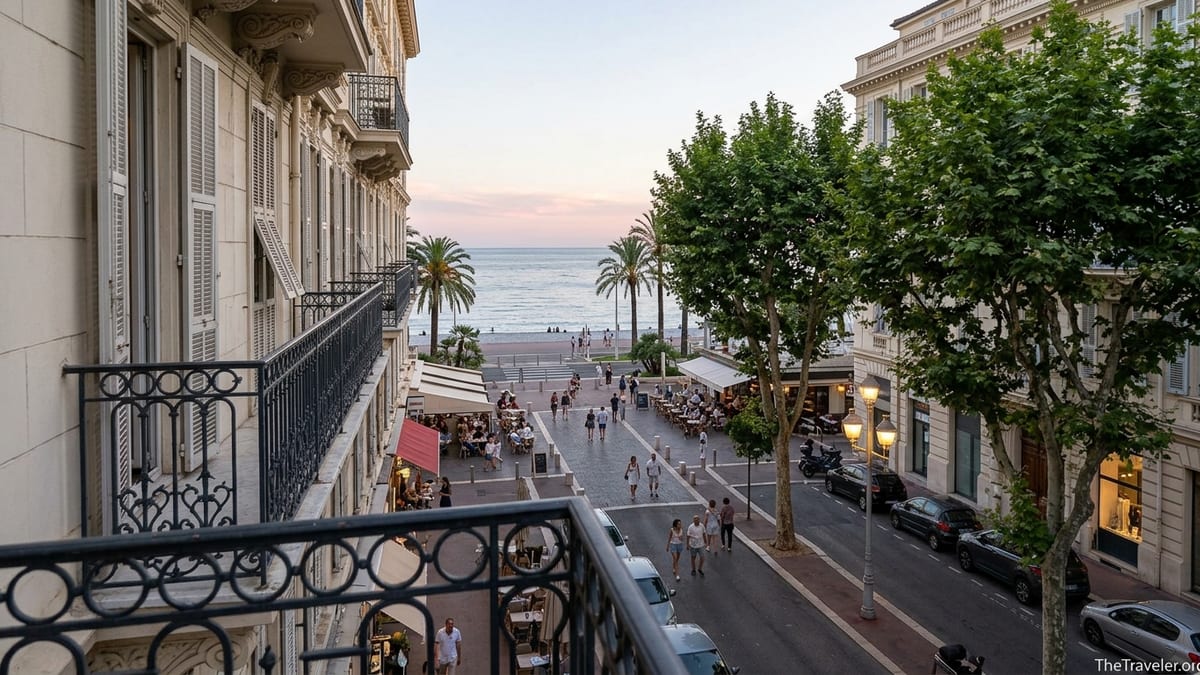
Where Exactly Is Carré d’Or, and Why It Matters
Carré d’Or is not an administrative district but a widely used local term. Roughly, it covers the grid of streets between the Promenade des Anglais to the south and boulevard Victor Hugo to the north, stretching from around avenue de Suède and place Masséna across to boulevard Gambetta. Within this rectangle lie streets residents mention by name when they talk about “the good life” in Nice: rue Masséna, rue de France, rue de la Buffa, rue Maréchal Joffre, rue Alphonse Karr, and the small squares such as place Magenta and place Grimaldi.
For people who live in Nice year-round, this precise location matters. It places Carré d’Or within a five to ten minute walk of both the beach and the main shopping axis on avenue Jean Médecin, while keeping it a little removed from the heaviest crowds in Old Town. You can step out of a flat on rue Maccarani or rue Meyerbeer and be on the pebbles of the Mediterranean faster than many big-city residents can walk to their nearest park.
The neighborhood also sits along line 2 of Nice’s modern tram network. Stations like Jean Médecin and Alsace-Lorraine bring the airport within about half an hour’s ride, meaning residents who travel often can reach flights without ever getting into a taxi. That combination of Riviera scenery and practical connectivity is a major reason locals quietly favor Carré d’Or over more obviously picturesque areas.
Beach Access the Way Locals Actually Use It
From Carré d’Or, the beach is not an outing; it is an extension of the neighborhood. A resident on rue de France can cut down a side street such as rue Meyerbeer or rue du Congrès and be crossing the Promenade des Anglais in minutes. Public stretches like Plage du Centenaire, just west of jardin Albert 1er, and the central sections of the Nice city beach become informal “backyards” where people slip down for a quick swim before work or at sunset.
Locals use these beaches differently from many visitors. Rather than booking a full day at a private establishment, a resident might walk down in flip-flops at 7.30 in the morning for a 20-minute dip, then be back under the plane trees of boulevard Victor Hugo with a takeaway coffee on the way to the office. Evening swims are equally popular: you see people from nearby streets heading straight into the water in running gear, combining exercise with a cool-down float.
The proximity also makes it easy to be selective about conditions. On days when the sea is choppy in front of Old Town, Carré d’Or residents may stroll a little farther west, toward quieter parts of the Promenade where the swell feels gentler. Because the beach is right there, nobody feels pressure to make every visit count; it is normal to walk down, decide the wind is not pleasant, and turn back for a drink on place Magenta instead.
Private beaches do play a role, particularly for residents who enjoy extra comfort a few times each summer. Establishments such as Beau Rivage Beach or the chic setups near the Palais de la Méditerranée attract locals for special occasions: a birthday lunch, a weekend with visiting family, or a splurge on a sunbed with waiter service. Crucially though, locals appreciate that they can switch freely between these paid comforts and the entirely free public stretches without ever needing a car.
Elegant Streets That Still Feel Like a Neighborhood
Walk through Carré d’Or and you see why Niçois describe it as elegant. Many buildings along boulevard Victor Hugo and the intersecting streets are Belle Époque or early 20th century, with wrought-iron balconies and pale facades that catch the Mediterranean light. Yet the atmosphere is more lived-in than museum-like. Behind those shutters are small city apartments with laundry on the balcony and bicycles wedged into stairwells, not just second homes shuttered for most of the year.
Rue Masséna, the pedestrian shopping street that slices through the area, is a good example of how locals and visitors share space. In high season it is busy with tourists, but early in the day you see residents using it as their walking route to the tram, pausing at a neighborhood boulangerie for a baguette or grabbing espresso at a corner café. By mid-morning, families from the side streets push prams along the same route to reach the shaded benches around jardin Albert 1er.
Just one block up, rue de la Buffa and rue Maréchal Joffre feel quieter and more residential. On these streets, everyday services cluster at ground level: a small supermarket, a greengrocer selling crates of local tomatoes and apricots in summer, a hairdresser, a dry cleaner, independent pharmacies. Residents sometimes compare this area to a village center: everything needed for daily life is within a few minutes’ walk, which reduces the dependence on cars and makes spontaneous socializing more likely.
In recent years, a new wave of boutique hotels and small luxury addresses has opened or been renovated around Carré d’Or, including higher-end properties near the Promenade. Locals acknowledge the added traffic but also value the improved lighting, cleaner public spaces, and variety of dining options that often come with such investments. For many, the balance still tilts in favor of a neighborhood that feels safe, well-tended, and busy enough to be interesting without being overwhelming outside peak summer weeks.
Café Culture and Everyday Pleasures
Part of Carré d’Or’s appeal is the simple pleasure of stepping out and having dozens of café terraces within a five-minute radius. Squares like place Magenta and place Grimaldi are ringed with brasseries and wine bars where locals settle in for an after-work apéritif, watching the sky turn pink over the city’s pastel facades. These spots are not secret, but at certain times of day the clientele tips noticeably toward people who live or work nearby rather than day-trippers.
On rue Masséna and avenue de Suède, a mix of casual bistros, pizzerias, and ice-cream stands caters to both locals and visitors. A resident might suggest a quick weekday dinner at a mid-priced brasserie where a main course of grilled fish or pasta costs roughly what you would pay in many Western European cities, then follow it with a stroll to a favorite gelateria closer to Old Town. While prices in Carré d’Or are not low, the range allows regular nights out without feeling like every meal is a once-a-year splurge.
Morning routines here are telling. Many locals prefer quieter side-street cafés on rue de France or rue de la Liberté, where they know the staff and can order a simple café crème and croissant without the language dance that sometimes happens in more tourist-heavy venues. It is common to see the same regulars occupying terrace tables before work, reading the local paper or checking messages as delivery trucks unload fresh produce onto the pavement.
Small conveniences also shape affection for the neighborhood. Within a short radius you find artisan bakeries, quality traiteurs selling prepared dishes for nights when cooking feels like too much, and wine shops that remember your preferences. Residents talk about grabbing a roast chicken and potatoes from a takeaway rotisserie on rue de la Buffa, then carrying them two blocks home. That combination of indulgent food and extreme convenience, all framed by grand 19th-century facades, is part of what people mean when they praise Carré d’Or’s lifestyle.
Smart Transport and Car-Free Living
For locals, a neighborhood’s desirability is rarely about views alone; it is also about how easily you can move around without stress. Carré d’Or scores highly here. The Jean Médecin tram stop, on line 2 linking Nice Côte d’Azur Airport with the port, is a short walk from most addresses in the district. This connection means residents can travel between home and the airport, or home and the train station, quickly and at a modest fare, without relying on taxis.
Line 1 of the tram, which runs north-south through the city, also intersects with Jean Médecin. This gives Carré d’Or residents direct public-transport access to areas as varied as the university district, the northern hills, and the Pasteur hospital zone. On a practical level, that widens the range of jobs and schools reachable from the neighborhood without ever owning a car.
Pedestrian infrastructure adds another layer of comfort. The Zone Piétonne, the pedestrianized stretch of rue Masséna and its continuations, means many daily errands can be done along car-free streets. Parents feel more relaxed walking with children in this area, and older residents appreciate being able to shop without constantly negotiating traffic. For cyclists, the flat seafront and the growing network of bike lanes provide a straightforward commute east-west along the Promenade or inland toward other quarters.
Because everything is so close, locals in Carré d’Or often keep smaller, city-friendly vehicles or give up the car entirely. Parking in Nice’s center is both scarce and expensive, so the ability to rely on public transport, bike-share schemes, and simple walking is not just environmentally attractive but economically sensible. For many households, the money saved on car ownership can justify higher rents or mortgages in this coveted area.
Real Estate, Long-Term Living, and Who Actually Lives Here
Carré d’Or is one of Nice’s priciest residential zones, but it remains a functioning neighborhood rather than a hollowed-out collection of second homes. The housing stock is diverse: compact studios aimed at students and young professionals, one- and two-bedroom apartments in Belle Époque buildings with original moldings and balconies, and larger family flats on higher floors or on wider boulevards like Victor Hugo.
Local agencies describe strong demand from permanent residents who work in sectors such as finance, healthcare, education, and tourism management. Being close to the tram and less than fifteen minutes on foot from Nice-Ville train station makes it feasible to commute along the coast to Antibes or Monaco while still enjoying city life. At the same time, semi-retired couples from elsewhere in France often choose Carré d’Or for its mix of culture, mild winters, and the ability to do most things on foot.
Prices reflect this popularity. While exact figures shift with the market, real estate professionals consistently list Carré d’Or among the most expensive per square meter in Nice, alongside parts of the Mont Boron and Cimiez areas. For locals, that cost might mean sacrificing space for location: choosing a well-renovated one-bedroom on rue de la Buffa over a larger flat in a less central suburb. Many accept the trade-off because daily life becomes smoother and more enjoyable when the sea, shops, and transport are all close at hand.
Rental dynamics also influence the atmosphere. Some streets in Carré d’Or have a high proportion of short-term holiday apartments, particularly near the Promenade. Locals sometimes complain about suitcase noise in stairwells at odd hours, but regulations and changing visitor patterns have prompted more owners to seek longer leases. On quieter cross streets north of rue de France, the balance between year-round residents and visitors tends to feel more stable, reinforcing the sense of a real community.
How Travelers Can Experience Carré d’Or Like a Local
Visitors drawn by Carré d’Or’s reputation for elegant city living can get a taste of local life by adjusting their rhythms. Instead of heading straight to the beach at midday, consider an early morning swim from one of the central public sections of the Promenade, when the water is calm and most beach clubs are still setting up. Afterwards, join residents at a side-street café for coffee and a simple pastry rather than breakfasting only in the hotel dining room.
During the day, explore beyond the obvious axes. Walk up boulevard Victor Hugo under its rows of mature trees and look for the smaller streets radiating off it. You will find neighborhood bakeries with trays of socca or pistachio tarts in the window, small bookshops, and clothing boutiques that serve a mostly local clientele. Buying fruit at a greengrocer on rue Maréchal Joffre, rather than only at the Cours Saleya market in Old Town, gives a more everyday snapshot of life in Nice.
In the evening, consider staying within the neighborhood instead of automatically gravitating back to Old Town. An apéritif on place Magenta or a quieter side terrace on rue de France allows you to feel the shift from busy shopping hours to a slower, more residential pace. Later, you might walk two blocks to the sea simply to watch the lights of the Baie des Anges, sharing the promenade with joggers and dog walkers who live nearby.
Accommodation choices can also shape your experience. Hotels and apartments set one or two streets back from the Promenade often offer better sleep than seafront addresses, where traffic on the coastal road continues late into the night. By staying closer to rues like de la Buffa or Cronstadt, you are more likely to share your building with Niçois families, hear French spoken in the lift, and pick up small details of local routine that stay with you long after the trip ends.
The Takeaway
Locals love Carré d’Or because it makes everyday life feel quietly exceptional. The beach is a few minutes’ walk away, not a special excursion. Errands unfold along elegant streets lined with Belle Époque facades. Public transport links the neighborhood to the airport, the port, and the wider Riviera, making travel simple without sacrificing the pleasures of a dense, walkable city center.
For travelers, understanding this local perspective changes the way Carré d’Or looks and feels. Instead of just a backdrop of grand hotels and designer boutiques, you begin to see the baker opening at dawn on rue de France, the office workers taking a quick dip after work, the retirees strolling slowly under the trees of boulevard Victor Hugo. That mix of practicality and beauty, of routine and Riviera light, is what keeps Niçois residents attached to this golden square of their city.
FAQ
Q1. What exactly is considered the Carré d’Or in Nice?
It is the informal name for the upscale grid of streets between the Promenade des Anglais and boulevard Victor Hugo, roughly from near place Masséna across toward boulevard Gambetta, including streets like rue Masséna, rue de France, rue de la Buffa, and several small squares.
Q2. How long does it take to walk from Carré d’Or to the beach?
From most streets in Carré d’Or, the walk to the Promenade des Anglais and the public beach sections is about five to ten minutes, often less if you are staying close to rue de France or rue Meyerbeer.
Q3. Are there good public beaches near Carré d’Or, or do you have to pay?
Several free public sections of Nice’s main beach lie directly in front of Carré d’Or, and many locals use these daily. Private beach clubs with sunbeds and restaurants sit in between, so you can choose either free pebbles or paid comfort depending on your mood and budget.
Q4. Is Carré d’Or a good area to stay in for first-time visitors to Nice?
Yes, it works very well for first-timers because you are close to the sea, within walking distance of Old Town and the main shopping streets, and near tram connections to the airport and train station, all in a relatively elegant and safe environment.
Q5. Do locals actually live in Carré d’Or, or is it mostly tourists?
While there are certainly hotels and holiday rentals, many buildings in Carré d’Or house year-round residents. On side streets just north of rue de France, you will find a high proportion of permanent Niçois households, which keeps everyday services and neighborhood routines very much alive.
Q6. How easy is it to get to and from the airport when staying in Carré d’Or?
The airport is well connected by tram line 2, with stops such as Jean Médecin and Alsace-Lorraine within walking distance of most of the neighborhood. The ride between the center and the airport typically takes under half an hour without traffic concerns.
Q7. Is Carré d’Or noisy at night?
Noise levels vary by street. The Promenade des Anglais and rue Masséna stay lively into the evening, while streets slightly inland, like rue de la Buffa or smaller cross streets near boulevard Victor Hugo, tend to be quieter, especially if your accommodation faces an inner courtyard.
Q8. Are there affordable food options in Carré d’Or, or is it all luxury dining?
The area has a mix. You will find upscale restaurants and chic hotel bars, but also mid-priced brasseries, pizzerias, bakeries, and small supermarkets and traiteurs where locals buy everyday meals without spending excessively.
Q9. Do you need a car if you are staying or living in Carré d’Or?
Many residents manage without a car thanks to the neighborhood’s central location, tram and bus connections, and the ability to walk to shops, the beach, and major sights. Parking can be expensive and limited, so staying car-free in Carré d’Or is both practical and common.
Q10. How does Carré d’Or compare to Nice’s Old Town for atmosphere?
Old Town feels medieval, densely packed, and very atmospheric, with narrow lanes and historic churches. Carré d’Or, by contrast, is more Belle Époque and early 20th century in style, with broader streets, elegant facades, and a slightly more residential, everyday city feel while still being close to the sea.