


More news on this day
Road access to Edinburgh Airport was severely disrupted on Monday morning after a serious multi-vehicle collision on the A8 left three people in hospital and forced the closure of a key approach route in both directions.
Get the latest news straight to your inbox!
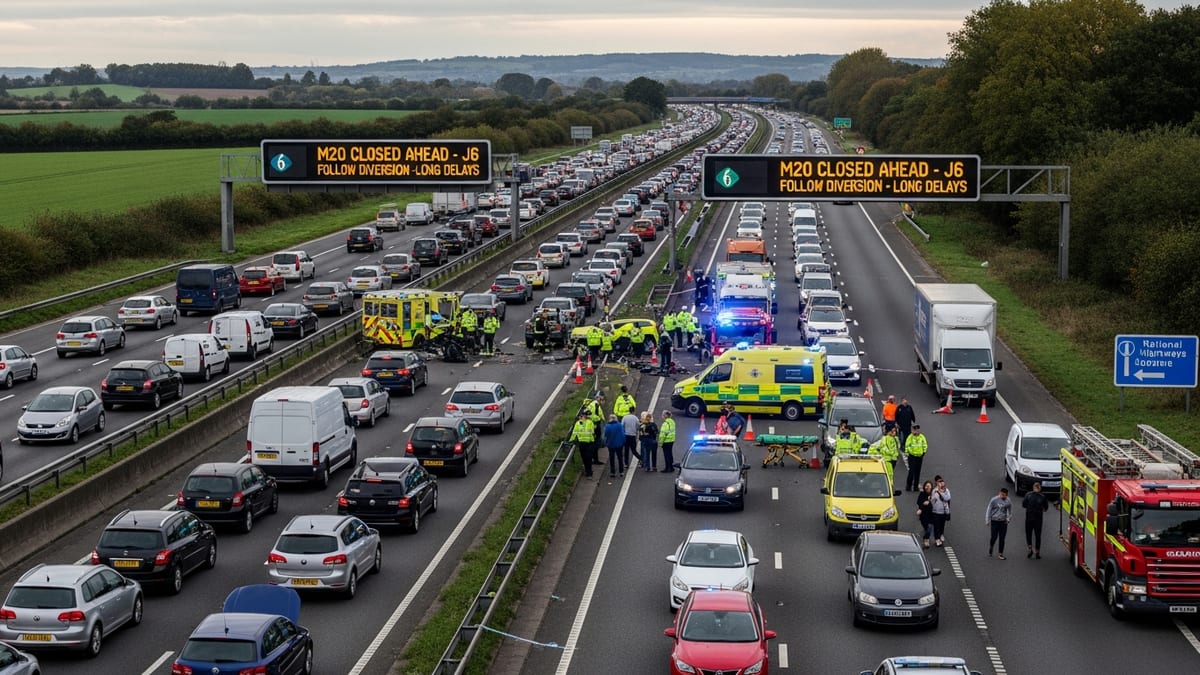
Crash closes key stretch of A8 near airport
Publicly available reports indicate that the collision occurred shortly after 9.20am on Monday 7 September on Glasgow Road, the A8 corridor that links the Newbridge roundabout with Gogar and serves as the principal road approach to Edinburgh Airport. The incident happened close to a petrol station near the airport access, in an area that carries a mix of commuter, freight and airport traffic.
Coverage from regional outlets describes the incident as a serious multi-vehicle crash, with three people taken to hospital for treatment. At the time of writing there have been no publicly reported fatalities, but the scale of the emergency response and the decision to fully close the route underline the severity of the collision.
The A8 was shut in both directions between Newbridge and Gogar, effectively cutting normal road access to the airport for several hours. Traffic cameras and mapping services showed long queues building on the approaches, with diversion routes quickly becoming congested as drivers attempted to bypass the closure.
Fire and rescue resources were also deployed to the scene, with multiple appliances sent following initial reports of the crash. Images shared on social and local platforms showed a significant emergency presence as responders worked to make the scene safe and assist the injured.
Major knock-on delays for airport passengers
The A8 forms the main road artery to Edinburgh Airport, so its closure had an immediate effect on travellers heading to and from the terminal. According to travel updates compiled by regional news and transport providers, drivers were warned to expect heavy congestion around Newbridge, Gogar and the wider western edge of the city.
Publicly available route data showed standing traffic on both the A8 and surrounding diversion roads, with some vehicles reportedly taking extended periods to move only short distances. For passengers relying on taxis or private cars, the disruption increased journey times substantially and risked missed check-in and boarding windows, particularly for late-morning and early-afternoon departures.
Bus and coach services that use the A8 corridor, including those serving the airport, also faced disruption. While some services were able to divert via alternative routes, these roads were not designed to handle equivalent traffic volumes, contributing to further delays for both airport users and regular commuters.
Airport operations themselves continued, but access constraints meant travellers were strongly advised through publicly available guidance to allow extra time for their journeys and to check the latest traffic conditions before setting out.
Emergency response and road closure details
Regional news outlets report that emergency services were alerted to the incident shortly before 9.30am. The response involved police, ambulance and fire crews, with at least three fire appliances dispatched to the scene on the A8 near the airport access.
Available coverage notes that three individuals were transported to hospital following the crash. The precise nature of their injuries has not been disclosed in open public reports, but the description of the incident as serious and the scale of the response suggest a significant impact at the scene.
The decision to close the A8 in both directions rather than implement partial lane restrictions significantly increased the disruption but allowed crews to work across the full carriageway. This approach is commonly used in serious collisions where vehicle recovery, collision investigation and safety checks are required before traffic can safely resume.
Traffic monitoring data showed that closures remained in place into the middle of the day, with gradual easing of congestion only once limited reopening and diversions had been established. Drivers in the wider area experienced delays well beyond the immediate vicinity of the crash as displaced traffic filtered onto secondary routes.
What drivers and travellers should know
The incident highlights how a single serious collision on the A8 corridor can rapidly affect access to one of Scotland’s busiest airports. Travel advisers routinely recommend that passengers build in extra time when driving to Edinburgh Airport, particularly during peak commuting periods or in unsettled weather, because options for alternative routes are limited once the A8 is blocked.
National and local transport services provide live digital updates on road conditions, including closures and congestion around major hubs such as Edinburgh Airport. When incidents occur, these feeds are among the first places where diversion advice is published and revised as the situation changes.
For travellers who are yet to depart for the airport in the wake of such incidents, checking live traffic maps and local news sources can help determine whether to switch to tram, rail-linked bus services or alternative road approaches where available. Those already on the road are generally advised through public channels to follow diversion signs, remain patient in queues and avoid risky manoeuvres that can create secondary incidents.
While serious crashes of this nature remain relatively rare along the A8, they reinforce broader road safety messages issued at national level, particularly around high-traffic corridors serving airports and major urban areas. Drivers passing through these zones are encouraged in official guidance to maintain safe following distances, observe speed limits and remain alert to changing traffic patterns.
Ongoing monitoring and travel advice
As of the latest updates from regional news and aggregated travel feeds, the immediate emergency phase of Monday’s incident has passed, with the injured receiving hospital care and the A8 gradually reopening to traffic. Residual congestion is still possible during subsequent peak periods as normal patterns resume and any remaining lane restrictions are lifted.
Travellers using Edinburgh Airport in the coming days are encouraged by publicly shared advice to continue allowing generous transfer times between city centre, motorway network and terminal, especially for early morning and late afternoon departures when the A8 is busiest.
Transport and road safety strategies for the wider Edinburgh area consistently identify the A8 corridor as a critical link in the city’s infrastructure. Incidents such as Monday’s collision are likely to inform ongoing assessments of signage, junction layouts and traffic management as planners seek to balance capacity with safety on this heavily used stretch.
For now, the focus for motorists and holidaymakers is on planning ahead, monitoring real-time travel information and being prepared to adjust routes at short notice when disruption occurs on the approaches to the airport.