


More news on this day
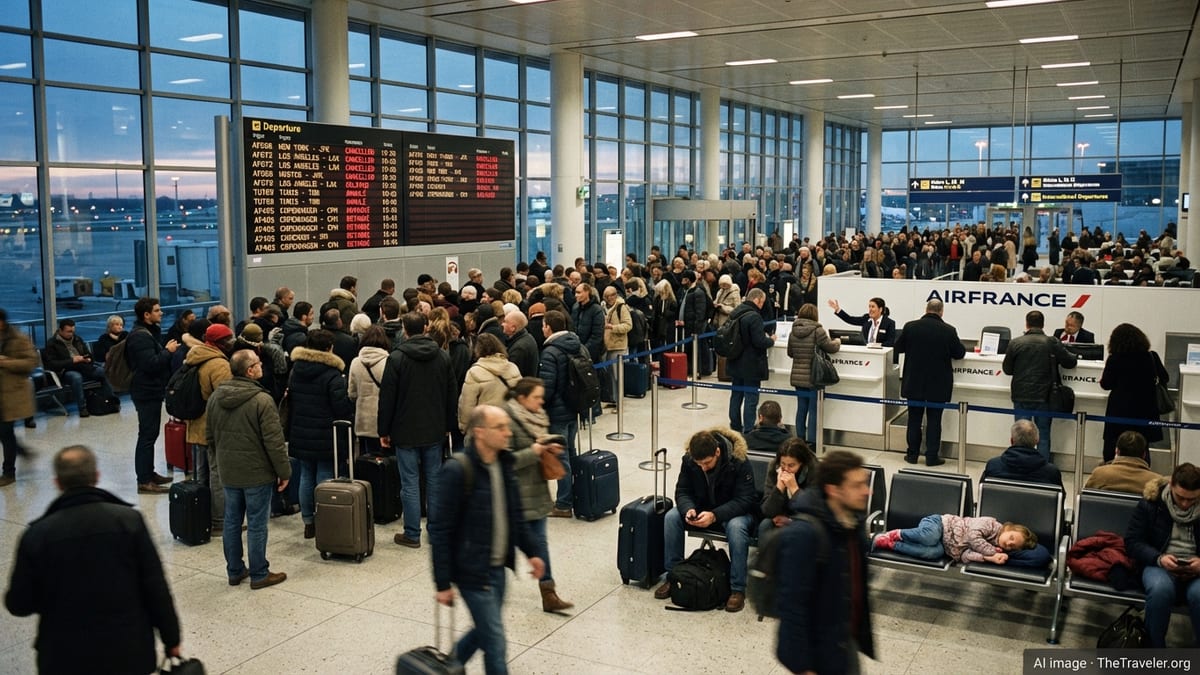
Travelers moving through Paris Charles de Gaulle Airport on June 8 are facing another day of disruption, with publicly available flight-tracking data indicating 161 delays and two cancellations across a range of airlines, including Air France, RwandAir and easyJet, complicating connections for passengers within France, across Europe and on long-haul routes.
Get the latest news straight to your inbox!
Wide-Ranging Disruptions Across Carriers
Operational data compiled from live flight-status services on Monday shows that Paris Charles de Gaulle, France’s busiest international hub, has registered more than 160 delayed departures and arrivals, along with at least two cancellations across its schedule. The disruptions affect both short-haul European sectors and longer intercontinental routes, underscoring how quickly knock-on effects can spread through such a tightly interconnected hub.
Air France, the dominant carrier at Charles de Gaulle, appears among the most exposed, given its dense network of European and transatlantic operations from the airport. Flights to key destinations such as New York, Washington and major European capitals are operating with schedule pressure, with some services departing behind timetable even when they ultimately make up part of the delay en route.
Low-cost and foreign carriers using the airport’s shared infrastructure are also feeling the strain. easyJet, which bases part of its European network at Charles de Gaulle, and RwandAir, which links Kigali and Paris for onward connections, are among the airlines listed with delayed movements. Publicly accessible tracking boards suggest that, while outright cancellations remain limited, many flights are departing or arriving significantly outside their planned slots.
The pattern reflects broader signs of congestion across European hubs as the peak summer season ramps up, with high passenger volumes leaving little margin for operational hiccups. Even a relatively small number of delayed or cancelled flights at a major hub can cascade into missed connections and extended travel times for thousands of passengers.
Impact on French, European and Long-Haul Travelers
The ripple effects of Monday’s disruption are being felt across mainland France, wider Europe and on long-haul itineraries that depend on smooth connections through Paris. Passengers traveling domestically or to nearby European cities face schedule uncertainty, with some regional flights showing delayed departures from Charles de Gaulle that translate into later-than-expected arrivals at secondary airports.
On key European trunk routes between Paris and cities such as Amsterdam, Copenhagen and Dublin, public flight-status boards indicate a mix of on-time operations and delayed sectors. Even when individual delays are limited to under an hour, the impact is magnified for travelers trying to make tightly timed onward connections. Missed transfers can quickly turn modest schedule slips into significant arrival delays at final destinations.
Long-haul travelers are also exposed. Transatlantic services from Paris to major North American cities like New York and Washington are central pillars of Air France’s network, and even small delays at departure can affect crew rotations and aircraft availability later in the day. For passengers connecting in Paris from other European or African cities to reach these flights, earlier delays increase the risk of missed onward services and last-minute rebooking.
The disruption is not confined to any single terminal or airline, which complicates planning for travelers. In some cases, aircraft have departed later than scheduled but recovered time in the air, arriving closer to original timetables. In others, earlier operational issues have cascaded into longer ground holds, with aircraft and crews out of position for subsequent flights.
Operational Pressures at a Busy Summer Hub
Charles de Gaulle’s status as a heavily banked connecting hub means that airlines schedule many arrivals and departures within tight waves to facilitate smooth transfers. While this model improves connectivity in normal conditions, it can leave the operation vulnerable when weather, airspace constraints or ground-handling challenges reduce available capacity, especially during busy summer travel days.
Recent months have seen an increase in traveler reports about longer processing times at major European airports, including Paris, particularly around new border-control procedures and high passenger volumes. These factors can lengthen the time needed to turn aircraft between flights, contributing to late departures even when aircraft and crews arrive on time.
Publicly available information suggests that French airports, including Paris Charles de Gaulle, have previously had to operate with reduced runway or terminal capacity during periods of bad weather, industrial action or infrastructure work. While there is no single, clearly defined trigger identified for Monday’s spike in delays, the combination of seasonal traffic, tight schedules and limited spare capacity appears to be testing the system.
For airlines like Air France, RwandAir and easyJet, operating within these constraints requires rapid adjustments, from swapping aircraft and crews to rerouting passengers through alternative hubs. When these measures are only partially successful, delays can accumulate throughout the day, particularly on aircraft tasked with multiple turns from Paris.
Passenger Experience and Rights in the Spotlight
For travelers caught in Monday’s disruption, the immediate priority is access to accurate, up-to-date information on departure times, gate changes and alternative routing options. Flight-tracking platforms and airline status pages are providing live updates, but the volume of affected flights at Charles de Gaulle increases the likelihood of queues at service desks and longer waits to secure rebooking for those who miss connections.
Under European air passenger rules, travelers facing long delays or cancellations on eligible flights may be entitled to assistance that can include meals, refreshments and, in some cases, hotel accommodation. Monetary compensation can also apply on certain routes when delays or cancellations are not attributable to extraordinary circumstances. Passengers are being encouraged in publicly available guidance to keep boarding passes, receipts and written confirmation of disruption to support any future claims.
Reports from recent months about operational strain across European hubs suggest that many travelers remain uncertain about how and when to invoke their rights. Consumer advocates and travel forums frequently advise passengers to document their experience carefully and to follow up with airlines after travel if immediate assistance at the airport is limited by staffing or crowding.
For those with upcoming journeys through Paris, the latest delays at Charles de Gaulle serve as a reminder to build in additional connection time where possible, monitor flight status closely on the day of travel and consider contingency plans if tight connections are at risk. As the peak summer season continues, the performance of major hubs such as Paris is likely to remain a key factor shaping the reliability of air travel across Europe and beyond.