


More news on this day
Severe thunderstorms sweeping across southern England on June 27 have triggered extensive disruption at some of the United Kingdom’s busiest airports, with hundreds of flights delayed or cancelled and knock-on effects rippling through domestic and European networks.
Get the latest news straight to your inbox!
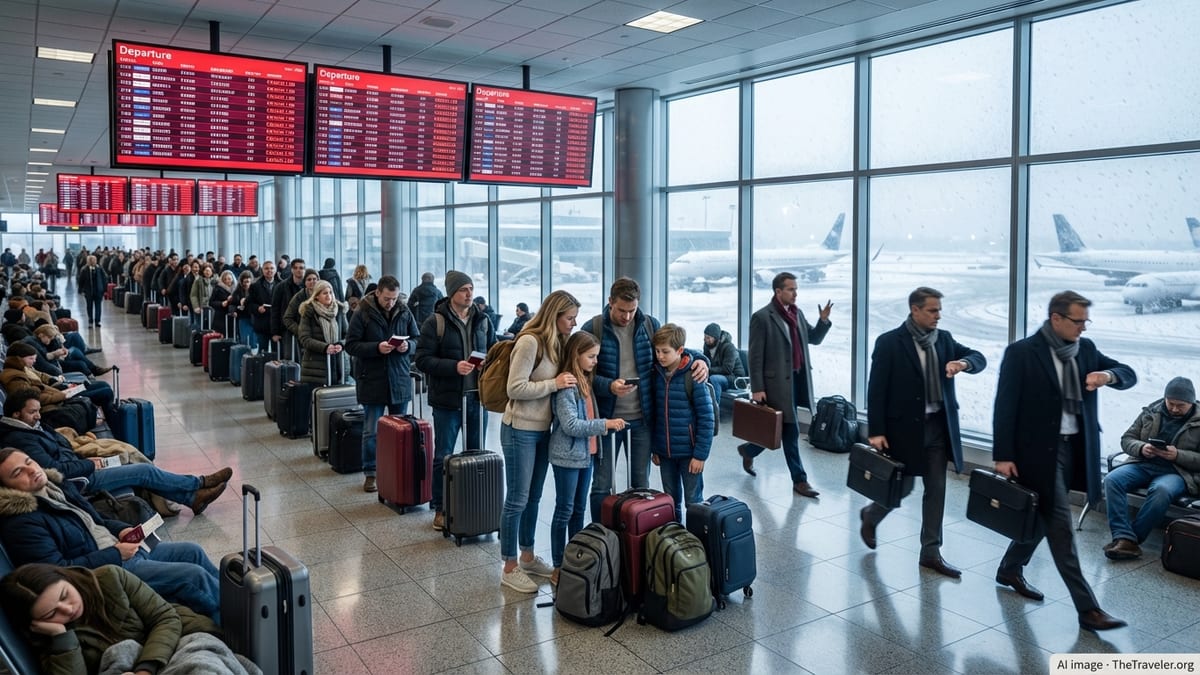
Stormy Skies Hit Heathrow, Gatwick and Other Key Hubs
Publicly available flight-tracking data and media coverage on Saturday indicate that London Heathrow and London Gatwick are bearing the brunt of the latest weather disruption, as slow-moving thunderstorm cells move across the capital and surrounding counties. More than 600 flights into and out of the two hubs are reported to be delayed, with some departure and arrival waits stretching to five or six hours in the busiest bank of afternoon and evening operations.
The UK’s national weather service has issued a thunderstorm warning for parts of southeast England, including London, highlighting the potential for torrential downpours, frequent lightning and gusty winds during the early hours of Saturday and into the morning. That combination is particularly challenging for high-density airports such as Heathrow, where tightly timed arrival streams and departure slots leave limited room to absorb weather-related slowdowns.
Operational updates from airlines and airport information screens show that delays are widespread rather than confined to a single carrier. Services to major European hubs, Mediterranean holiday destinations and domestic UK routes have all been affected, with rolling schedule changes continuing as storm cells intensify or weaken along key approach and departure corridors.
Travelers arriving into London have reported extended ground holds, diversions to alternate airports and lengthy waits for available gates as disrupted aircraft rotations cascade through the system. For some passengers, the disruption is being compounded by the broader pressure of peak summer travel, with load factors already high and spare seats limited on later flights.
How Thunderstorms Disrupt High-Density Airport Operations
Convective summer storms routinely rank among the leading causes of air traffic delays in Europe, and the pattern now unfolding over the UK fits into this wider trend. Thunderclouds can grow rapidly along frontal boundaries, producing strong updrafts, heavy rain, hail and lightning. For safety reasons, air traffic controllers may reduce arrival and departure rates when storms encroach on standard approach paths, while airlines and pilots build in extra spacing to navigate around the most intense cells.
At airport level, surface conditions add another layer of complexity. Heavy rainfall can temporarily reduce braking performance on runways and taxiways, while lightning in the vicinity of terminals often triggers restrictions on ramp activity. When baggage handlers, fuelers and maintenance crews are required to shelter indoors during a storm, aircraft cannot be turned around as quickly. Even a short suspension of ramp work during a period of high traffic can quickly lead to a backlog.
Eurocontrol data for spring and early summer 2026 already shows weather as a leading driver of air traffic flow management delays across the European network. Thunderstorms and strong winds have repeatedly reduced the available capacity at major hubs, forcing regulators to impose traffic metering programs that slow down arrivals and departures. The latest UK disruption appears to be another example of how localized weather can trigger far-reaching impacts when skies are already busy.
Because airlines schedule aircraft and crews on tight rotations between cities, a storm event over London in the morning can affect flights leaving Mediterranean holiday destinations or regional UK airports many hours later. Passengers may see their departure posted as “awaiting inbound aircraft,” even if their own departure point is experiencing relatively calm weather.
Knock-On Effects Across UK and European Routes
Although Heathrow and Gatwick are drawing most of the attention because of their size, reports indicate that the thunderstorm pattern is also affecting operations at other UK airports connected to the same weather systems and traffic flows. Edinburgh and Newcastle have already seen diversions and selective cancellations this week as unsettled conditions moved across Scotland and northern England, and the continuing line of storms is adding fresh strain on the wider network.
Published aviation data shows that when London’s main hubs slow down, smaller airports often feel the secondary effects. Flights that would normally route directly to regional fields may instead be held on the ground at origin, diverted in flight or re-timed to slot into newly limited arrival windows. Airlines then have to reposition aircraft and crews, sometimes resorting to overnighting planes away from their usual bases to recover the schedule.
Travel industry analyses of recent weeks have underscored that European air traffic is running above 2025 levels, with busier schedules leaving less slack to recover from weather-related slowdowns. As thunderstorms now intersect with school holiday getaways, the result for passengers can be a longer wait for alternative flights, particularly on busy leisure routes to Spain, Portugal and the Greek islands.
Some carriers have issued flexible travel advisories around affected UK airports, allowing customers to move their journeys to different flights or dates without change fees where capacity permits. However, many passengers are still encountering crowded rebooking desks and limited same-day options, especially where entire waves of flights have been pushed back or consolidated.
Passenger Rights and What Travelers Can Do
The latest outbreak of delays is once again drawing attention to the patchwork of passenger rights that apply when flights are disrupted by severe weather. Guidance from consumer groups and legal specialists notes that under UK and EU rules, thunderstorms and associated air traffic control restrictions are generally treated as extraordinary circumstances. This typically means airlines are not required to pay cash compensation for delayed or cancelled flights where weather is the primary cause.
However, publicly available information on UK261 and EU261 regulations makes clear that airlines may still owe a duty of care in certain situations, including providing meals, refreshments and hotel accommodation when passengers are stranded overnight, provided they present themselves for travel and the disruption falls within the scope of the regulation. Eligibility can depend on the length of the delay, the distance of the route and whether the flight is departing from or arriving into the UK or European Union on an eligible carrier.
Consumer advocates recommend that travelers keep boarding passes, receipts and written records of any expenses incurred while waiting out prolonged delays, as this documentation can be important when pursuing reimbursement after the event. They also advise that passengers check both airline and independent flight-tracking tools to build a clear picture of the cause and duration of any disruption affecting their itinerary.
In the short term, airports, airlines and air navigation providers are expected to adjust operations dynamically as the thunderstorm line evolves through Saturday. With weather models suggesting further unsettled conditions across parts of the UK, travelers with flights booked in the coming hours are being urged, through public advisories and airline updates, to allow extra time to reach the airport, remain attentive to schedule changes and prepare for the possibility of extended waits if storms drift back across already congested airspace.