


More news on this day
Severe thunderstorms over southeast England on Saturday, 27 June, triggered widespread flight disruption at London’s Heathrow and Gatwick airports, with reports indicating delays of up to six hours and hundreds of services affected across Europe’s busiest air corridors.
Get the latest news straight to your inbox!
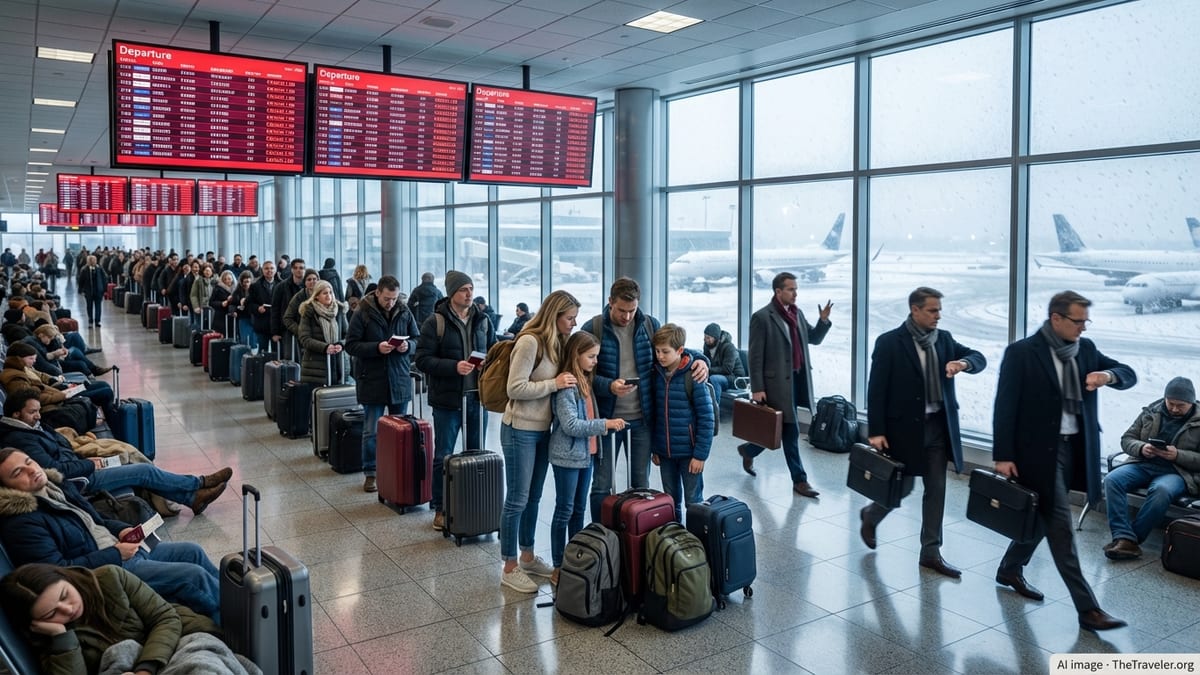
Hundreds of Flights Disrupted at UK’s Busiest Hubs
Publicly available operational data and flight tracking snapshots show that Heathrow and Gatwick experienced some of the most significant disruption in Europe on Saturday as intense storms moved across southern England. Aggregated figures cited in multiple news reports indicate that more than 600 flights linked to the two airports were delayed or cancelled, affecting both arrivals and departures on short and long haul routes.
Coverage in international and specialist aviation outlets describes passengers facing waits of several hours as departure boards filled with late running services and last minute schedule changes. At both airports, the combination of arriving aircraft waiting for stands, departing flights held on the ground and rerouted traffic passing around storm cells created sharp spikes in congestion during the afternoon and evening peak.
Social media posts and passenger forums referenced individual delays of up to six hours, particularly on flights operating within already busy European airspace. Travellers reported extensive queues at check in and security as well as crowded gate areas, with many seeking rebooking options after missing onward connections.
Eurocontrol summaries cited in regional coverage identified Heathrow and Gatwick as the only UK airports listed under “heavy” weather related delays during the worst of the storm activity, underscoring how localized but intense thunderstorm cells can focus disruption on a small number of key hubs.
Storm Cells Force Air Traffic Restrictions
Meteorological updates for southeast England on Saturday pointed to slow moving thunderstorm clusters developing after several days of record breaking heat. Weather radar imagery shared by broadcasters showed lightning, torrential rain and localized hail tracking across the London area and major approach paths used by aircraft heading into Heathrow and Gatwick.
According to publicly available aviation briefings, air traffic control managers reduced the rate of takeoffs and landings during the most active storm periods. This type of flow restriction is a standard safety response when thunderstorms are close to runways or established arrival and departure routes, and it typically results in airborne holding patterns, ground stops for departures from outstations, or both.
Industry explainers note that the hazards associated with convective weather include severe turbulence, lightning strikes, wind shear and sudden changes in visibility. When storm cells align across busy arrival streams, controllers often have little choice but to widen spacing between aircraft or temporarily suspend operations, trading schedule reliability for a higher margin of safety.
Saturday’s disruption followed earlier warnings from weather agencies that intense heat would break with scattered storms across much of the United Kingdom. Travel analysts have highlighted how such rapid shifts from heatwave conditions to violent thunderstorms can be particularly challenging for airlines attempting to keep aircraft, crews and passengers in the right place at the right time.
Knock On Effects Across European Networks
The problems at Heathrow and Gatwick fed quickly into wider European networks, with operational updates from carriers and passenger rights organizations pointing to rolling delays on routes linking London with hubs such as Amsterdam, Paris, Copenhagen and major Mediterranean gateways. In recent weeks, separate disruption episodes at airports including Amsterdam Schiphol and Edinburgh have already left schedules tight, reducing the spare capacity available to recover from new shocks.
Analysis from travel rights platforms shows that delay clusters earlier in June had already disrupted hundreds of services across the same London airports. Those prior disruptions were linked to a blend of operational constraints and airspace management issues, which continue to limit flexibility when sudden weather events occur.
Because many aircraft operating from Heathrow and Gatwick are scheduled on multi leg rotations, a storm related delay of several hours on one sector can cascade across subsequent flights. Evening departures to long haul destinations are particularly vulnerable when inbound aircraft arrive significantly behind schedule, sometimes requiring carriers to swap equipment or reassign crews at short notice.
Travel industry commentary suggests that the latest thunderstorm related chaos is part of a broader pattern of strain on Europe’s aviation system this summer, as passenger numbers climb above 2025 levels while airports and air navigation providers work within finite staffing and infrastructure limits.
What Passengers Can Expect After the Storms
Passenger guidance published by consumer advocates and travel rights services indicates that anyone travelling through Heathrow or Gatwick over the weekend should expect residual delays even after the most active storms have passed. Aircraft and crew rotations can take a full day or more to return to normal, meaning early morning services on Sunday may still feel the impact of Saturday’s disruption.
Information from airline and airport customer channels emphasizes the importance of checking flight status before leaving for the airport, using carrier apps or departure boards to monitor last minute schedule changes. Travellers with tight connections, especially those transiting through other busy hubs, are being urged to allow additional buffer time or consider more flexible itineraries where possible.
Passenger rights organizations underline that eligibility for monetary compensation under European regulations typically depends on the cause of the disruption. Thunderstorms are generally categorized as extraordinary circumstances, which can limit compensation, although airlines are still expected to provide care such as meals, refreshments and accommodation when delays stretch late into the night.
Travel specialists also recommend that affected passengers retain boarding passes, booking confirmations and any written notifications about delays or cancellations. These records can be useful when submitting claims for refunds, alternative transport or out of pocket expenses once the immediate disruption has eased.
Rising Weather Volatility Raises Summer Travel Risks
The thunderstorm turmoil at Heathrow and Gatwick arrives in the middle of an early summer period already marked by intense heatwaves and localized flooding across parts of Europe. Meteorologists and transport analysts have repeatedly warned that more volatile weather patterns are likely to produce additional episodes of disruption as the main holiday season approaches.
Recent operational snapshots compiled by aviation data firms indicate that average air traffic flow management delays per flight in Europe have been trending higher this month, with storms and congestion often intersecting during peak travel hours. For passengers, this translates into a higher likelihood that even routine flights may encounter moderate delays, particularly on Fridays and weekends.
For now, airlines operating at Heathrow and Gatwick are focused on moving stranded passengers to their destinations, clearing backlogs and repositioning aircraft to restore regular schedules. However, commentators note that the combination of busy airports, complex route networks and increasingly changeable weather means that further disruption over the coming weeks cannot be ruled out.
With southeastern England’s storms serving as the latest reminder of how quickly conditions can shift, travellers planning journeys through London’s main airports are being encouraged to keep plans flexible, monitor forecasts and travel alerts closely, and build additional time into itineraries during periods of unsettled weather.