


More news on this day
Severe summer storms sweeping across major U.S. aviation corridors have triggered 4,367 flight delays and 210 cancellations, creating widespread disruption for travelers at some of the country’s busiest airports.
Get the latest news straight to your inbox!
Storm Systems Snarl Key Hubs and Corridors
Publicly available flight-tracking data shows that the latest wave of disruption has been concentrated along the East Coast and through key Midwest hubs, where a combination of thunderstorms, low visibility and ground-stop programs slowed traffic throughout the day. The turbulent weather pattern has repeatedly swept over heavily traveled routes linking New York, Boston, Washington, Atlanta and Chicago, forcing airlines and air traffic managers to reduce the number of departures and arrivals for safety reasons.
According to aggregated aviation dashboards, the 4,367 delays and 210 cancellations represent one of the most disruptive single-day periods of the current summer travel season, with knock-on effects expected to continue into the evening and potentially into the next day. Airlines have been adjusting schedules in real time as storm cells redevelop over the same regions, complicating efforts to restore normal operations.
Large hub airports, including the New York region’s major fields and busy connecting centers in the Southeast, have reported long departure queues and extended tarmac waits as crews work within strict safety and crew-duty limits. Even airports that avoided the worst of the storms have experienced delays as they awaited inbound aircraft and crews that were stuck earlier in the day elsewhere in the system.
Meteorologists tracking the system describe a classic mid- to late-summer pattern, with intense thunderstorms forming along frontal boundaries and feeding on warm, humid air. For aviation, that combination often translates into rapidly changing conditions, lightning risks on the ramp and airspace constraints as controllers reroute traffic around the most active cells.
How 4,367 Delays Ripple Across the Network
While 210 outright cancellations capture attention, the 4,367 delays are having the broader impact on the traveling public. Industry data and prior government analyses indicate that a high volume of weather-driven delays can cascade through the network, creating missed connections and repositioning challenges for both aircraft and crew. A single late inbound aircraft can push back the departure of several later flights, especially at hubs built around tightly timed banks of arrivals and departures.
Carriers often prioritize keeping as many flights operating as possible, even if they depart late, to avoid stranding aircraft in the wrong cities overnight. On days like this, however, the sheer scale of weather activity can overwhelm those strategies. As thunderstorm complexes move across the country, airports may briefly reopen and then slow again, leading to rolling waves of delays that are difficult for passengers to predict.
Operational data from past storm events suggests that delays caused by extreme weather can also increase the share of late-arriving aircraft in the overall delay picture. When planes arrive late from earlier flights affected by storms, subsequent legs may face additional ground delays while crews reset and airport operations absorb the backlog. This pattern is visible again in the latest disruption, with late inbound flights contributing to evening congestion even as the most intense storms move away.
Air traffic flow programs, which limit the rate of departures and arrivals into affected regions, further magnify the delay totals. These measures are a key safety tool during severe weather but can leave dozens of aircraft at the gate or on taxiways waiting for release times, particularly at complex airspace chokepoints along the Eastern Seaboard.
Airlines Juggle Safety, Schedules and Customer Commitments
Public schedules and airline operations pages show carriers trimming frequencies, consolidating lightly booked services and focusing resources on core trunk routes as they respond to the severe weather. When forecast models indicate prolonged storms or repeated thunderstorm development over a hub, airlines may proactively cancel some flights to create buffer in the schedule and reduce the number of passengers stuck mid-journey.
Recent policy updates and customer-service dashboards published by the U.S. Department of Transportation highlight that carriers generally are not required to provide cash compensation when disruptions are caused by weather, although many major airlines commit to certain forms of assistance when delays or cancellations are within their control. On a day dominated by severe storms, those distinctions become critical for travelers seeking rebooking options, meal vouchers or hotel accommodations.
Operational reports from previous severe-weather events show that some airlines now issue travel waivers in advance when forecasters call for widespread thunderstorms over key corridors. These waivers often allow customers to change flights within a defined window without additional fees, in an effort to spread demand across multiple days and ease peak-day congestion. Signs of similar measures have emerged around the current disruptions, particularly at airports repeatedly affected by summer storm systems this season.
Despite the high number of impacted flights, safety remains the primary constraint. Thunderstorms pose risks such as wind shear, hail, lightning and rapidly changing wind patterns near runways. When those risks are elevated, carriers and air traffic managers often choose to hold departures or divert aircraft even if skies appear relatively clear from terminal windows, a pattern again evident in today’s disruption.
Travelers Face Long Lines, Limited Rebooking Options
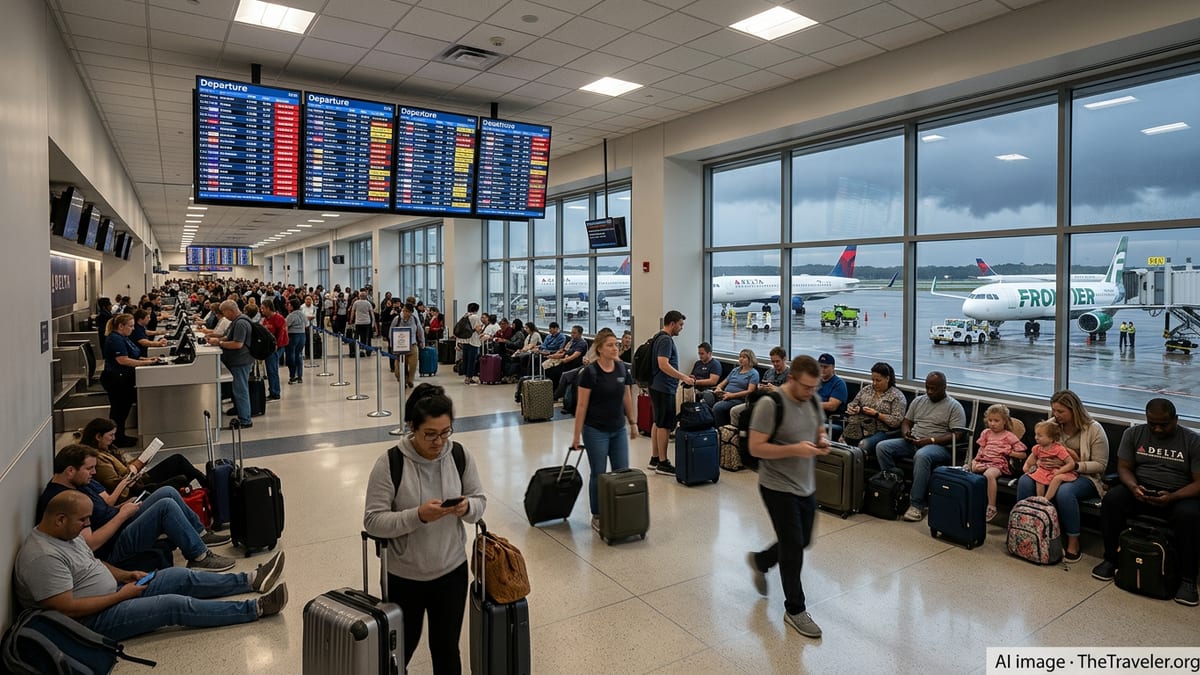
For passengers, the 4,367 delays and 210 cancellations have translated into long lines at check-in counters and customer-service desks, congested airport concourses and uncertainty about onward connections. Anecdotal accounts shared on social platforms and travel forums describe travelers spending several hours in queues to secure new itineraries, with some reporting overnight stays as remaining seats on later flights filled quickly.
Because many flights during the summer peak already operate close to full, same-day rebooking options can be scarce after large-scale disruptions. Publicly visible seat maps and inventory tools indicate that alternative departures from heavily affected hubs are limited, forcing some travelers to accept routings through secondary airports or multi-stop journeys that stretch travel times by half a day or more.
In addition to schedule stress, severe weather can disrupt airport ground transportation and local services. Heavy rain, lightning and flooding near terminals can slow shuttle buses, ride-hailing services and public transit links, extending door-to-door travel times. Some airports have also reported minor power interruptions and brief outages in baggage-handling or check-in systems during intense storms, further complicating the passenger experience.
Consumer advocates often encourage travelers to use airline mobile apps, text alerts and direct-status tools to monitor changes during rapidly evolving weather events. On days with widespread disruption, those digital channels can update faster than airport departure boards and can sometimes surface self-service rebooking options that reduce the need to stand in line.
What Today’s Disruptions Signal About a Volatile Travel Season
The latest round of severe-weather delays and cancellations underscores what has already been a volatile year for U.S. air travel. Seasonal storm patterns, lingering infrastructure constraints and high demand have combined to create a series of high-impact days across multiple carriers and regions. Industry analysts note that even when overall on-time performance improves over the long term, clusters of major weather events can dominate the experience for travelers during peak vacation periods.
Government air travel reports point out that extreme weather typically accounts for a smaller share of total delays than factors such as carrier operations or late-arriving aircraft in an average year. However, when severe storms align with busy travel windows, weather-related disruptions can spike sharply in a matter of hours, as they did with today’s 4,367 delays and 210 cancellations.
Looking ahead to the remaining weeks of the summer season, forecasters expect continued bouts of strong thunderstorms along the same heavily traveled corridors, suggesting that further disruption is possible. Airports and airlines have been working on long-term efforts to modernize air traffic control technology, add staffing and adjust schedules to create more resilience, but those initiatives take time to show results at scale.
For now, today’s severe-weather disruptions serve as another reminder that flexibility remains an asset for air travelers in the United States. Building in longer connection times, avoiding the last flight of the day when possible and staying closely attuned to developing forecasts can help reduce the risk of being caught in the next major wave of delays and cancellations.