


More news on this day
Severe weather sweeping across key U.S. aviation hubs has triggered 4,367 flight delays and 210 cancellations in a single day, disrupting travel plans for tens of thousands of passengers at the height of the summer season.
Get the latest news straight to your inbox!
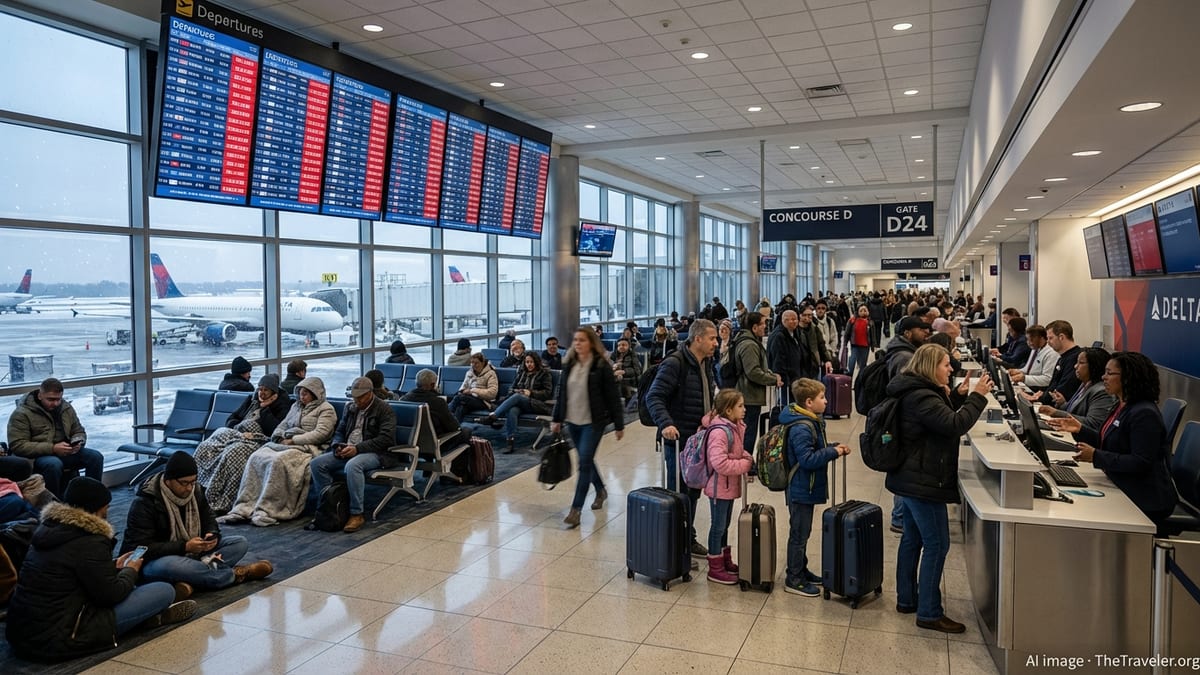
Storm Systems Snarl Major Hubs and Corridors
Published aviation tracking data and media coverage indicate that a line of intense thunderstorms and heavy rain moving through the Northeast and Mid-Atlantic was the primary driver of the disruptions, with ripple effects extending into the Midwest and Southeast. The combination of lightning, low visibility and rapidly changing wind conditions forced airports and air traffic managers to reduce the number of arrivals and departures that could safely operate per hour.
Operations were particularly strained at major connecting hubs and high-density coastal airports, where a relatively small reduction in runway capacity can quickly cascade into large numbers of delayed flights. Ground stops and ground-delay programs, used to meter traffic into overloaded airspace, meant aircraft were held at gates or on tarmacs for extended periods, often leading to missed connections even when flights were not ultimately canceled.
Because summer storms tend to flare up in the afternoon and evening, many flights scheduled later in the day either departed significantly behind schedule or were scrubbed altogether. Airlines also faced challenges repositioning aircraft and crew once the most severe cells passed, further lengthening the disruption window beyond the peak of the storms themselves.
Smaller regional airports connected to these hubs experienced secondary impacts, as carriers prioritized limited capacity for the busiest trunk routes. This translated into full cancellations on some short-haul services even when local weather conditions appeared relatively benign to travelers on the ground.
Pressure on Airlines and the Aging Air Traffic System
Airlines have attributed the bulk of the delays and cancellations to extreme weather and related air traffic control constraints, a pattern reflected in longer-term statistics from the U.S. Department of Transportation, which consistently show storms and national aviation system issues among the leading causes of schedule disruptions. Industry data over recent years point to rising weather volatility, with more frequent episodes of heavy precipitation and severe convective activity during the traditional summer peak.
Carriers enter busy travel periods with tighter schedules in order to meet demand, leaving less slack in the system when weather forces abrupt changes. Once crews exceed allowable duty times because of rolling delays, flights can no longer operate even if a break emerges in the storm pattern. This interaction between meteorological hazards, regulatory limits and network complexity often amplifies what might otherwise be a shorter-lived disruption.
Publicly available commentary from passenger groups and aviation analysts also highlights the role of long-running challenges within the U.S. air traffic control system. Staffing constraints in some key facilities and the slow rollout of modernized traffic-management technology can limit the ability to reroute aircraft efficiently around storm cells or quickly recover when conditions improve, contributing to extended delay chains throughout the day.
While airlines have expanded the use of real-time data tools and predictive analytics to anticipate capacity drops and preemptively trim schedules, such measures typically translate into earlier cancellations rather than fewer disruptions overall, shifting the burden from last-minute decisions at the gate to more advance notification but not eliminating the underlying constraints.
Travelers Face Missed Connections, Long Rebookings and Confusion
The wave of 4,367 delays and 210 cancellations left many passengers facing missed connections, unexpected overnight stays and uncertainty about when they would reach their destinations. Social media posts and message-board accounts described hours-long waits in customer-service lines, crowded terminals and limited availability of same-day alternative flights, particularly on popular leisure routes.
Because most U.S. airlines categorize severe weather as an event beyond their control, travelers affected by cancellations often are not entitled to hotel vouchers or additional compensation, even when they are required to stay overnight. Publicly available guidance from consumer advocates notes that carriers generally commit to rebooking passengers at no additional fare cost on the next available flight, but options can be scarce when entire waves of departures are grounded at once.
The disruptions also exposed how dependent many passengers have become on mobile apps and digital notifications. While real-time updates can help some travelers rebook more quickly, widely reported experiences suggest that inconsistent messaging about whether delays were due to weather, crew timing or maintenance left others unsure about their rights and the likelihood that a delayed flight would ultimately depart.
Families traveling with children, as well as those connecting from international services onto domestic legs in the United States, appeared to be among the most affected, as their itineraries were less flexible and alternative routings involved additional border controls or complex arrangements for checked baggage.
Broader Trends in a Volatile Travel Season
The latest disruption day, with more than four thousand flights delayed and hundreds canceled, fits into a broader pattern of turbulence for U.S. air travel in 2026. Earlier in the year, a major January winter storm and a powerful March blizzard each led to thousands of cancellations across multiple days, underscoring the growing influence of extreme weather on aviation reliability.
Industry-focused reports have pointed to climate-linked shifts in storm behavior as a factor in planning for future capacity. Stronger and more frequent convective systems in key air corridors, combined with heat-driven performance limits at some airports, are forcing airlines and regulators to contemplate new operational norms, including more conservative scheduling around historically storm-prone periods.
At the same time, passenger demand has remained robust, particularly for domestic leisure travel, eroding the buffer that airlines once maintained to absorb shocks. When networks are scheduled more tightly and planes are flying close to full, there is less room to reaccommodate those whose flights are disrupted, which is why a single severe-weather day now regularly ripples across the system for 24 hours or more.
Policy discussions have increasingly focused on whether updated passenger protections, clearer communication standards and accelerated investment in air traffic infrastructure could reduce the impact of such events on travelers, even if the underlying meteorological risks continue to rise. For now, however, the numbers logged on this most recent stormy day illustrate how quickly the nation’s air transportation system can become strained when severe weather collides with peak-season demand.