


More news on this day
Seychelles is placing its UNESCO-recognised natural heritage at the centre of a new tourism push, aligning conservation accolades with a strategy to attract higher value, sustainability-minded visitors from key long-haul markets.
Get the latest news straight to your inbox!
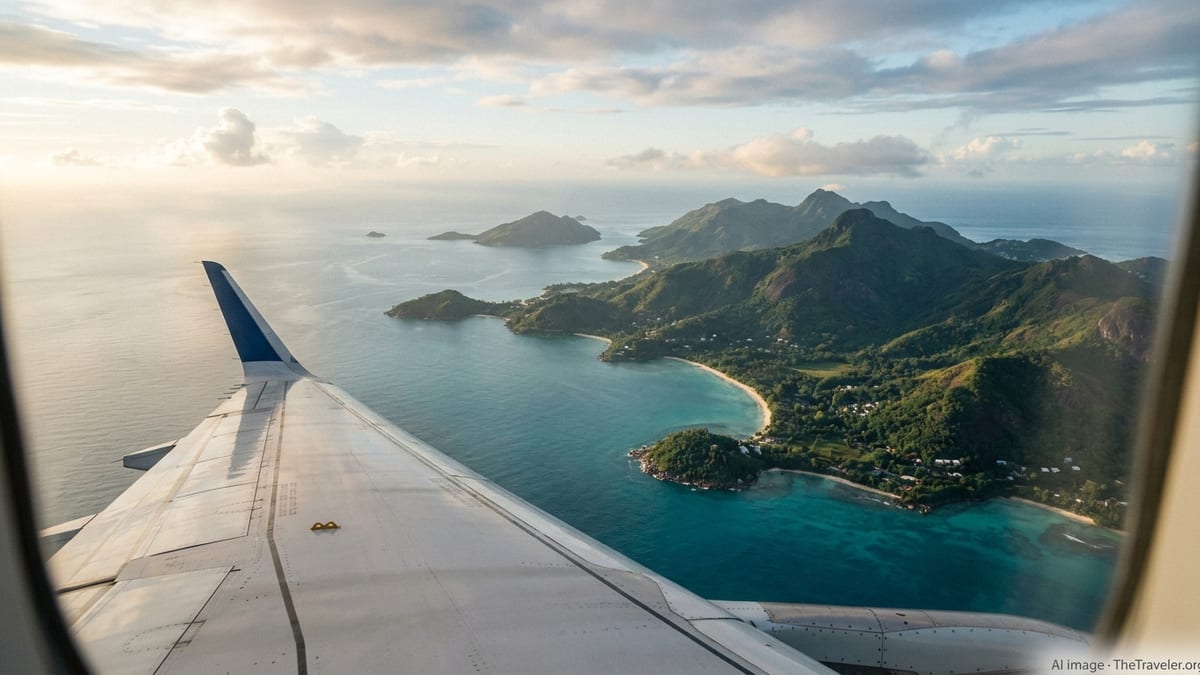
UNESCO Status Moves to the Heart of Tourism Strategy
Seychelles currently counts two natural UNESCO World Heritage sites, Aldabra Atoll and Vallée de Mai Nature Reserve, which are frequently promoted as signature attractions in national tourism campaigns. Publicly available information from UNESCO and national agencies highlights these sites as evidence of the archipelago’s global environmental significance and as anchors for nature-based tourism itineraries.
Aldabra Atoll, one of the world’s largest raised coral atolls, and Vallée de Mai on Praslin, a primeval palm forest known for the endemic coco de mer, have long drawn specialist travellers interested in biodiversity and geology. National heritage documentation notes that Aldabra’s expanded marine boundaries and Vallée de Mai’s strict conservation regime are designed to safeguard these assets while enabling carefully controlled visitation.
Recent policy documents and tourism marketing material indicate that Seychelles is increasingly positioning these UNESCO properties as flagships for a broader destination brand built around pristine ecosystems, endemic species and low-impact experiences. The objective is to stand out in a crowded sun-and-sea market by tying holiday narratives to globally recognised conservation successes.
Officials and tourism planners have also drawn on UNESCO’s World Heritage and Sustainable Tourism guidance, which promotes destination-level planning and community participation, to frame Seychelles’ own approach. Publicly available toolkits and programmes are referenced in local planning processes as benchmarks for integrating heritage protection with visitor growth.
Policy Framework Links Heritage and High-Value Growth
Seychelles’ Sustainable Tourism Policy Framework for 2024 to 2034 sets out a shift from a volume-driven model to one that emphasises value, environmental safeguards and cultural authenticity. The document highlights the country’s protected areas and World Heritage sites as strategic comparative advantages in appealing to discerning travellers willing to pay more for low-impact, nature-rich holidays.
Within this framework, Aldabra and Vallée de Mai are described as critical reference points for product development. The policy encourages the creation of experiences that build on the story of Seychelles as a small island state that protects over half of its terrestrial area and a large share of its marine space, with UNESCO sites serving as tangible proof of that commitment.
Complementary measures, such as the Seychelles Sustainable Tourism Label and new destination-management plans on islands like La Digue, are designed to cascade heritage-linked standards across the wider tourism economy. Certification schemes and visitor-use plans aim to reduce environmental pressure while maintaining the sense of exclusivity that underpins Seychelles’ premium pricing strategy.
Tourism master planning also recognises the risk that poorly managed growth could erode the very qualities that underpin UNESCO recognition. Planning documents emphasise carrying-capacity assessments, zoning and investment controls around sensitive landscapes, including those connected to or buffering the World Heritage properties.
New International Programmes Elevate Global Profile
Seychelles’ collaboration with UNESCO goes beyond its two inscribed sites. The country became the first pilot location for UNESCO’s IslandWatch initiative in 2024, according to publicly available information from the United Nations in Seychelles. The programme focuses on climate resilience, ecosystem monitoring and data-driven management for islands, with implications for how tourism interacts with fragile coastlines and reefs.
This pilot role effectively positions Seychelles as a testbed for integrating environmental observation with policy decisions on land use and visitor flows. The visibility associated with IslandWatch offers an additional narrative for tourism promotion, aligning Seychelles with global innovation in island sustainability and climate adaptation.
In parallel, Seychelles has taken part in regional and international events where UNESCO heritage, cultural expressions and sustainable tourism are showcased together. Coverage of the country’s recognition at a heritage-focused tourism fair in Europe, where its UNESCO sites and traditional Moutya dance were highlighted, illustrates how the destination is using cultural and natural accolades to appeal to niche markets interested in authenticity and responsible travel.
These engagements contribute to raising Seychelles’ profile among tour operators, media and travellers who seek destinations aligned with conservation principles. By linking its brand to UNESCO-led initiatives, Seychelles aims to convert recognition in heritage and sustainability forums into concrete gains in visitor arrivals and tourism spending.
Sustainable Tourism Tools Support Site and Island Management
Management of Seychelles’ UNESCO sites is closely tied to national efforts to embed sustainable tourism practices across the archipelago. Publicly available reports on Vallée de Mai describe recent projects, supported by international partners, to improve visitor management, strengthen conservation and enhance interpretive services for tourists returning after the pandemic-era downturn.
At Aldabra, long-running scientific monitoring and strict access rules have become part of the destination’s narrative, with visiting researchers and small numbers of tourists contributing to funding for conservation. UNESCO World Heritage marine site guidance stresses the role of limited, well-managed visitation in supporting both biodiversity protection and local economies, a message that aligns with Seychelles’ broader strategy.
On more accessible islands, such as La Digue, visitor-use planning initiatives are being used to balance pressure on beaches, trails and village infrastructure with community expectations and environmental safeguards. Workshops and consultations described in government communications underline a drive to involve local operators and residents in decisions about how tourism growth should be channelled.
These efforts reflect a wider trend in Seychelles of adopting international sustainable tourism tools, including those developed by UNESCO, and tailoring them to island contexts. The result is a layered approach in which World Heritage sites act as exemplars for the standards that the country seeks to apply more widely.
Balancing Visibility, Access and Conservation
As Seychelles intensifies its heritage-focused tourism push, policymakers face the challenge of maintaining the balance between visibility and vulnerability. Increased global attention around UNESCO recognition can translate into higher demand for visits to fragile areas, particularly smaller sites such as Vallée de Mai, where space and ecological resilience are limited.
Planning documents and conservation assessments stress that strict visitor caps, guided-tour systems and investment restrictions will remain essential to protect key habitats and species. This cautious stance is particularly pronounced for Aldabra, which is routinely cited in conservation literature as one of the planet’s least disturbed tropical island ecosystems.
In economic terms, Seychelles is betting that a model built on scarcity, quality and environmental credentials can deliver steady or growing tourism revenue without the mass-market pressures seen in other coastal destinations. By foregrounding its UNESCO properties and related international initiatives, the country is signalling to airlines, operators and travellers that heritage and sustainability are non-negotiable pillars of its tourism offer.
The coming years will test whether this heritage-led strategy can keep Seychelles competitive amid rising regional competition and climate-related threats. For now, the country appears determined to turn its UNESCO recognition, and the programmes that flow from it, into both a conservation asset and a driver of global tourism growth.