


More news on this day
Travelers at Toronto Pearson International Airport faced another difficult travel day as at least 23 flights were canceled and many more delayed, with Air Canada, regional affiliate Jazz and several other carriers disrupting major routes across Canada, the United States and Europe.
Get the latest news straight to your inbox!
Fresh Disruptions at Canada’s Busiest Hub
Publicly available flight-status boards and tracking services for May 23 and May 24 indicate that Toronto Pearson once again experienced a concentrated wave of cancellations and late-running services, echoing earlier episodes of operational stress at the airport this year. While the overall number of cancellations remained below the extreme levels seen during past winter storms, the targeted loss of 23 flights and a cluster of long delays created outsized disruption for connecting travelers.
Data compiled from aviation tracking platforms and airport information pages show Air Canada and Jazz accounting for a significant share of the disrupted schedule, alongside a smaller number of affected flights from other domestic and transborder operators. These interruptions followed a week in which Canadian travelers nationwide were already contending with more than 100 cancellations and several hundred delays, underscoring how even modest schedule cuts at Pearson can quickly ripple across the wider network.
Reports indicate that the latest irregular operations built on a pattern of rolling disruption at Pearson stretching back through the winter and early spring. Previous days with higher cancellation volumes have often combined weather, air traffic control constraints and staffing limitations, creating what analysts describe as stacked delay scenarios where relatively minor slippages early in the day snowball into cancellations by evening.
Major Routes Across North America and Europe Affected
Although the absolute number of canceled flights remained in the low double digits, their concentration on key trunk routes magnified the impact for passengers. Monitoring of Pearson’s departure and arrival boards suggests that several cross border flights to major U.S. hubs, including New York area airports and Washington, were either canceled outright or departed significantly behind schedule, disrupting onward connections across the United States.
Domestic travelers were hit as well, with core links between Toronto and other Canadian cities such as Ottawa, Montreal and regional centers facing rolling delays. Past disruption summaries for Pearson have highlighted how even a handful of cancellations on these routes can leave travelers stranded for hours, particularly late in the day when alternative departures are limited and remaining services are already heavily booked.
Europe bound travelers saw knock on effects as well. Long haul services rely on timely feeder flights from across Canada and the United States, and when those shorter sectors are delayed or canceled, passengers can misconnect, leaving transatlantic flights departing with empty seats while affected travelers are rebooked onto later services. Recent coverage of earlier Pearson disruptions in 2026 has already documented cases where cancellations on regional and U.S. routes cascaded into missed departures to European and Middle Eastern hubs.
Air Canada and Jazz Under Renewed Scrutiny
The latest episode adds to ongoing scrutiny of Air Canada and its regional partner Jazz, which together operate a large share of Pearson’s domestic and transborder schedule. Previous analyses of cancellation data this year have frequently identified the pair among the most impacted operators during days of heavy disruption, particularly when winter weather or air traffic control constraints are in play.
Industry commentary notes that the Air Canada and Jazz network is especially sensitive to what experts describe as cascading delays. Because many aircraft and crew rotate through multiple short sectors in a single day, a delay on an early morning departure can reverberate through several subsequent flights, eventually forcing cancellations when crew duty limits are reached or when aircraft are no longer in the right place at the right time.
In addition, recent nationwide tallies of Canadian flight disruptions have shown Air Canada and Jazz prominently represented among canceled and heavily delayed flights, even on days when other carriers experienced more moderate impacts. That pattern has contributed to mounting frustration among frequent travelers, some of whom have taken to online forums to document repeated schedule changes and same day cancellations on what were once considered reliable trunk routes.
Weather, Technical Factors and System Strain
The specific combination of factors behind the 23 cancellations at Pearson has not been attributed to a single cause. However, publicly available operational updates in recent days point to a mix of infrastructure and airspace issues contributing to broader strain. Earlier in the week, aviation discussion channels highlighted an outage affecting the filing of flight plans in Canadian airspace, prompting widespread delays as airlines and air traffic managers worked through a backlog.
Weather related challenges remain a recurrent theme as well. Throughout 2026, Canadian carriers have contended with episodes of severe cold, heavy snow and low visibility that require intensified de icing and more conservative runway operations. Even when conditions improve, the residual impact on aircraft and crew positioning can persist for days, particularly at high volume hubs such as Pearson where recovery windows are narrow.
Analyses of recent flight performance reports also emphasize how tight scheduling and high aircraft utilization can leave little buffer when something goes wrong. When a long haul aircraft arrives late from overseas, for example, its delayed turnaround can affect several subsequent North American departures. Likewise, a technical issue on a regional jet operated by Jazz can force the consolidation of multiple short haul flights, leaving some departures canceled outright.
Passengers Face Long Lines and Limited Alternatives
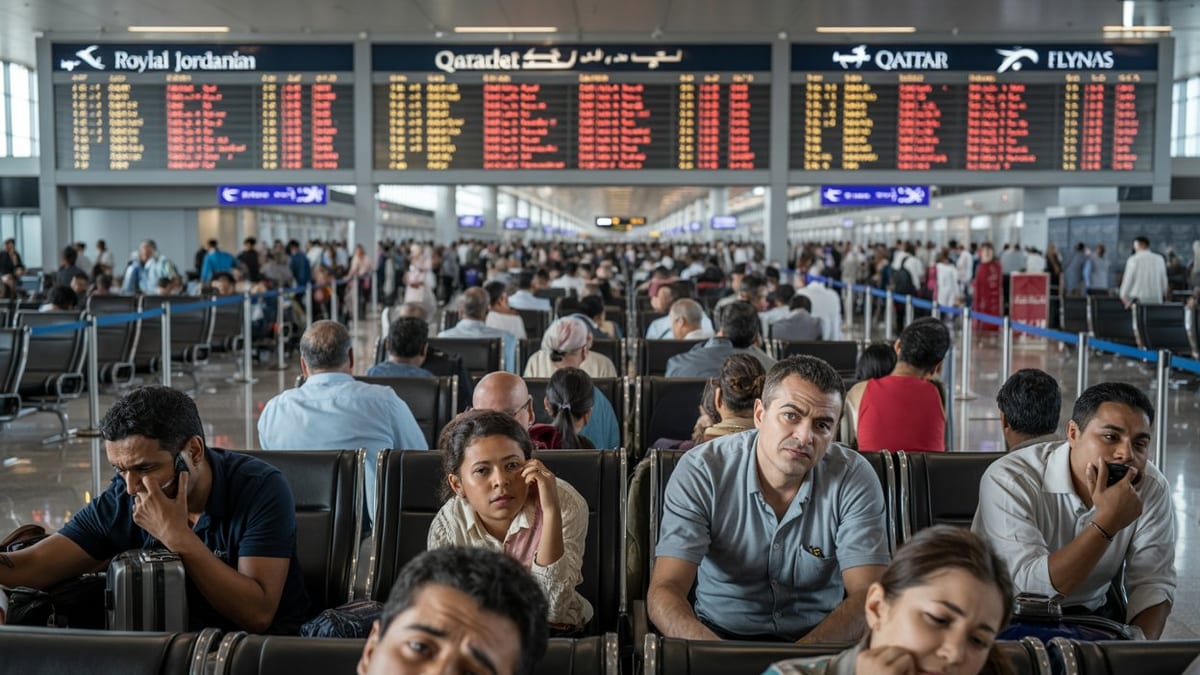
For travelers caught in the latest disruption at Pearson, the practical effects were familiar. Photographs and firsthand descriptions circulating on social media described crowded departure halls, long lines at customer service counters and confusion over conflicting information between airline apps, airport screens and third party tracking sites. Similar scenes have been reported repeatedly during previous Pearson disruption events this year.
Passenger rights organizations point out that Canada’s air passenger protection framework sets out specific obligations for airlines in cases of cancellation and long delay, including rebooking on the next available flight and, in some circumstances, compensation. However, advocates note that the process of securing those entitlements can be time consuming, particularly when large numbers of flights are disrupted at once and call centers are overwhelmed.
Travel experts advise that on days when Pearson experiences concentrated cancellations and delays, options for same day rebooking can quickly become scarce, especially on popular North American and European routes. As aircraft fill, some travelers may find themselves rebooked via circuitous routings or facing overnight stays, adding accommodation and meal costs to the inconvenience of missed plans.
With the summer travel peak approaching, the latest wave of disrupted flights at Toronto Pearson underscores ongoing concern about the resilience of Canada’s aviation system. Analysts note that while extreme weather and isolated technical issues are difficult to avoid, reducing the frequency and impact of stacked delay days at major hubs like Pearson will be critical to restoring traveler confidence in the months ahead.