


More news on this day
The U.S. travel and airline industries are warning of severe disruption after the Trump administration renewed threats to pull Customs and Border Protection officers from major international airports in jurisdictions labeled as sanctuary cities, a move that could slow or halt processing of millions of foreign visitors and upend flight operations at the country’s busiest global gateways.
Get the latest news straight to your inbox!
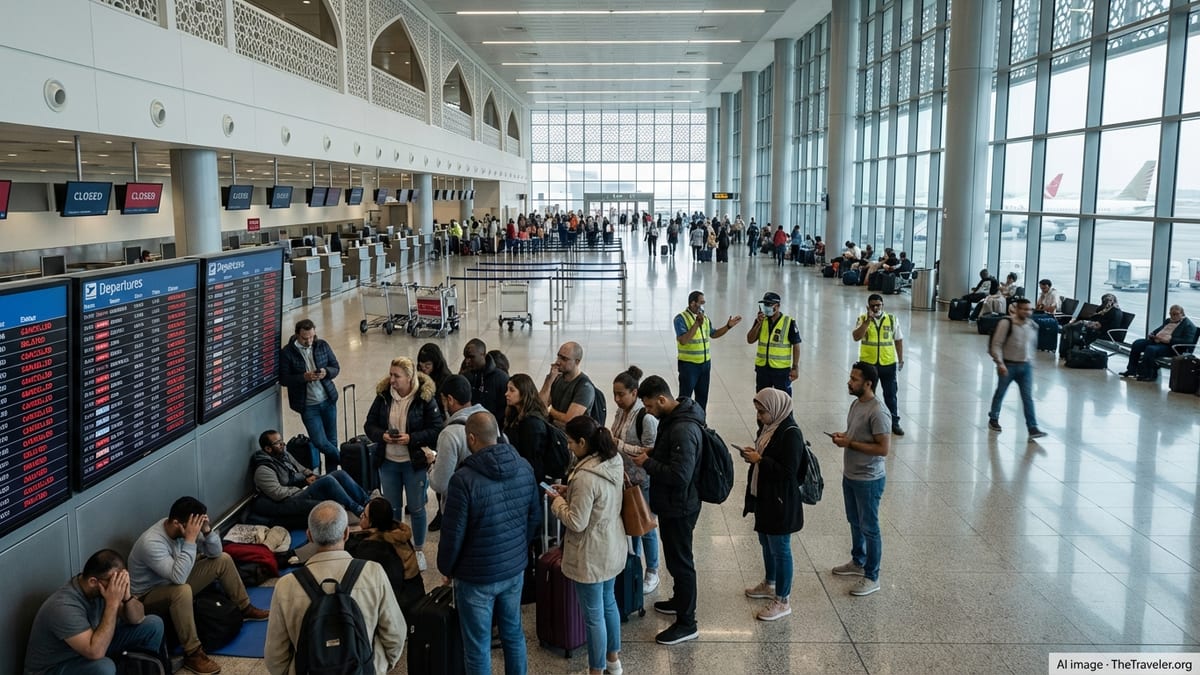
Renewed Threat Targets High-Profile Liberal Hubs
Recent statements from Homeland Security leadership have revived the possibility of reassigning Customs and Border Protection personnel away from airports in cities that limit cooperation with federal immigration enforcement. Publicly available information indicates that the idea centers on targeting so-called sanctuary jurisdictions, many of which are large, Democratic-leaning metropolitan areas with major international gateways.
Reports indicate that airports potentially affected include hubs serving New York, Los Angeles, San Francisco, Chicago, Denver and Philadelphia. These facilities function as primary ports of entry for transatlantic and transpacific traffic, handling millions of arriving international passengers each month. Any substantial reduction in federal inspection staff at such locations could jeopardize their ability to legally process arriving travelers.
Coverage in national outlets over the past week describes the threat as part of a broader conflict between the administration and liberal jurisdictions over immigration policy. Industry observers note that using airport staffing as leverage brings political tension directly into the heart of the U.S. aviation and tourism system at a time when travel volumes remain high and system resilience is already being tested by separate security staffing shortages.
Travel and Airline Sectors Warn of Cascading Disruptions
Trade groups representing airlines, airports and tourism businesses have reacted with alarm, arguing that even partial withdrawal of Customs and Border Protection officers from major hubs could trigger cascading operational problems across the national air network. Public statements from industry associations emphasize that customs staffing is a core requirement for international arrivals and cannot be quickly replaced with other personnel or technology.
According to recent industry analyses, bottlenecks at federal inspection stations can rapidly ripple outward, delaying arriving flights, backing up aircraft at gates and causing missed connections for onward domestic and international services. In severe cases, carriers may be forced to hold passengers on the tarmac, divert flights or temporarily suspend routes if ports of entry cannot reliably clear travelers.
Airline capacity projections for the current spring and summer seasons show record or near-record passenger volumes, particularly on long-haul routes into coastal hubs. Publicly available forecasts from carrier groups note that schedules are tightly timed, leaving limited margin to absorb additional delays at arrival halls. Industry experts caution that policy-driven staffing shocks at key airports could turn localized customs slowdowns into nationwide disruptions affecting both leisure and business travelers.
Economic Stakes for Tourism-Focused Cities
Major U.S. cities that rely heavily on international visitors face significant economic exposure if customs processing is curtailed. Tourism boards, hotel associations and convention organizers have highlighted that international guests tend to stay longer and spend more per trip than domestic travelers, supporting jobs across lodging, dining, retail, attractions and ground transportation.
Recent economic impact studies used by city and state officials show that inbound international travel contributes billions of dollars annually to metropolitan economies such as New York, Los Angeles, San Francisco and Chicago. A sudden deterioration in the reliability or predictability of entry procedures at airports serving these markets could prompt travelers and tour operators to reroute itineraries through alternative hubs in Canada, Europe or other regions.
Analysts tracking global travel trends point out that competitors to the United States are investing heavily in streamlined border processes, biometric screening and marketing campaigns aimed at attracting long-haul visitors. Against that backdrop, widely publicized threats of curtailed customs services at politically prominent U.S. airports risk reinforcing perceptions of unpredictability and politicization in the American entry experience, potentially weakening the country’s long-term competitive position in international tourism.
Legal and Operational Questions Cloud Implementation
The feasibility of significantly pulling Customs and Border Protection officers from large international airports remains uncertain. Legal specialists quoted in recent coverage note that federal statutes and long-standing practice treat customs services as essential functions at designated ports of entry, raising questions about how far an administration can go in reducing staffing without violating statutory obligations or triggering court challenges.
Operationally, diverting large numbers of officers away from airports serving as primary gateways would require substantial reconfiguration of staffing models that already balance needs across land borders, seaports and air terminals. Public budget documents and advisory reports have for years highlighted concerns about thin staffing at inspection points, suggesting that there is limited surplus capacity to redeploy without creating vulnerabilities elsewhere in the system.
Industry groups and some members of Congress are discussing potential legislative responses, including proposals that would require advance notice, impact assessments or explicit public interest findings before any large-scale reassignment of airport customs staff. While such ideas remain at an early stage, their emergence underscores growing unease about the use of critical border personnel as a tool in domestic political disputes.
Air Travel Already Strained by Security Staffing Turmoil
The threatened customs pullback comes as the broader aviation security workforce is under strain from a separate funding standoff affecting the Department of Homeland Security. Recent reports detail widespread unpaid work and elevated absence rates among Transportation Security Administration officers, resulting in security lines stretching well beyond normal peak-time waits at airports across the country.
Some airports have already reduced or consolidated security checkpoints, and travel advisories are urging passengers to arrive significantly earlier for departures. Industry testimony submitted to federal policymakers has warned that prolonged funding gaps and erratic staffing patterns can quickly escalate from an inconvenience for travelers into system-level disruptions requiring flight cuts and schedule reductions.
With security screening and customs inspection both situated within the same federal department, the possibility of concurrent stress on these functions worries airlines and airports. Travel analysts note that the combination of longer security lines at departure and potential customs slowdowns on arrival could make the overall U.S. trip experience meaningfully less attractive, especially for high-spending international visitors who have alternative routing options.