


More news on this day
Shanghai Pudong International Airport has been hit by a fresh wave of disruption, with 12 flights reportedly cancelled and 554 delayed across China Eastern, China Southern, Air China, Juneyao and Spring Airlines, unsettling travel plans across China, Japan, South Korea, Singapore, Thailand and Malaysia.
Get the latest news straight to your inbox!
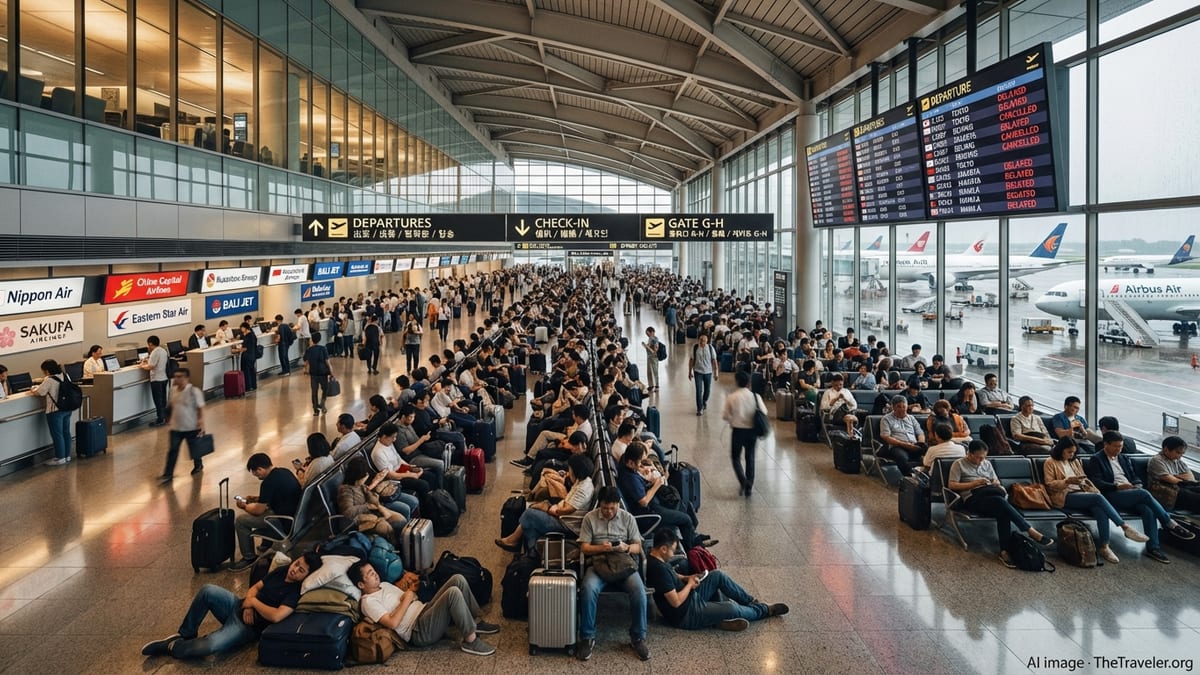
Major Hub Brought to a Standstill
Shanghai Pudong International Airport, a primary gateway for China’s international travel, experienced significant operational disruption as hundreds of flights ran behind schedule and a dozen were cancelled across multiple carriers. Publicly available tracking data and aggregated delay reports indicate that services operated by China Eastern, China Southern, Air China, Juneyao Air and Spring Airlines were among those most affected.
The disruption has been concentrated on short and medium haul routes that form the backbone of regional connectivity, including key business and leisure links to Japan, South Korea and Southeast Asia. The knock-on effect has included missed onward connections, aircraft and crew out of position, and extended turnaround times at gates.
Shanghai Pudong serves as a major hub for China Eastern and an important base for Air China, China Southern, Juneyao Air and Spring Airlines, meaning irregular operations at this single airport can quickly cascade across their wider networks. The latest disruption underscores how sensitive regional aviation remains to bottlenecks at China’s busiest hubs.
While the precise causes of each affected flight differ, operational databases and schedule monitoring platforms point to a combination of air traffic flow restrictions, weather-related constraints and ground handling congestion converging to produce the unusually high number of delays.
China’s Big Three Carriers Feel the Strain
China Eastern, China Southern and Air China, the country’s three largest airlines, have all seen their operations at Shanghai Pudong slow sharply during the latest bout of disruption. According to available performance dashboards, China Eastern departures from the hub recorded particularly heavy delays on high-frequency domestic routes, including links into major inland cities and coastal provincial capitals.
Flight status summaries show that China Southern and Air China, which rely on Shanghai for a mix of domestic and regional international services, also registered a higher-than-normal share of late and rescheduled departures. These slowdowns have added pressure on already busy schedules that connect Shanghai with airports in Beijing, Guangzhou, Chengdu and other large metropolitan centres.
Data from recent days further suggests that the three airlines have been contending with a broader pattern of strain across China’s aviation network, with previous waves of disruption in May and June highlighting the vulnerability of densely scheduled hubs such as Shanghai, Shenzhen and Guangzhou when air traffic control measures tighten or weather systems move through.
The combination of full peak-season loads and limited slack in the timetable leaves carriers with little flexibility to absorb delays, so even a relatively small number of cancellations can translate into widespread knock-on disruption.
Juneyao and Spring Airlines Hit on Regional Leisure Routes
Privately owned Juneyao Air and low cost carrier Spring Airlines, both headquartered in Shanghai and heavily dependent on Pudong and nearby Hongqiao, have also been drawn into the turbulence. Route data shows that these airlines operate dense networks radiating from Shanghai to popular leisure destinations in Japan, South Korea, Thailand, Singapore and Malaysia.
During the current disruption, tracking platforms list multiple late departures and schedule changes on routes linking Shanghai with cities such as Jeju, Bangkok, Phuket, Kuala Lumpur and Singapore. Some services have been cancelled outright, while others have departed substantially behind schedule, forcing passengers to adjust hotel bookings, tours and domestic transfers at their destination.
Juneyao and Spring’s business models, which prioritise high aircraft utilisation and fast turnarounds, make them particularly exposed when gate congestion or airspace restrictions slow operations. Once aircraft begin to run late early in the day, airlines can struggle to recover punctuality across subsequent rotations, especially on multi-leg itineraries touching several countries.
The disruption at Pudong therefore has implications well beyond mainland China, as delayed or cancelled departures from Shanghai can translate into late-night arrivals, shortened connections, and reduced service reliability at secondary airports around the region that depend on these carriers’ traffic.
Ripple Effects Across Northeast Asia and Southeast Asia
The impact of Shanghai’s latest flight turmoil has been felt most strongly on regional corridors that have seen brisk recovery in demand from business travellers and tourists. Routes between Shanghai and major Japanese and South Korean airports, as well as trunk connections into Singapore, Bangkok, Phuket, Kuala Lumpur and other Southeast Asian gateways, appear prominently in delay tallies compiled from airport and airline data.
Passengers on these corridors often rely on tightly timed itineraries, including early morning and late evening departures intended to maximise time on the ground for work or leisure. When flights are delayed by several hours or rescheduled at short notice, travellers can lose prepaid nights of accommodation, tour slots or meetings, with limited same-day alternatives available during peak travel periods.
Regional airports on the receiving end of Shanghai traffic have in turn recorded downstream operational challenges, from congested immigration halls and baggage belts when several late flights arrive simultaneously, to underutilised facilities when cancellations or extensive delays thin expected traffic flows. This uneven pattern is particularly visible at island and resort destinations where visitor arrivals cluster around a small number of daily flights.
For connecting travellers who route through Shanghai to reach onward destinations in China and beyond, the disruption has also raised the risk of missed long haul flights and the need for complex rebooking, especially where itineraries span multiple carriers within or beyond established alliance structures.
Travellers Grapple With Limited Options and Long Queues
For passengers already in transit, the immediate consequences of the Shanghai Pudong disruption have included extended waiting times at check in and transfer desks, tighter competition for remaining seats on alternative flights and a rush for nearby hotel rooms when late evening departures are pushed into the following day.
Consumer information platforms and passenger rights organisations report a spike in searches related to compensation, rebooking options and delay entitlements on China Eastern, China Southern, Air China, Juneyao and Spring Airlines, indicating heightened concern about what support may be available when flights are significantly disrupted.
Guidance widely shared by travel advisers stresses the importance of monitoring flight status in real time, registering contact details with airlines for schedule alerts, and allowing additional buffer time for connections through crowded hubs such as Shanghai during periods of instability in the aviation system.
With demand for regional travel remaining strong and airline schedules running near capacity, observers suggest that further bouts of disruption cannot be ruled out in the short term. Travellers using Shanghai Pudong, particularly on routes linking China with Japan, South Korea, Singapore, Thailand and Malaysia, are being urged by publicly available advisories to remain flexible, prepare contingency plans and stay informed as airlines work to stabilise their operations.