


More news on this day
Two Chicago bound commercial flights suffered tire blowouts only a few hours apart after landing at O’Hare International Airport, briefly disrupting operations at one of the nation’s busiest hubs and drawing renewed attention to runway conditions and aircraft maintenance practices.
Get the latest news straight to your inbox!
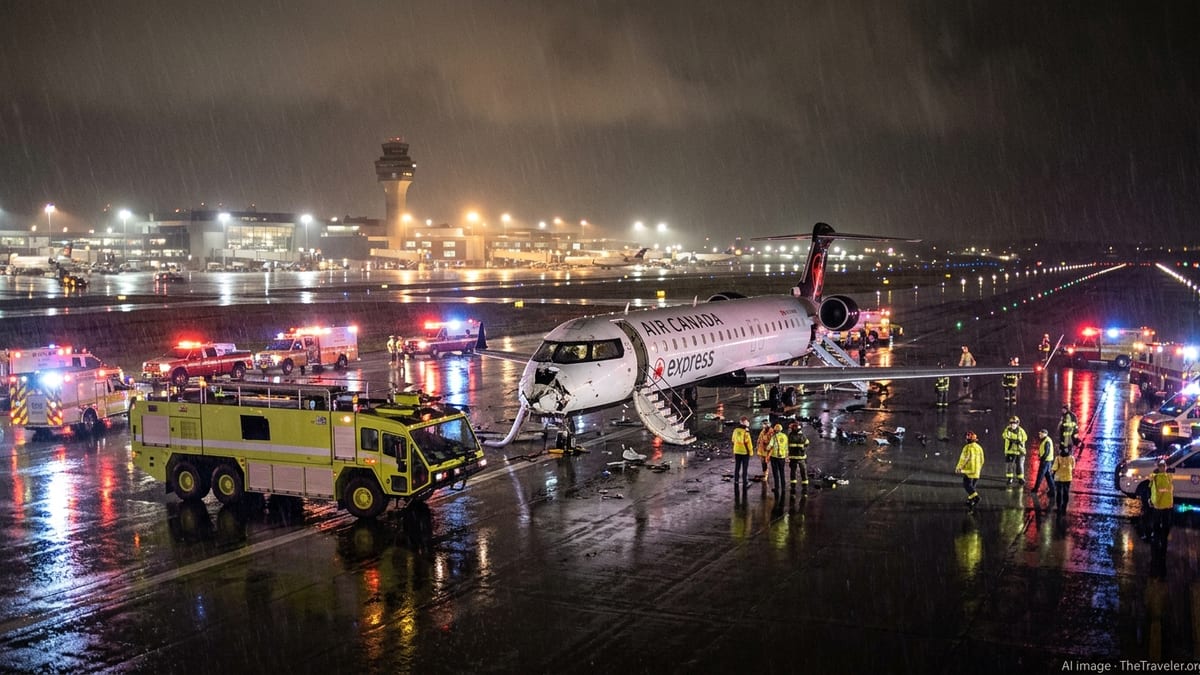
Back to back incidents on arrivals into Chicago
Publicly available flight tracking data and local coverage indicate that the first incident involved an American Airlines flight arriving at O’Hare, followed roughly three hours later by a United Airlines service that experienced a similar tire failure after touchdown. Both jets had originated outside Illinois and were on routine scheduled services into Chicago.
Initial accounts describe the tire problems occurring during the landing rollout, after the aircraft had already touched down on O’Hare’s concrete runways. In each case, crews brought their aircraft safely to a controlled stop on the runway. Passengers were kept on board while ground teams assessed damage and arranged for towing and onward handling.
Reports from passengers and airport observers suggest that the two events unfolded on separate runways, but in both cases the affected aircraft came to rest on the pavement and required removal before normal traffic flows could resume. While no injuries were reported, the paired occurrences in such a short window prompted questions about whether weather, runway contamination, or other shared factors may have played a role.
According to published coverage, both aircraft were inspected on site and later moved to ramp areas for more detailed examination. Subsequent departures and arrivals saw some brief delays and vectoring around closed sections of pavement as airport staff completed clean up and checks.
Impact on passengers and operations at O’Hare
The tire blowouts caused temporary disruptions for travelers already on board the affected flights as well as for those waiting for later departures using the same gates or runways. Passengers on the aircraft with damaged tires reported extended taxi times and waits on the runway while ground vehicles arrived and coordinated with the flight crews.
For O’Hare’s operations as a whole, the incidents contributed to short lived congestion typical of an unscheduled runway blockage. Flight tracking data shows arriving aircraft placed in holding patterns or slowed on approach, while some departures waited at taxiway intersections until the disabled jets were cleared.
Airline statements referenced in news reports emphasize that both flights landed normally before the tire failures were identified, and that passengers disembarked safely once the aircraft reached a gate or were towed from the runway. Standard procedures call for maintenance inspections and tire replacement before the jets return to service, which can cascade into schedule changes and aircraft substitutions later in the day.
Travelers passing through O’Hare around the time of the events also reported gate changes and minor delays. However, the airport’s multi runway layout and high capacity allowed most operations to continue, limiting the wider operational impact compared with a full runway closure at a smaller facility.
What is known so far about the tire failures
As of the latest publicly available information, investigators and airline maintenance teams are still working to determine the precise causes of the tire blowouts. Early details from tracking data and aviation focused coverage show no immediate evidence of fire, loss of directional control, or structural damage beyond the landing gear assemblies.
Commercial jet tires are designed to withstand repeated high speed landings and heavy loads, but they can still fail because of wear, foreign object damage on the runway, under or over inflation, or manufacturing defects. In many cases, a single tire failure on a multi wheel landing gear can be managed without incident, though excessive damage or multiple tire problems on the same bogie can increase the risk of a runway excursion.
Aviation incident histories maintained by federal agencies show that isolated tire failures on landing are not uncommon across the industry, and most result in minor damage and precautionary inspections. Two similar tire related events within hours on arrivals into the same airport, however, tend to prompt closer scrutiny of shared factors such as recent runway work, debris, or prevailing weather conditions at the time.
Available data for the O’Hare cases does not yet indicate any direct connection between the two aircraft beyond their destination and timing. Airlines typically conduct internal maintenance reviews after such events, while airport operators carry out runway sweeps to identify and remove any debris that could contribute to tire damage.
Runway safety and O’Hare’s role as a major hub
O’Hare International Airport functions as a critical hub for both American Airlines and United Airlines, with hundreds of daily movements and complex runway operations shaped by intersecting arrival and departure banks. That volume makes the airport particularly sensitive to any event that temporarily removes a runway from service, including tire blowouts, disabled aircraft, or weather related closures.
Runway safety practices at large U.S. airports typically include frequent pavement inspections, regular friction testing, and routine sweeps for foreign object debris that can damage tires or engines. When an incident such as a blown tire occurs, airport staff generally respond by isolating the affected section of runway, removing debris, and verifying pavement integrity before reopening the surface to traffic.
Industry observers note that modern braking systems, anti skid technology, and robust tire designs have significantly reduced the frequency of serious accidents linked directly to tire failures. Nevertheless, cluster events at a single airport often serve as reminders of the need for continued vigilance around inspection intervals, runway housekeeping, and adherence to maintenance manuals.
For a hub like O’Hare, which regularly manages complex arrival streams under a variety of weather conditions, any anomaly can also highlight how quickly backup plans, alternate runways, and ground resource coordination come into play to keep flight schedules moving.
What travelers should expect after similar incidents
For passengers, tire blowouts that occur on landing usually look more disruptive than they are dangerous, as the most critical phase of flight has already passed when the wheels make contact with the runway. In the O’Hare cases, publicly available information indicates that both aircraft remained on the pavement and were brought under control without injuries.
Travelers on board can expect the crew to remain in place on the runway until airport response vehicles arrive, followed by a slow taxi or tow to a gate or remote stand. Disembarkation may be delayed while safety checks are completed, and in some situations passengers may be rebooked if the aircraft requires extended maintenance.
Those connecting through the airport are more likely to notice knock on effects such as delayed departures, aircraft swaps, or gate changes. Because large hubs like O’Hare maintain multiple runways and a sizable aircraft fleet, these disruptions often resolve over several hours rather than days, although peak travel periods can amplify the impact.
Travel industry analysts point out that while consecutive tire incidents can be unsettling, they are generally categorized as operational events rather than systemic safety failures. The paired blowouts in Chicago are expected to be reviewed by both airlines and relevant agencies, and any findings on maintenance practices, runway conditions, or equipment performance could inform incremental changes designed to reduce the likelihood of a repeat.