


More news on this day
A sheriff’s officer has died after a patrol vehicle was struck by a train at a rail crossing, according to early regional news coverage and public safety summaries, underscoring persistent safety concerns where road traffic and rail lines intersect.
Get the latest news straight to your inbox!
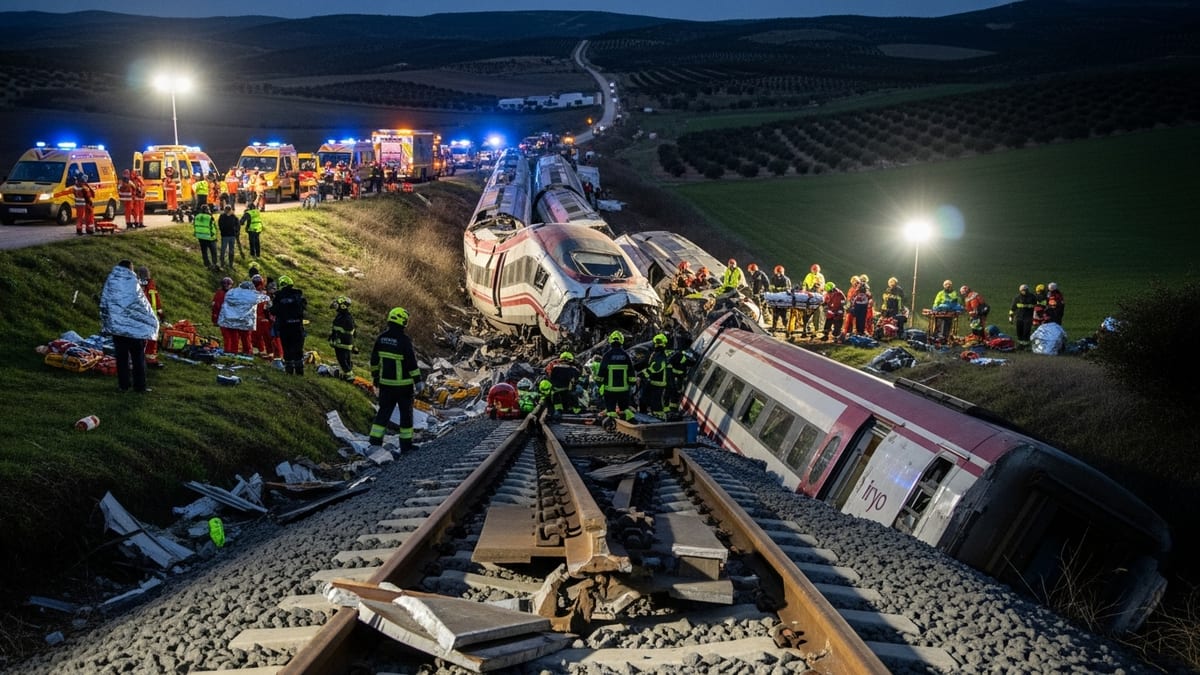
Collision at Rail Crossing Claims Law Enforcement Life
Initial accounts from local news outlets and public information summaries describe a fatal crash in which a sheriff’s vehicle was hit by a train while traveling near a grade crossing. The officer, who was on duty at the time of the collision, was pronounced dead after the impact. No rail passengers were reported killed, but the force of the crash left the patrol vehicle heavily damaged and prompted a full shutdown of rail traffic through the area for several hours.
Reports indicate that the collision occurred at a level crossing where road and rail traffic intersect at grade. Details on warning systems at the site, including whether gates or flashing lights were in operation at the moment of impact, have not yet been fully clarified in publicly available information. Local coverage notes that investigators are reviewing signal operation, train speed and the approach path of the sheriff’s vehicle as they work to piece together the sequence of events.
Rail operators temporarily halted trains in both directions while emergency crews responded, inspected the tracks and cleared debris. Travelers in the surrounding region experienced delays on both rail and adjacent road corridors, as traffic was diverted around the investigation perimeter. For many drivers and passengers, the disruption served as a stark reminder of the risks that persist at even familiar neighborhood crossings.
The fallen officer’s name is being withheld in some reports pending formal notifications, although regional outlets describe the individual as a veteran member of the sheriff’s office. Flags at nearby law enforcement facilities and county buildings were observed at half-staff, reflecting the community’s initial response to the loss.
Responder Risks at the Road–Rail Interface
The death of a sheriff’s officer in a train collision highlights the elevated risks faced by law enforcement and other first responders who frequently operate near traffic and rail corridors. National responder-safety compilations show that officers are regularly injured or killed while working close to moving vehicles, including trains, particularly when responding to calls near crossings, highways or rural tracks.
Publicly available safety data from transportation agencies point to highway–rail grade crossings as persistent danger points for both the public and on-duty personnel. While overall train crash rates have improved over recent decades, grade-crossing incidents continue to occur when drivers misjudge train speed, bypass lowered gates or encounter limited visibility at night or in poor weather. When emergency vehicles are involved, their need to respond quickly can add layers of complexity to already challenging driving conditions.
In many counties, sheriff’s deputies patrol expansive territories that include rural roads, industrial spur lines and lightly protected crossings. Travel along these routes can require frequent crossings of tracks with varying levels of warning infrastructure. The latest incident underscores how a single miscalculation or equipment failure at such a junction can have catastrophic results, even for highly trained drivers accustomed to operating under pressure.
Responder safety advocates have long emphasized that law enforcement agencies should incorporate rail-specific driving guidance into their training programs. That can include best practices for approaching crossings, coordinating with rail dispatchers and recognizing the limitations of emergency lights and sirens when trains are nearby. The new fatality is likely to renew scrutiny of whether such measures are consistently applied across jurisdictions.
Impact on Local Travel and Rail Operations
From a travel perspective, the crash immediately affected both rail passengers and motorists in the surrounding area. Trains on the affected line were held at nearby stations or rerouted where possible, leading to delays and modified schedules. Commuters reported extended journey times and crowded platforms as operators worked to restore normal service after investigators completed on-site work at the crossing.
Road traffic around the scene was also heavily disrupted. Law enforcement blocked approaches to the crossing for much of the day, forcing drivers onto secondary roads that were not designed for the sudden spike in volume. Local travelers described slow-moving detours and longer-than-normal drive times to airports, business districts and suburban neighborhoods that rely on the corridor where the crash occurred.
Travel-industry observers note that such incidents can have a lingering effect on route planning, especially for visitors unfamiliar with the area. Navigation apps and trip planners may continue to flag the crossing or adjacent streets as problem spots until backlogs clear, particularly if rail operators reduce speeds through the section or if repair work continues near the tracks. For those planning rail journeys, timetable changes and rolling stock substitutions can ripple across a wider network, affecting connections far from the crash site.
In the medium term, local authorities and rail managers may reassess crossing protections, signage and traffic patterns around the site. Changes could include upgraded gates, new approach signage or altered road layouts designed to reduce queues near the tracks. Such measures, if implemented, would shape how both residents and travelers move through the corridor in the months to come.
Investigations and Calls for Safety Improvements
According to published coverage, multiple investigative bodies are expected to review the collision, including local traffic investigators and specialized rail safety teams. These inquiries typically explore train handling, signal performance, driver behavior, environmental conditions and any available camera footage from the locomotive cab or nearby infrastructure. Findings can take weeks or months to compile, but preliminary observations often inform immediate safety advisories.
Public information from past rail incidents suggests that investigators may look closely at sightlines to the crossing, maintenance records for gates and signals, and any history of prior incidents at the same location. They may also assess whether vegetation, roadside structures or curve geometry contributed to reduced visibility for the sheriff’s vehicle or the train crew as they approached the intersection.
Advocacy groups focused on road and rail safety often use such tragedies to renew calls for infrastructure upgrades. Proposals can range from adding brighter LED warning lights and longer gate arms to more ambitious projects such as grade separation, where roads are rerouted over or under the tracks. While these larger engineering solutions involve significant cost and planning, they are widely recognized as among the most effective ways to eliminate conflict points between trains and vehicles.
At a policy level, the incident may also prompt county and state discussions about funding priorities for high-risk crossings. Travel planners and regional tourism boards sometimes support these efforts, noting that smoother, safer transport links are essential for attracting visitors and ensuring reliable access to parks, town centers and other key destinations along rail corridors.
Community Grief and Support for the Sheriff’s Office
Beyond the immediate operational and safety implications, the collision has left a profound emotional impact on the community served by the sheriff’s office. Residents have begun leaving flowers, notes and flags near a temporary memorial at the agency’s headquarters and, in some cases, at the crossing itself. Social media posts from civic organizations and local businesses reflect a sense of shared loss for an officer who died while performing public service.
Travelers passing through the area may notice increased law enforcement presence, not only to manage traffic but also as colleagues gather to support one another. Memorial motorcades, processions and vigils are common responses when a law enforcement officer dies in the line of duty, and such events can briefly affect road conditions and public transport schedules as routes are closed or adjusted to accommodate them.
According to regional reporting, local charities and law enforcement support groups are organizing assistance for the officer’s family, including fundraising efforts and logistical help. These initiatives often draw participation from both residents and visitors, particularly in smaller communities where tourism plays a significant role in the local economy and where visitors may feel a connection to the area’s first responders.
As investigations proceed and formal honors for the officer are planned, the collision between a sheriff’s vehicle and a train is likely to remain a focal point of public discussion. For travelers, it serves as a somber reminder to approach every rail crossing with caution, and for communities, it renews attention on how infrastructure, training and awareness can work together to make journeys by road and rail safer for everyone.