


More news on this day
Europe’s tourism rebound faces a fresh test as delays linked to the European Union’s new Entry/Exit System are projected to put as many as 41 million visitor arrivals at risk, with industry groups warning that hours-long border queues could deter travelers from key long-haul and short-haul markets.
Get the latest news straight to your inbox!
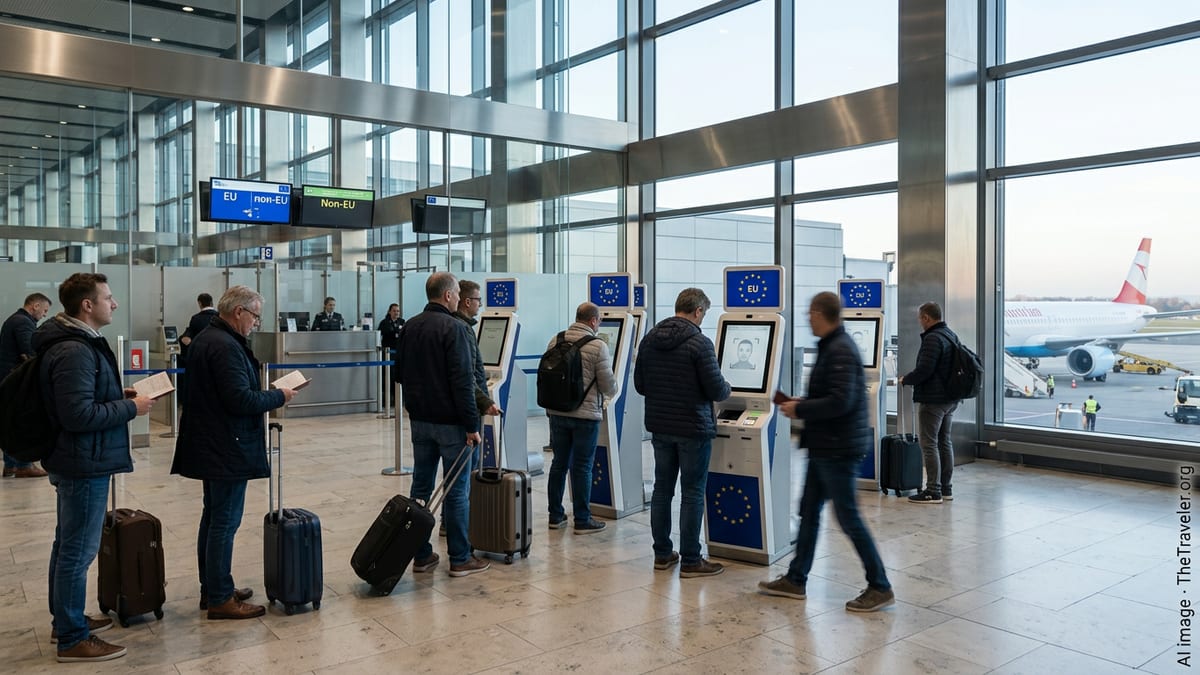
New Border Regime Raises Alarm Across Europe’s Tourism Sector
The Entry/Exit System, a biometric border management scheme for non-EU nationals entering the Schengen area, is being phased in after multiple postponements intended to give member states more time to upgrade infrastructure and staffing. The system records fingerprints and facial images at first entry, replacing passport stamping in a bid to improve security and track overstays.
As trials and early rollouts expanded this spring and summer, reports indicate that airports, seaports and land crossings have struggled to process peak passenger volumes, particularly where large numbers of British and other non-EU travelers use shared facilities with EU citizens. Case studies from southern Europe and key cross-Channel gateways point to queues stretching several hours at peak holiday periods, raising concerns about knock-on impacts for flight operations and cruise schedules.
Industry bodies representing airlines and airports have warned publicly that the combination of biometric capture, unfamiliar procedures and varying levels of readiness among border police could create structural bottlenecks during the busiest travel months. These concerns have intensified as more carriers restore or expand summer capacity to pre-pandemic levels, tightening the margin for delay at already congested hubs.
European Commission representatives have acknowledged in recent coverage that the system is not yet operating perfectly but have maintained that a full suspension is neither necessary nor feasible. Instead, the focus has shifted to incremental fixes, such as additional kiosks, better signage and staggered deployment at high-pressure border points.
WTTC Modelling Flags 41 Million Arrivals at Risk
The World Travel & Tourism Council has become one of the most vocal organizations quantifying the potential impact of EES-related disruption. According to its latest research, widely cited in European trade media, prolonged border waits of three to four hours could deter up to 41 million international arrivals over a full year if such delays became routine at Schengen entry points.
That modelling aligns the projected drop in arrivals with an estimated 45.4 billion dollars in at-risk visitor spending across the region. The figures are based on survey responses from prospective travelers who indicated they would reconsider or rebook their trips if confronted with repeated reports of extreme queues or missed connections tied directly to EES checks.
The warning comes at a time when many European destinations are counting on sustained international demand to consolidate their post-pandemic recovery. Popular Mediterranean markets such as Spain, Italy, Greece and Portugal remain heavily dependent on inflows from the United Kingdom and long-haul markets that are all subject to the new biometric regime.
While the WTTC analysis is framed as a downside risk rather than a forecast, it underscores how sensitive discretionary travel can be to perceived hassle at borders. Travel trade groups have echoed the concern that, in a highly competitive global market, persistent stories of four-hour queues could push consumers toward destinations in regions without similar entry requirements.
Early Evidence: Long Queues, Missed Flights and Regional Disparities
Recent coverage from European outlets highlights a patchwork of experiences as EES has moved from pilot to regular use. Some major hubs report manageable conditions, with only modest additional processing time once travelers understand the new system. Others, particularly airports with constrained terminal layouts, have recorded lines stretching across arrival halls as first-time users register biometrics.
Reports from Mediterranean gateways indicate that waiting times of up to five hours have already been observed at peak weekend periods, contributing to missed flights, delayed departures and passenger complaints. Local tourism businesses have voiced concern that guests arriving exhausted or arriving late for resort transfers could see overall satisfaction fall just as competition from non-EU beach destinations intensifies.
At key cross-Channel ports and rail terminals, concerns center on the challenge of processing high volumes of coach and car traffic within limited physical space. Local authorities in southeast England have warned that long tailbacks could worsen in periods of extreme heat, prompting renewed debate about balancing border control requirements with traveler welfare.
Despite these issues, other destinations report smoother transitions. Northern European airports with early investment in self-service kiosks and pre-registration tools appear to be handling volumes relatively well, suggesting that infrastructure, staffing levels and local operating procedures may matter as much as the design of EES itself.
Policy Debate Focuses on Mitigation, Not Suspension
Calls from airline and airport associations to suspend or delay the full rollout of EES through at least one more summer season have not gained traction in Brussels. Publicly available information shows that the European Commission has consistently framed the system as a critical security upgrade that should proceed, while acknowledging that operational teething problems will take time to resolve.
In response, industry groups have shifted emphasis toward practical mitigation. Proposals reported by European travel and aviation media include widening the use of digital pre-enrolment so that travelers can submit certain data before arrival, expanding automated gates where feasible, and ensuring that border staffing levels are aligned with anticipated peak schedules.
National governments are also under pressure to adapt infrastructure at high-traffic exit and entry points. Recent policy announcements in the United Kingdom, for example, highlight additional funding for road and port management in regions where outbound travelers encounter EES checks on the European side of the border.
Tourism councils and business associations argue that consistent communication will be crucial in the coming months. They urge authorities and travel brands alike to provide clear, up-to-date guidance on expected procedures and recommended arrival times, in order to minimize last-minute surprises that can exacerbate congestion at terminals.
Travelers Rethink Itineraries as Industry Braces for Summer Peaks
As media coverage of long queues and missed departures circulates, travel advisors report that some customers are reconsidering itineraries or adjusting trip timing to avoid perceived pressure points. Long-weekend city breaks that require tight flight connections are viewed as particularly vulnerable, since a single extended wait at border control can erode much of the available leisure time.
Package tour operators and cruise lines are closely monitoring the situation, with some refining transfer windows and excursion schedules to account for potential bottlenecks at airports and ports. In destinations where tourism accounts for a high share of employment, local councils are weighing whether to intensify visitor information campaigns to reassure guests and manage expectations.
Despite the risks highlighted in the WTTC’s 41 million arrivals scenario, analysts point out that Europe’s underlying travel demand remains robust, supported by strong household savings in key origin markets and a continued desire for overseas trips after pandemic-era restrictions. For many travelers, the prospect of an extra hour in a border queue may not be enough to cancel long-planned holidays.
The central question for the coming seasons is whether operational improvements can outpace demand growth. If authorities and industry partners succeed in reducing wait times as staff gain experience and technology stabilizes, EES may gradually recede into the background as just another part of the travel process. If not, the warning that tens of millions of visits are at risk may move from modelling exercise toward measurable reality in Europe’s arrival statistics.