


More news on this day
Two major cruise ships have dropped planned calls at a Canadian port this week after marine forecasts signaled deteriorating conditions, forcing last minute itinerary changes for thousands of passengers.
Get the latest news straight to your inbox!
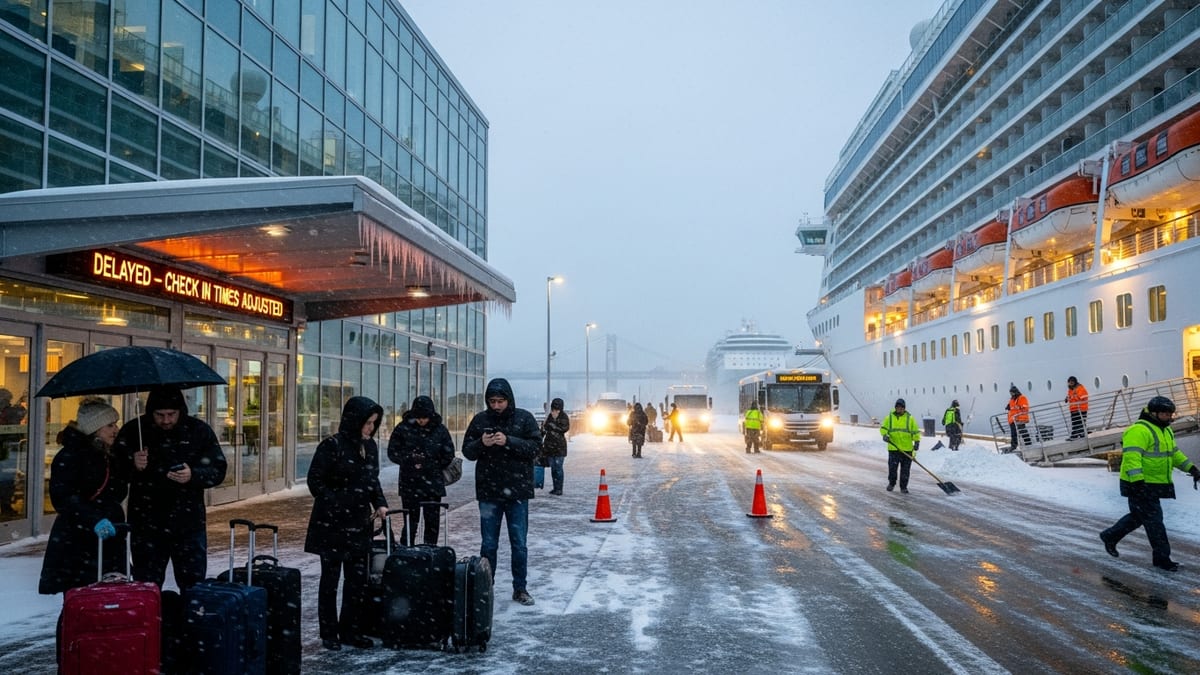
Weather Forecast Prompts Abrupt Schedule Change
According to cruise industry coverage and marine forecasting data, the two vessels had been scheduled to call at a Canadian port in July, providing the only cruise ship visits there for the month. Both calls were cancelled within days of arrival after forecasts highlighted the risk of squalls, high winds and poor visibility along nearby waterways.
Publicly available forecasts from Environment Canada for several St. Lawrence and Gulf of St. Lawrence sectors on July 14 indicated conditions favorable for squalls, with wind gusts potentially reaching 50 knots, frequent lightning and heavy rain reducing visibility. Such conditions can complicate approaches to smaller ports, particularly those relying on narrow channels, tender operations or exposed berths.
Cruise lines typically retain wide discretion to adjust itineraries when safety thresholds are approached. While cancellations are relatively infrequent on Canada and New England routes compared with more hurricane prone regions, industry observers note that smaller Atlantic and river ports can be especially vulnerable to strong wind events, fast changing fog patterns and localized squalls.
In this case, the combined effect of wind forecasts, sea state and visibility concerns led operators to remove the port call entirely and opt for alternate routing at sea, effectively wiping out what would have been a rare cruise tourism day for the community.
Impact on Passengers and Local Economy
The decision left thousands of guests with altered itineraries and one fewer port to explore. For passengers, the change meant an additional sea day, onboard programming adjustments and, in some cases, revised shore excursion plans at subsequent destinations. Cruise forums frequently document similar episodes in which weather driven cancellations lead to disappointment but are broadly understood as a safety measure.
For the host community, the impact is more stark. Local tourism operators, retailers and transport providers had anticipated a meaningful spike in mid season business tied to these calls. Coverage in cruise focused publications indicates that the lost visits represented the port’s only scheduled cruise traffic for the entire month, concentrating the financial effect on a single set of dates.
Cruise ship calls can funnel hundreds of thousands of dollars in direct and indirect spending into smaller ports across Atlantic Canada over the course of a season. When a port sees only a handful of visits, the cancellation of even one ship can translate into a notable shortfall for independent guides, restaurants, craft vendors and seasonal workers whose operating windows are already limited by weather and geography.
Industry analysts point out that such ports often invest in terminal upgrades, beautification projects and marketing campaigns specifically to attract cruise itineraries. When weather prevents ships from arriving, those sunk costs cannot be recouped in the short term, leaving communities vulnerable to the variability of each season.
How Cruise Lines Weigh Safety and Operational Risk
Publicly available practice across major cruise brands shows that masters are given broad authority to change course, delay arrivals or bypass ports whenever local conditions raise safety concerns. Factors can include sustained or gusting winds above docking limits, crosswinds in narrow channels, sea state that could render tender operations unsafe, and visibility too low to navigate confined approaches.
Forecasts pointing to rapidly developing squall lines, convective activity or heavy rain often carry additional uncertainty. Even if conditions appear manageable at a particular moment, the risk that strong gusts might coincide with docking or undocking can be enough to exceed company guidelines. In those cases, altering the itinerary before passengers disembark for shore excursions is generally viewed within the industry as the less disruptive option.
Operational logistics also play a part. Smaller Canadian ports may have limited tug assistance, fewer sheltered berths and constrained maneuvering room, increasing reliance on favorable weather windows. When those windows narrow, a ship might be forced to wait offshore, compress its call or cancel outright. With tight schedules tying together multiple ports and turnaround times, a missed call sometimes allows lines to maintain on time arrivals later in the itinerary.
Cruise lines typically treat weather related cancellations differently from optional schedule changes. Public information for several brands indicates that passengers usually remain entitled to taxes and port fees associated with the missed stop, with some itineraries also offering onboard credit or alternative programming depending on circumstances and company policy.
Growing Focus on Climate and Atlantic Weather Variability
The episode comes amid a broader discussion about climate variability and its implications for marine tourism along the Canadian Atlantic and St. Lawrence corridor. Researchers and marine forecasters have documented increasingly erratic patterns of intense rainfall, localized storms and shifting fog and wind regimes that can complicate navigation and port operations during the core cruise months.
Some itinerary planners have already begun adjusting seasonal schedules, arrival times and port combinations to account for more frequent bouts of unsettled weather. Early morning calls can sometimes take advantage of calmer conditions, while sequencing ports with sheltered harbors alongside more exposed destinations can create room for last minute substitutions without overextending sailing distances.
In the medium term, port authorities and local governments in smaller Canadian communities are examining options such as upgraded berthing infrastructure, enhanced tug capacity and more granular localized forecasting to increase their resilience to short notice weather disruptions. While these measures cannot eliminate risk, they can expand the range of conditions under which ships are able to dock safely.
For now, the cancellation of two rare calls in a single month underscores the delicate balance between showcasing remote Canadian ports to a growing cruise audience and respecting the limits imposed by rapidly changing maritime weather.
What Travelers Should Know About Missed Ports
Travel advisors and consumer advocates generally recommend that passengers treat port calls as conditional, particularly on itineraries passing through exposed or narrow coastal areas. While severe weather may be relatively rare during summer in Atlantic Canada, recent seasons across multiple regions have shown that even well planned routes can be affected by unanticipated wind events and storms.
Before sailing, travelers are encouraged to review the cruise line’s contract of carriage and publicly posted policies, which commonly specify that ports, schedules and routes may change at the operator’s discretion for safety or operational reasons. These documents also usually clarify the handling of port taxes and fees for missed calls and outline any goodwill measures, such as small onboard credits, that may be extended at the company’s option.
Passengers who place a high value on visiting a specific destination are often advised to select itineraries featuring more than one call in the same country or region, or to choose cruises where the marquee port is a large, frequently visited harbor less vulnerable to cancellations. Travel insurance products may address certain financial consequences of major itinerary disruptions, though coverage for routine weather related port changes is typically limited.
Despite the setback for the affected Canadian port and the disappointment among local businesses and visitors, cruise demand for Canada and New England routes remains strong heading into the peak season. However, the latest cancellations provide a timely reminder that, in northern waters, even midsummer voyages must ultimately adapt to conditions at sea.