


Car hire can make or break a trip. You might land a great weekly deal that lets you roam the Algarve or California coast freely, or you might find yourself at a crowded airport counter arguing over surprise fees. One of the biggest choices you face before you even see the keys is whether to book through a broker like Rentalcars.com or reserve directly with companies such as Hertz, Avis, Enterprise, Sixt, or Europcar. Each route has clear advantages and real risks, and the “right” answer can change depending on where you are going, when you are traveling, and how flexible your plans are.
Get the latest updates straight to your inbox!
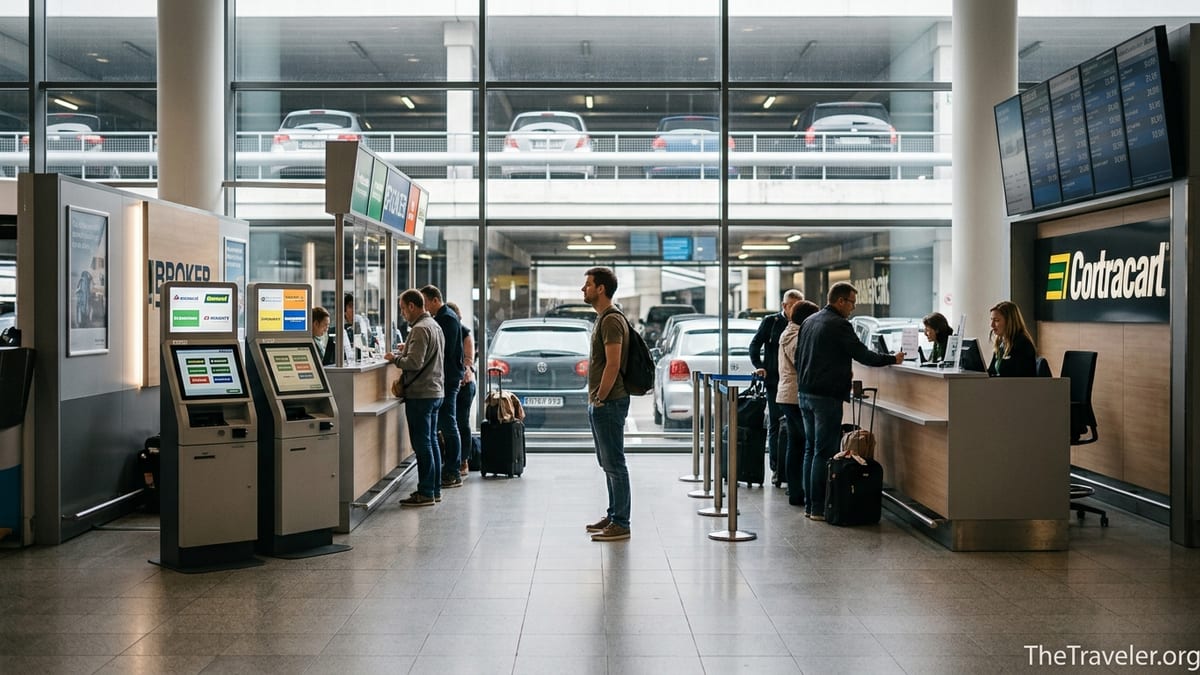
How Rentalcars.com Works Compared With Booking Direct
Rentalcars.com is a broker, not a car rental company. It does not own vehicles or counters at airports. Instead, it connects you with established brands and local agencies, typically showing you options from names such as Hertz, Avis, Budget, Europcar, Sixt, and dozens of local outfits in more than 150 countries. You pay Rentalcars.com (or sometimes leave a small deposit) and then pick up a car from a partner supplier when you arrive.
When you book directly with a brand like Hertz or Avis, you are dealing with the company that actually owns the car and runs the desk at the airport. Your reservation, payment, and often your insurance are all handled in one system. If your flight is delayed into Chicago O’Hare, for example, the Hertz counter staff can see your booking in their system, adjust the pickup time, and reissue paperwork without looping in a third party.
In practical terms, using a broker can feel more like booking a hotel through an online travel agency, while booking direct is closer to buying airfare from the airline itself. Many travelers turn to Rentalcars.com because the interface is simple, the range of vehicles is broad, and the headline prices can look significantly cheaper than on the rental brand’s own website. Direct bookings may look slightly higher at first glance, but often include clearer details about insurance, mileage, and deposit rules.
Understanding this structural difference is key. If everything goes smoothly on a simple three-day rental in Phoenix in low season, you may never notice that Rentalcars.com is in the middle. Trouble usually arises when travel plans change, the fine print on insurance is unclear, or the local rental office decides to interpret rules strictly.
Price Differences and When Brokers Can Save You Money
The main appeal of Rentalcars.com is price. It aggregates offers from multiple providers and often negotiates discounted prepaid rates. A traveler searching for a compact car in Lisbon for a week in November, for example, might see offers around 80 to 120 euros on Rentalcars.com, while the same dates booked directly with a major brand might start closer to 130 to 160 euros. In low or shoulder seasons, those gaps can be meaningful if you are renting for 10 or 14 days.
Real-world reports show that in some markets, particularly where there is heavy competition among local companies such as the Canary Islands or southern Italy, the cheapest offers displayed by Rentalcars.com can be dramatically lower than booking direct. It is not unusual to see a week’s rental advertised for under 10 euros per day with an unfamiliar local brand, while major direct players like Enterprise or Sixt quote double that. The broker model allows these small companies to fill cars by cutting rates on a global platform without needing to invest heavily in their own marketing.
However, what looks cheaper at search stage does not always stay cheaper at the counter. Complaints posted in recent years on consumer sites and forums describe situations where a traveler booked an economy car in Catania for about 100 euros through Rentalcars.com, only to be told on arrival that a large deposit was required on a credit card in the driver’s name, or that third-party insurance purchased through the broker was not recognized. Faced with a long queue and limited alternatives, the renter ended up paying an extra 200 to 300 euros for local insurance and add-ons, wiping out the initial savings.
By contrast, booking direct with a mid-range rate can sometimes work out similar or even cheaper in the end. For example, a family renting via the direct website of Enterprise in Denver might see a quote of 450 dollars for a week including basic protection and unlimited mileage. A broker might show 350 dollars for what appears to be a similar car with a lesser-known partner, but with a 1,500 dollar deposit and strict damage rules. Once you add additional protection at the counter and account for the risk of disputes, the direct quote is often better value for cautious travelers.
Insurance, Deposits, and the Confusing Fine Print
Insurance is where the difference between Rentalcars.com and direct bookings becomes most obvious. Brokers typically offer their own “full protection” products, sold during checkout, which promise reimbursement for damage charges taken by the rental company. The actual rental supplier, however, often requires a standard collision damage waiver and theft protection in its own contract, with a deductible that can be anywhere from a few hundred to several thousand dollars.
A recurring pattern in recent reviews is that travelers arrive at desks in locations such as Malaga, Cancun, or Athens to be told that the “full protection” they bought from the broker is not recognized at the counter. The local staff usually insists on blocking a high deposit on a credit card or selling an additional insurance package. The cover from Rentalcars.com still exists, but it functions as a separate reimbursement policy. If damage occurs and the rental company charges the excess, the customer must then claim that money back from Rentalcars.com, often by submitting documents and waiting weeks for a decision.
Booking direct tends to be clearer, though not always cheaper. Major brands like Hertz, Avis, Europcar, and Sixt spell out their deposit amounts, deductible levels, and coverage add-ons in their own terms. If you buy an upgraded protection package on the brand’s own site, the counter staff will usually recognize it immediately, and deposits are often lower. If there is a dispute about a scratch or chipped windshield, you deal with one company rather than going back and forth between the rental desk and a broker’s support team.
None of this means Rentalcars.com is inherently bad on insurance, but it does mean you must read both sets of documents carefully. If you are renting in a country where basic protection is legally required to be included in the price, such as many European Union nations, check that the quote you see on Rentalcars.com genuinely includes that legal minimum and understand whether its extra coverage is primary or secondary. The easiest way to avoid unwelcome surprises is to assume that any cover sold by a broker is reimbursement-based and that the local supplier will still insist on its own deposit and excess.
Customer Service, Changes, and What Happens When Things Go Wrong
Handling problems is where the gap between a broker and a direct rental company is most obvious. When you book via Rentalcars.com, you are essentially giving them the role of middleman for any modifications or disputes. If your flight from New York to Rome is delayed by 10 hours and you land after the rental desk closes, the local supplier may mark you as a no-show. Some customers who pre-paid via Rentalcars.com and then arrived late have reported that the local company treated the reservation as void and asked for a completely new, often higher-priced booking on the spot.
In those cases, travelers turned back to Rentalcars.com for refunds and support. Recent comments on consumer review platforms in 2024 and 2025 describe a mixed picture: some renters eventually received partial refunds after weeks of emails, while others said they were bounced between the rental company and the broker, each claiming the other should pay. Direct bookings are not immune to strict policies, but it is generally easier to negotiate directly with the company that controls both the reservation and the car stock.
Another recurring issue involves dispute resolution after damage. Several drivers have shared experiences where they rented a car through Rentalcars.com in destinations such as Madeira or the Balearic Islands, returned it without noticing problems, and then saw substantial damage charges weeks later from the local supplier. When they tried to claim those fees back under Rentalcars.com’s protection product, they were asked for detailed photographic evidence and documents that were difficult to obtain after the fact. Booking directly with a large brand does not guarantee fairness, yet it often comes with clearer internal processes for disputes and, in some cases, dedicated customer care for loyalty members.
On the positive side, Rentalcars.com can be helpful when plans change before pickup. Its current policies typically allow free cancellation within a set window before the scheduled start time on many pay-now deals, which can be attractive if you are watching flight prices or unsure of your itinerary. Direct suppliers may offer a similar level of flexibility, but some still charge change fees or offer less generous refund terms on prepaid rates. The burden is on the traveler to compare not only prices but also how easy it is to cancel, change drivers, or downgrade a car class without penalty.
Loyalty Programs, Upgrades, and Earning Rewards
One often overlooked advantage of booking direct is access to loyalty benefits. Major rental brands run programs that reward frequent customers with perks such as priority lines, free additional drivers, or car class upgrades. If you reserve through Hertz, Avis, Enterprise, or Sixt directly and include your loyalty number, you can usually earn points or credits on that rental and occasionally qualify for nicer vehicles at check-in.
When you book through Rentalcars.com, those benefits may be reduced or lost entirely. Some rental desks honor loyalty status even when the booking came from a broker, but others treat broker reservations as basic third-party contracts that do not earn points and are not eligible for automatic upgrades. A business traveler renting in Frankfurt several times a year, for instance, might find that direct reservations with the same brand deliver better cars and more flexible treatment if there is a problem, while the cheapest broker deal consistently lands them in the slowest queue with the least forgiving staff.
Travelers with premium credit cards that include rental insurance and elite status with certain suppliers may also find more value in going direct. If your card issuer covers collision damage when you decline the rental company’s insurance, you might prefer to deal with a single brand and keep your paperwork simple. Rentalcars.com bookings can still be compatible with credit card coverage, but the extra layer can complicate claims if the broker’s policy, the rental company’s terms, and the card issuer’s conditions all interact in unexpected ways.
For occasional renters who do not care about points and simply want the lowest rate for a weekend trip, these loyalty and rewards nuances may not matter. But for longer trips or repeat rentals, the cumulative benefits of direct relationships with one or two big brands are worth factoring into your decision.
Where Rentalcars.com Makes Sense, and When to Avoid It
There are situations where using Rentalcars.com can be a smart move. If you are planning a road trip that crosses multiple borders in Europe or southern Africa, for example, the broker can make it easier to compare cross-border fees and drop-off charges from various suppliers at once. If you are landing in a small regional airport in Spain or Greece where only a couple of local companies operate, a broker’s platform may be one of the few ways to see those options and lock in a car before you arrive.
Rentalcars.com can also be useful when you are flexible about which supplier you use and primarily care about having a car at a reasonable price. A backpacker heading to Faro in January might be comfortable taking a chance on a little-known partner at a rock-bottom daily rate, knowing that queues will be short and alternative cars will be available if something goes wrong. In these low-stakes scenarios, the convenience of seeing dozens of options in one search may outweigh the occasional frustrations of dealing with a middleman.
On the other hand, there are clear red flags that suggest you should skip the broker and book direct. If the Rentalcars.com offer involves a supplier with many recent complaints about aggressive damage claims or hard-sell tactics on insurance, it is safer to choose a direct booking with a more reputable brand, even if it costs a bit more. If you are traveling during peak periods such as August in Italy or school holidays in Florida, when cars routinely sell out, relying on a heavily discounted broker rate from a small company carries more risk. In those moments, having a direct contract with a large fleet operator can help ensure that a car is actually waiting for you.
You should also be cautious if your schedule is tight or your route complex. A tight connection between an international arrival and a domestic drive, for example, leaves little room for a booking dispute at the counter. So does a plan that requires a specific vehicle type, such as a seven-seat people carrier for a family of six. In those cases, the relative certainty and clearer responsibility chain of a direct booking usually outweigh the savings offered by a broker.
The Takeaway
There is no one-size-fits-all answer to whether you should book through Rentalcars.com or directly with rental companies. Brokers like Rentalcars.com can unlock genuinely lower prices, especially in competitive leisure destinations and off-peak seasons, and they make it easy to scan dozens of options at once. For flexible travelers on simple itineraries, that convenience can be worth the trade-offs.
Yet the same middleman structure that produces appealing headline rates can create real headaches when plans shift or problems arise. Differences in insurance terms, high deposits, and disputes over damage or late arrivals often become more complicated when a broker sits between you and the desk handing over the keys. Direct bookings with brands such as Hertz, Avis, Enterprise, Sixt, or Europcar usually offer more transparent policies, better integration with loyalty programs, and a single point of responsibility if something goes wrong.
Before you decide, compare not just the daily rate but also deposit amounts, cancellation rules, insurance structure, and the reputation of the specific supplier tied to your offer. If saving 50 or 100 dollars would not matter much compared with the stress of a ruined pickup experience, lean toward booking direct. If you are traveling off-season, have a flexible schedule, and are comfortable reading the fine print, a Rentalcars.com deal can still be a useful tool in your planning kit.
Ultimately, the choice comes down to your risk tolerance and priorities. Price-focused travelers with simple trips may prefer the breadth and occasional bargains of Rentalcars.com, while those who value predictability, loyalty benefits, and streamlined support will often be happier reserving directly with the rental company.
FAQ
Q1. Is Rentalcars.com a legitimate company?
Yes, Rentalcars.com is a large, established car rental broker that works with many well-known rental brands. However, as with any intermediary, experiences vary, and some travelers report excellent value while others have had issues with refunds, insurance interpretation, or customer service.
Q2. Why is Rentalcars.com sometimes cheaper than booking direct?
Rentalcars.com negotiates discounted rates with rental companies and often sells prepaid deals that allow suppliers to fill cars in advance. These contracts can produce visibly lower headline prices than booking direct, especially in competitive leisure markets or off-season dates.
Q3. Will the rental counter honor insurance I buy from Rentalcars.com?
Typically the counter accepts that you have a reimbursement-style protection from Rentalcars.com, but it still requires its own standard coverage and deposit. Staff may ask you to leave a large credit card hold or buy additional local insurance, so it is important to understand that broker insurance rarely replaces the supplier’s own policy.
Q4. Can I earn loyalty points if I book through Rentalcars.com?
In many cases, no. Some rental companies do not award loyalty points or elite benefits for broker reservations, or they offer reduced perks. If earning or using points and receiving upgrades is important to you, booking directly with your preferred brand is usually a safer path.
Q5. What happens if my flight is delayed and I booked via Rentalcars.com?
If you arrive late, the local rental company may classify you as a no-show according to its own policy, especially if the desk has closed or stock is tight. In that situation you may need to negotiate directly at the counter and then request any refund from Rentalcars.com, rather than relying on the broker to automatically protect your reservation.
Q6. Is it easier to change or cancel a booking when I book direct?
Often yes. When you book direct, the rental company controls your reservation and can usually modify pickup times, car classes, or drivers without involving a third party. Rentalcars.com does offer free cancellation on many deals, but changes close to pickup or after collection may be more complex because two sets of rules apply.
Q7. How can I avoid surprise fees with Rentalcars.com bookings?
Read both the Rentalcars.com conditions and the specific supplier’s terms carefully before paying. Pay attention to deposit amounts, fuel policies, mileage limits, and insurance details. Look up recent reviews of the local rental office you will use, and photograph the car thoroughly at pickup and return to minimize disputes.
Q8. When is it better to book directly with a rental company?
Booking direct usually makes more sense during peak seasons, when you need a specific vehicle type, when your schedule is tight, or when you value loyalty perks and straightforward support. In those cases, paying a bit more to deal with one company rather than a broker and a supplier can reduce stress.
Q9. Does Rentalcars.com own any of the cars it advertises?
No. Rentalcars.com is a broker and does not own or operate vehicles or desks. The cars are owned by partner rental companies, both major global brands and local agencies, which are responsible for the actual rental contract, vehicle condition, and on-the-ground service.
Q10. Should I avoid brokers like Rentalcars.com altogether?
Not necessarily. Brokers can deliver good value and convenience when you understand their role and are comfortable managing a bit of extra complexity. The key is to weigh the potential savings against your tolerance for risk and to choose reputable suppliers, whether you book via Rentalcars.com or directly.