


Booking a hire car through Rentalcars.com can save time and money, but only if you understand how the platform and its partners really work. Because Rentalcars.com is a broker, not the actual rental company, many travelers only discover the real rules on arrival at the counter: large, unexpected deposits, unrecognized insurance, mandatory extra fees or even a refused rental. With a bit of preparation, you can avoid these common and often costly mistakes.
Get the latest updates straight to your inbox!
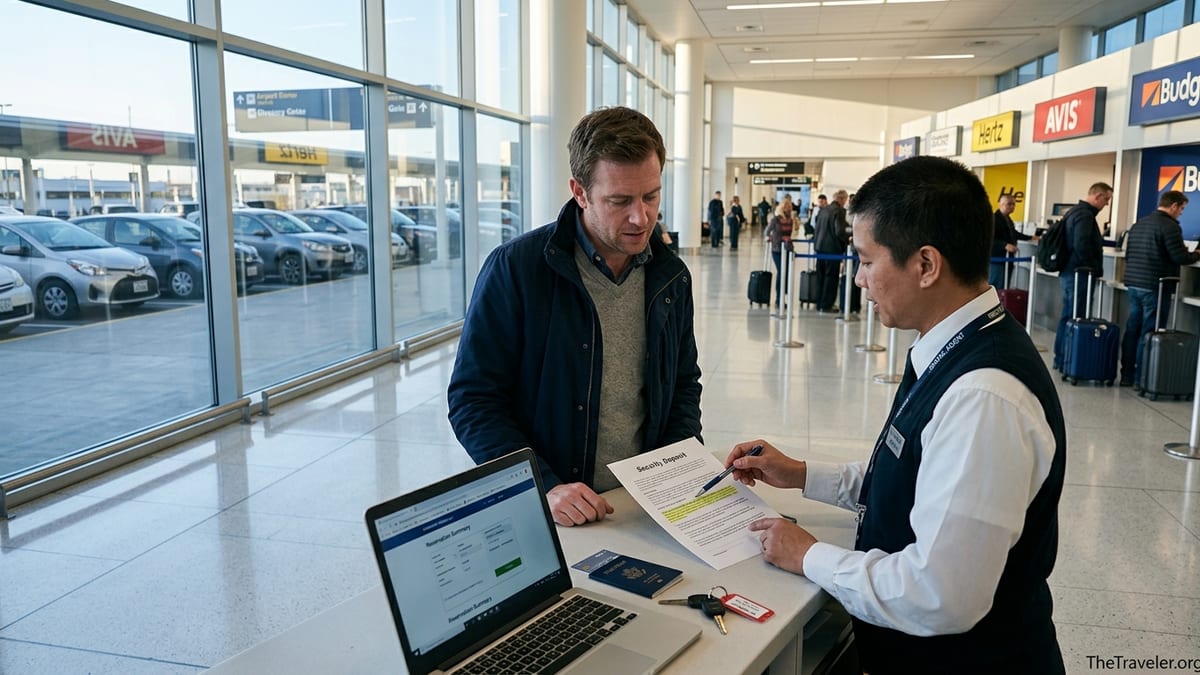
Confusing Rentalcars.com With the Actual Car Provider
One of the biggest misunderstandings is assuming that Rentalcars.com is the company that will hand you the keys. In reality, the site is a broker that compares and sells offers from suppliers such as Hertz, Avis, Budget, Sixt or local companies. Your booking is made through Rentalcars.com, but the rental contract you sign at the desk is with the local provider. This separation matters because complaints about the car, extra charges or local rules usually sit with that provider, not with Rentalcars.com, even though you paid the broker.
Recent review summaries on specialist watchdog sites highlight this gap. Travelers report issues such as confirmed reservations that the local desk claims it cannot honor, or disputes where the rental counter sends the customer back to Rentalcars.com, and Rentalcars.com says it is a matter for the local firm. In one 2025 case, a traveler who canceled due to undisclosed fees found the broker and the local company each blaming the other when he tried to reclaim his money. That kind of ping-pong happens when people assume a single company controls the whole chain.
To protect yourself, treat your booking as a three step process. First, you compare and pay on Rentalcars.com. Second, you receive a voucher and detailed supplier terms. Third, you enter a new relationship at the desk when you sign the actual rental agreement. Before you click “Book now,” make sure you know which firm will be on the sign at the airport, look up its own reputation in that country, and read its specific conditions on the Rentalcars.com page. If the supplier is an unfamiliar local brand with poor recent reviews in, for example, Athens or Cancun, consider switching to a better rated option even if the headline price is slightly higher.
It is also wise to call or email the local provider a few days before pickup, quoting your Rentalcars.com reference. Ask them to confirm your booking in their system, the required documents and the expected deposit. This brief contact can reveal problems such as mismatched pickup times or documentation rules while you still have time to fix or rebook through the platform.
Ignoring Deposit Rules and Card Requirements
A second frequent pitfall involves security deposits. Almost every major car rental company will place a temporary authorization hold on your card when you pick up the car, typically a few hundred dollars above the estimated rental charge. Legal and consumer guides published in 2026 note that holds of 200 to 500 dollars are common for United States rentals, and in some destinations, such as Iceland or parts of southern Europe, deposits of 1,000 dollars or more are not unusual for compact cars, and significantly more for SUVs.
Travel forums are full of examples where customers arrived with only a debit card or a low credit limit and saw their reservation effectively collapse. One traveler renting in Italy through Rentalcars.com discovered on arrival that the local partner required a 900 euro deposit on a physical credit card in the main driver’s name. His card limit was too low, so the supplier refused to release the vehicle. Because the reservation was tagged as “non refundable,” he lost both the car and much of the money he had already paid online. In another 2025 complaint, a customer was quoted a small balance due at the counter but found that the provider attempted a pre authorization close to 1,000 dollars, which exceeded their card capacity.
To avoid this, look beyond the eye catching daily rate and read the “Important information” and “Deposit” section for the specific offer on Rentalcars.com. You will usually see a note stating that the main driver must present a credit card with available funds for the deposit. Pay attention to details such as whether virtual or prepaid cards are rejected, whether debit cards are accepted only under stricter conditions, and whether luxury or one way rentals require larger holds. If your limit is close to the deposit amount, ask your bank to increase it temporarily before travel or bring a different credit card with more headroom.
Also remember that the deposit is usually a hold, not a charge, but it still reduces your available credit. If a United States renter picks up a car from a major brand like Hertz with 92 dollars due at pickup, staff may place an authorization for the balance plus a 200 dollar buffer, for a total of about 292 dollars. If that card only has 240 dollars of available credit, the transaction may be declined. Think of the deposit as money you must be able to spare for the whole rental period, and not funds available for hotels, restaurants or emergency expenses.
Misunderstanding Insurance and Excess Coverage
Insurance is another area where travelers often trip up when booking through Rentalcars.com. The platform frequently sells its own damage protection product that reimburses you after the fact for charges the rental company may apply for damage. However, many local desks do not treat this as their own coverage. Travelers arriving in locations like Greece or Mexico in 2025 and 2026 have reported that rental agents told them the Rentalcars.com insurance was “not recognized” and then insisted that they either buy the local full coverage for hundreds of dollars or agree to a very high excess and deposit.
This does not mean the broker insurance is necessarily useless, but it does change how you should think about it. If you rely purely on coverage sold through Rentalcars.com, you still need to leave the full excess deposit with the provider. In the event of damage, the provider may charge that excess, sometimes 1,000 to 3,000 dollars, and you then have to claim reimbursement from the broker’s insurer, providing police reports, damage invoices and correspondence within a strict timeframe. That process can be stressful and slow, especially if the local company inflates repair costs or charges administrative fees.
There are a few ways to reduce friction. First, check whether your existing travel insurance, your credit card’s rental car coverage or your own auto policy already provides collision or theft protection in your destination. For example, some premium United States credit cards cover collision damage waiver on rentals paid in full with the card, but exclude certain countries and types of vehicle. If you are already covered, you may decide to decline both the broker’s insurance and the local add ons, while understanding that staff at the counter may still push their product.
Second, if you are driving somewhere with a high risk of gravel, sand or ash damage, such as Iceland, or on unpaved rural roads in southern Spain, study the exclusions carefully. Travelers on Iceland forums often note that standard broker insurance does not cover windscreen or sand damage, while local packages do, albeit at a steep price. If you know you will drive off main paved roads, paying extra for a local protection that explicitly includes those hazards can be cheaper than facing a four figure windshield bill later that you then have to chase through a reimbursement claim.
Overlooking Fuel, Mileage and One Way Fees
Many of the worst billing surprises reported in recent reviews of Rentalcars.com stem from not noticing fuel, mileage or one way policies. While some comparison sites highlight “no hidden fees,” customers still report being charged for pre paid fuel packages or long distance fees that were not obvious during booking. In one New Zealand case in 2025, a traveler said the one way fee for dropping the car in a different city only appeared later as a local charge, even though the Rentalcars.com voucher showed “extras to pay at pickup” with no mention of it.
Fuel is particularly tricky. Most reputable providers now use “full to full,” where you receive the car with a full tank and must return it full. However, some still sell a “full tank prepay” or “fuel service” option. On one complaint, a traveler realized too late that what looked like a refundable fuel charge on the Rentalcars.com payment screen was in fact a mandatory service fee that would not be returned even if the tank came back full. Local brands may also charge a refueling penalty if you do not refuel within a certain distance from the return location or if the gauge suggests even a small shortfall.
Mileage limits are another point that can turn an attractive price into an expensive choice. In Europe, many low cost offers on Rentalcars.com come with a fixed daily mileage cap, such as 100 or 200 kilometers, and hefty per kilometer surcharges beyond that. A visitor planning to tour Portugal or drive from Berlin to Munich and back could easily exceed such limits and face an unexpectedly large bill. Similarly, crossing borders into neighboring countries or using ferries can be restricted or subject to additional fees. A family that booked a car in Croatia through the platform, planning side trips into Bosnia and Herzegovina, later learned at the desk that their chosen supplier did not allow cross border travel at all.
Before booking, expand every section of the offer details relating to fuel, mileage and cross border rules. If you see “limited mileage,” compare the cap with your planned driving distances using a map. For one way rentals, assume there will be a drop fee and search the small print until you find it. If the platform’s summary seems vague, call the local office directly and ask what they would charge for, say, a one week rental from Los Angeles Airport to San Francisco with 1,000 miles of driving. If the answer does not match what you see on Rentalcars.com, consider a different provider or a different broker.
Arriving at the Counter Unprepared
Even when the booking itself is solid, arriving at the rental desk without the right documents, card or timing can derail your plans. Many frustrations recorded in 2025 and 2026 reviews involve travelers who were denied cars because they had only a digital driver’s license, brought a debit card instead of a credit card in the main driver’s name, or arrived hours after the scheduled pickup time without informing the supplier. In one example, a customer started their Rentalcars.com reservation a day earlier than needed by mistake, failed to show up that first day and found the supplier had canceled the contract and kept the money.
To avoid this, treat the voucher from Rentalcars.com as a checklist. As soon as you receive it, confirm that the spelling of the main driver’s name matches the passport and driver’s license, that the pickup and return times match your flight schedule, and that your flight number is included if there is a field for it. Many providers will hold a car if they can see a delayed flight in their system, but may cancel after a few hours if they do not have that information and you arrive late at night.
Make sure you bring a physical driver’s license, any required international driving permit, a passport or national ID according to local law, and the physical credit card that you used to book or intend to use for the deposit. Some travelers try to present a spouse’s card or a digital wallet entry even though the main driver listed on the booking is different. Most rental desks will refuse this for fraud and insurance reasons. If you need a different person to pay or drive, change the main driver through Rentalcars.com or add an additional driver in advance and budget for that fee.
Timing also matters. If your flight lands at 23:30 and the Rentalcars.com offer lists a downtown office that closes at 23:00, you may find yourself stranded. Check the office opening hours for your specific pickup location on both the broker and the supplier website. If they differ, trust the local supplier. For late arrivals, airport branches or 24 hour options may cost slightly more on the platform but can save you an expensive taxi ride and a hotel night.
Skipping a Thorough Vehicle Inspection and Documentation
Another common, avoidable mistake is treating vehicle handover as a quick formality. Many complaints in consumer reviews involve damage disputes where the renter returns the car believing everything is in order, only to find new charges on their card a week later for scratches or dents that they say were pre existing. In one 2025 review, a customer avoided a damage bill only because they had taken clear time stamped photos of the car at pickup, including close ups of the wheels and bumpers, which showed that the alleged new scratch was already present.
When renting through a broker like Rentalcars.com, it becomes even more important to build your own evidence trail because you may have to show it to both the local company and, if you bought their coverage, the broker’s insurer. At pickup, walk around the car slowly with a staff member and insist that every visible scratch, dent, chipped windshield or interior stain is marked on the check out form. If the form is only a digital tablet, ask the agent explicitly to note significant damage such as kerbed alloy wheels or a cracked bumper corner.
Use your phone to photograph all sides of the car, plus the roof, wheels, windshield and interior, ideally while the car is still in the pickup bay with the license plate visible. Repeat the process at return, ideally showing the fuel gauge and odometer as well. These photos take only a few minutes and can be crucial if a company later claims you returned the car with a damaged rim or an almost empty tank. Keep all paperwork, including the final invoice and any “no damage” confirmation, until at least one or two credit card cycles have passed.
If you notice a mechanical issue such as a low battery, worn tires or a warning light immediately after leaving the lot, report it at once by phone and email rather than waiting. A complainant in Greece in 2026 described picking up a car that failed at the first stop due to a dead battery. The local company suggested it was “bad luck,” but because the renter had reported it instantly and kept a record of calls and messages, they were better positioned to dispute any attempt to charge them for the replacement.
Assuming Customer Service Will Fix Everything Later
Many people click through online bookings confident that if anything goes wrong, a quick email or chat with customer service will sort it out. Yet independent review aggregators that analyze Rentalcars.com feedback in 2025 and 2026 often find recurring complaints about slow or unhelpful responses when disputes arise. Common themes include customers who never received a clear explanation for additional charges, who struggled to obtain invoices that met their home country’s tax rules, or whose refund requests for canceled bookings remained unresolved for months.
For example, a traveler who bought insurance through Rentalcars.com in early 2026 reported that the local rental company refused to accept the policy, insisting he buy their own coverage on the spot. He then spent weeks trying to obtain a properly itemized insurance invoice from Rentalcars.com for tax purposes, encountering repeated template responses and confusion between the broker’s team and their payment processor. Another customer complained that the company charged the full rental cost a day before the scheduled pickup, then referred them back to the local provider when asked to justify the timing.
This pattern suggests that you should not rely on after the fact goodwill to correct fundamental booking mistakes. Instead, front load your diligence. Before you confirm and pay, screenshot all key pages of the offer, including the price breakdown, cancellation policy, fuel and mileage conditions, and deposit information. Save your voucher and all emails in a dedicated folder. If you spot conflicting information between the Rentalcars.com confirmation and the supplier’s own website, raise it immediately, not after the trip.
If a problem arises, document everything. Keep copies of receipts, fuel bills, toll records and communication with staff. When you write to customer service, be specific and concise, including dates, amounts and supporting documents. If you paid with a credit card, remember that chargeback rights in your home country may offer an additional layer of protection if you are charged for a service not provided, such as a car that was never released to you despite full prepayment. However, card disputes also require clear evidence, so your preparation still matters.
The Takeaway
Booking a car through Rentalcars.com can work well for many travelers. The platform aggregates offers from hundreds of providers worldwide, often at competitive headline prices, and its interface makes it easy to filter by car size, fuel policy or supplier rating. Yet the same features that make it convenient also create traps when customers assume the broker controls every detail of the rental experience or that the displayed price is the final word.
To avoid the most common and painful mistakes, treat your booking as a three way relationship between you, the broker and the local rental company. Read the supplier specific terms, verify deposit and card rules, understand how insurance really works in practice, and pay attention to fuel, mileage and one way conditions. Arrive at the counter with the right documents, enough credit headroom for the deposit and enough time to inspect the car carefully. Finally, keep thorough records so that if a dispute arises, you are not relying solely on memory or customer service goodwill.
With these steps, travelers can use Rentalcars.com as a useful comparison tool while still staying firmly in control of their budget and expectations. A few extra minutes of preparation before clicking “Reserve” can save hundreds of dollars, hours of stress and the unpleasant feeling that your holiday started with an avoidable argument at the rental desk.
FAQ
Q1. Is Rentalcars.com a scam or a legitimate company?
Rentalcars.com is a large, long established broker owned by a major online travel group, and many people use it without problems. Most issues arise not from outright fraud but from misunderstandings about local rental company rules, deposits, insurance and extra fees, which can make some customers feel misled or poorly supported when disputes occur.
Q2. Why was my Rentalcars.com reservation refused at the counter even though I prepaid?
This usually happens because the local provider’s conditions were not met, such as lacking a physical credit card in the main driver’s name, not having enough available credit for the deposit, presenting an unsuitable driver’s license or arriving far outside the pickup time. Prepayment through Rentalcars.com does not override the supplier’s own contract rules, so they can still refuse to release the car.
Q3. Does the insurance I buy on Rentalcars.com cover everything at the rental desk?
Not always. The broker often sells third party excess protection, which reimburses you later for charges, but is not recognized as the local company’s own damage waiver. This means the supplier may still require a full excess deposit and may offer or push its own coverage packages, especially in higher risk destinations or for certain vehicle types.
Q4. How big a deposit should I expect when booking through Rentalcars.com?
Deposits vary by country, supplier and car category, but amounts around 200 to 500 dollars above the estimated rental cost are common in North America and western Europe, with higher figures in places such as Iceland or for premium vehicles. Always check the “Deposit” section for your specific offer and ensure your credit card limit can comfortably absorb that hold for the full rental period.
Q5. Can I use a debit card instead of a credit card for my Rentalcars.com booking?
You can usually pay the online portion with a debit card, but many local rental companies still require a traditional credit card in the main driver’s name for the deposit at pickup. Some suppliers accept debit cards under stricter rules, such as higher deposits or proof of return travel, so you need to read the supplier conditions on Rentalcars.com before relying on a debit card alone.
Q6. How do I avoid surprise fuel and mileage charges on a Rentalcars.com booking?
Before confirming, expand the details for your offer and look closely at the fuel policy and mileage rules. Prefer “full to full” fuel, refill just before returning the car, and keep the receipt. If mileage is limited, compare the daily cap with your planned driving distance and consider upgrading to an offer with unlimited mileage if your itinerary involves long road trips or cross country drives.
Q7. What should I do if the local rental company says my Rentalcars.com insurance is not valid?
Stay calm and ask the agent to explain exactly what coverage is included in the base rate and what risk or excess you would carry without their add ons. You can then decide whether to buy local coverage for peace of mind, rely on your own insurance or credit card benefits, or walk away if the terms seem unacceptable. Keep all documents and, after the trip, raise the issue with Rentalcars.com if the offer description on the site felt misleading compared with what was presented at the desk.
Q8. How can I protect myself against false damage claims after returning a car?
Inspect the vehicle thoroughly at pickup and return, taking clear, time stamped photos or video of all sides, wheels, glass and the interior, plus the fuel gauge and odometer. Make sure existing damage is recorded on the checkout form and request written confirmation of a clean return when you drop the car off. Keep these records until your card statement settles and any deposit holds are released.
Q9. What is the best way to handle disputes or refund issues with Rentalcars.com?
Collect all relevant evidence, including vouchers, invoices, photos, emails and names of staff you spoke with at the rental desk. When contacting Rentalcars.com, explain the issue in a concise, factual way, attaching supporting documents. If you paid by credit card and believe you were charged for services not provided, consider speaking with your card issuer about your options, while understanding that card disputes also require solid documentation.
Q10. Should I book directly with a rental company instead of using Rentalcars.com?
It depends on your priorities. Booking directly can simplify communication and sometimes makes it easier to change or cancel, while Rentalcars.com can offer lower prices and a wider choice of suppliers in one place. Whichever route you choose, the key is to read the terms carefully, understand deposits and insurance, and research the specific branch you will use rather than relying only on the headline brand or price.