


More news on this day
Central Railway is set to convert five long‑running special services into regular trains from August 15, 2026, a move that marks a significant shift in how India’s busiest rail zone manages seasonal demand and long‑distance connectivity.
Get the latest news straight to your inbox!
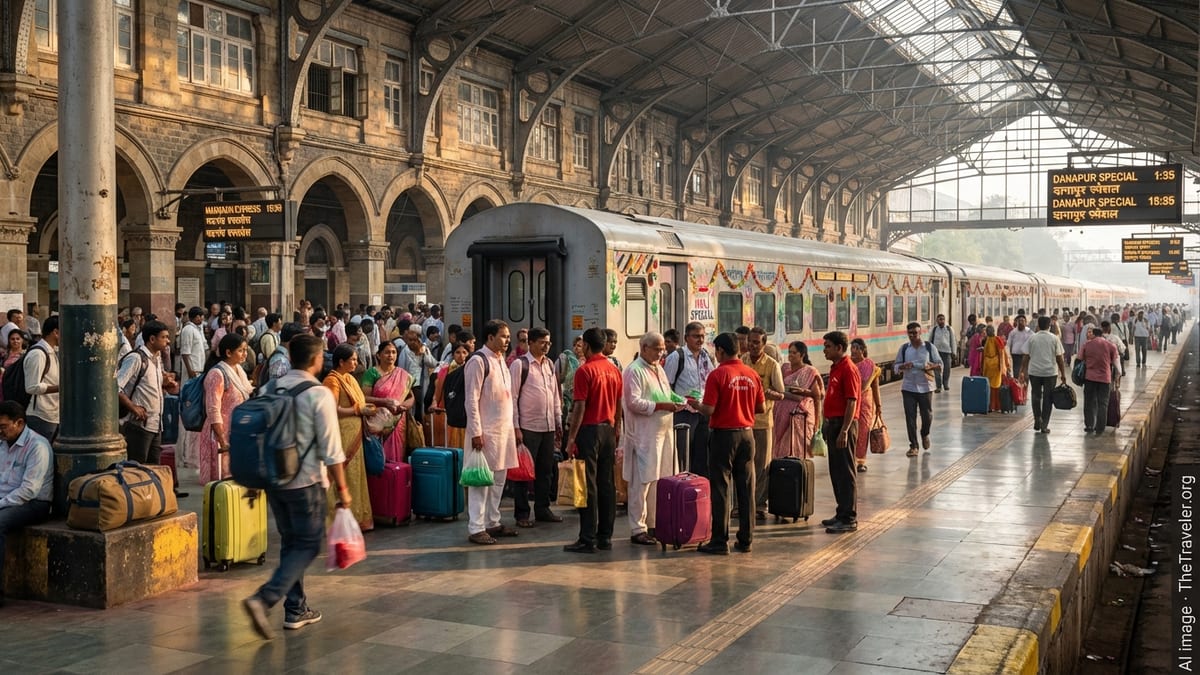
From Temporary Specials To Timetabled Regular Services
Publicly available information on recent timetable changes across the Indian Railways network indicates a wider trend of moving popular “special” trains into the regular timetable once sustained demand is established. The decision by Central Railway to regularise five of its special services from August 15, 2026, aligns with this pattern and reflects an effort to standardise fares, frequencies and travel planning on some of its most heavily used routes.
Special trains are typically introduced to manage festival peaks or summer and winter rush, often carrying premium or dynamically adjusted fares. When these services run continuously for months or years and consistently operate with high occupancy, railway planners increasingly opt to convert them into regular trains with fixed numbers and defined schedules. Reports on earlier regularisations on other zones in 2026 suggest that this transition tends to stabilise pricing and improve timetable visibility for passengers.
Under the upcoming Central Railway upgrade, the five trains being regularised are expected to retain broadly similar paths and halts, but their operations will be governed by the working timetable rather than by a series of short‑term notifications. For travellers across Maharashtra and connecting states, this means that services previously announced in limited batches will now appear as part of the standard reservation cycle.
Railway circulars and parliamentary responses over the past year have repeatedly highlighted the gradual conversion of special trains into regular services as capacity, crew and maintenance resources allow. The August 15 move underlines how Central Railway is using this approach to lock in additional capacity on routes where temporary measures have effectively become permanent fixtures.
What Changes For Passengers On Key Routes
For passengers, the regularisation of these five services primarily affects three areas: booking predictability, fare structures and onward connections. Once a train is scheduled as a regular service, its timetable is integrated into long‑range reservation charts, allowing travellers to book further in advance and plan connecting journeys with greater certainty.
Experience from other recently regularised services in 2026 shows that many of these trains retain their broad departure and arrival windows, with only minor adjustments to dwell times or intermediate halts to fit the regular timetable. Travellers who have become accustomed to specific special‑train timings on Central Railway’s trunk routes can therefore expect broadly familiar patterns, albeit with more consistent weekly or bi‑weekly frequencies.
Fare implications are also notable. Special services are usually charged at a higher rate compared with standard express or superfast trains. When a route is integrated into the regular timetable, the fare structure generally shifts closer to standard tariffs for the respective class and distance. While final pricing will depend on factors such as train category and average speed, the change is expected to moderate costs for frequent travellers who rely on these routes year‑round rather than just in peak seasons.
Regularisation further simplifies onward and return planning. With fixed train numbers and standard categories, these services become easier to pair with other long‑distance and regional trains. Passengers using Central Railway’s network to reach hubs such as Mumbai, Pune or key junctions in adjoining zones may find it easier to secure coordinated itineraries, particularly during busy holiday periods when special trains previously appeared in fragmented announcements.
Operational Impact Across Central Railway’s Network
The decision to convert five specials into regular trains sits within a broader operational shift for Central Railway in 2026. The zone has already been operating an expansive programme of Holi, summer and festival specials to cope with heavy demand between March and July, while also rolling out additional suburban and long‑distance capacity on core corridors. According to published coverage, Central Railway is among the leading zones in terms of the number of seasonal special trips approved for the current year.
Regularising trains that have proven demand allows planners to rebalance the mix between truly seasonal extras and year‑round services. When a once‑temporary train is granted a fixed slot, it effectively secures its place in the daily pathing of the network. This can, in turn, free up planning headroom for new peak‑season specials elsewhere, rather than repeatedly re‑notifying the same set of services.
The move also interacts with ongoing infrastructure enhancements, including multi‑tracking projects and capacity upgrades on heavily used suburban and mainline sections. As new tracks and signalling improvements come online, Central Railway has slightly more room to craft stable, repeatable patterns for long‑distance express services, instead of relying heavily on ad hoc specials slotted around existing traffic.
Operational data released in recent months shows that zones with clear separation between core regular services and genuinely seasonal specials manage punctuality and rake utilisation more effectively. By shifting five enduring specials into the regular category from mid‑August, Central Railway appears to be steering its network toward a similar model, with more predictable asset deployment and fewer short‑notice timetable changes.
Broader Context: National Push To Rationalise Special Trains
The August 15 upgrade on Central Railway is part of a wider nationwide effort to rationalise India’s heavy reliance on special trains in the years following the pandemic. Government responses and press releases through early 2026 point to thousands of special trips being sanctioned across zones to manage successive waves of festival, summer and holiday demand, while regular services were restored and expanded in stages.
As overall capacity has grown, railway planners across different zones have started to distinguish between corridors that only need short‑term boosts and those where demand justifies permanent additions. In several cases outside Central Railway, long‑running specials have already been assigned regular numbers and integrated into working timetables in 2026, providing precedents for the current move.
Railway observers note that converting popular specials into regular trains can also improve transparency around service patterns. Regular services are more systematically captured in publicly available timetables and planning documents, making it easier for passengers, state transport authorities and tourism stakeholders to align their own schedules and promotions around reliable rail connectivity.
For Central Railway, which serves dense urban regions as well as long‑distance inter‑state routes, the decision to regularise five specials from August 15, 2026, signals a step toward a more stable, timetable‑driven approach while still retaining the option of adding true seasonal specials when demand spikes. Travellers on the affected routes can expect the shift to bring clearer schedules, more predictable fares and a stronger foundation for planning future journeys.