


More news on this day
American Airlines is quietly updating how it labels and explains disruption-related vouchers and credits, as the carrier responds to years of customer frustration over opaque rules and disappointing compensation for long delays and cancellations.
Get the latest news straight to your inbox!
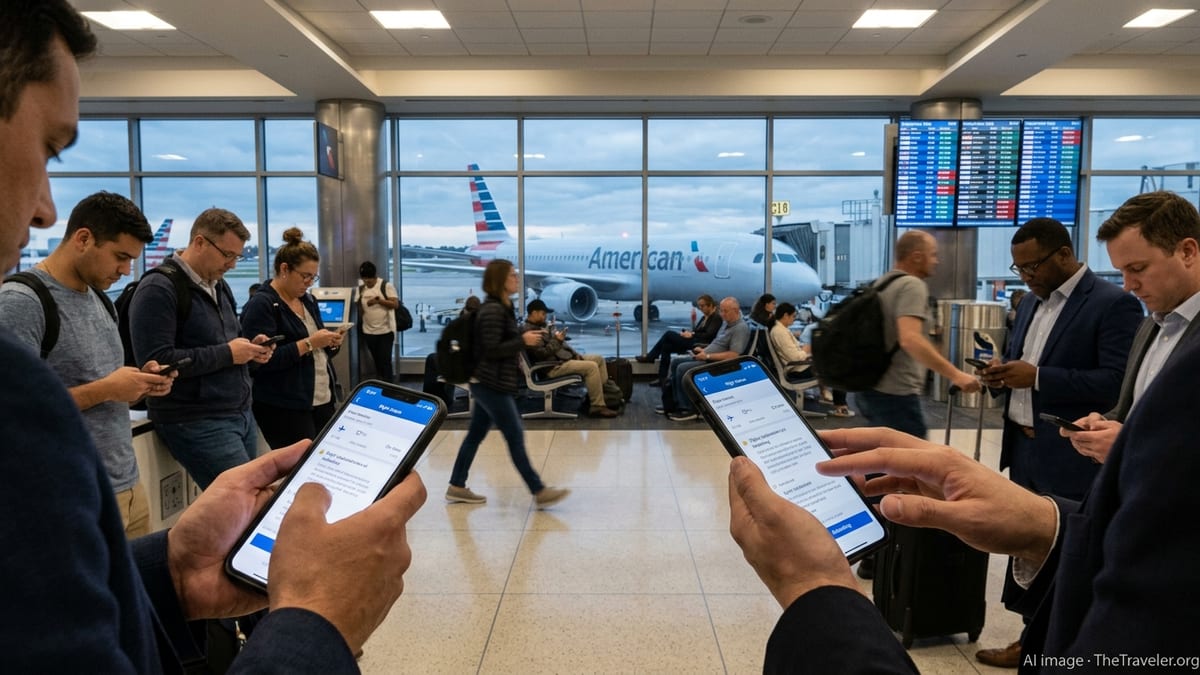
From Paper Vouchers to Digital Credits
American Airlines has spent the past several years shifting from paper travel vouchers and miscellaneous charge orders to a largely digital system of credits that can be applied to future trips. Internal guidance describes a Trip Credit as an electronic document that is gradually replacing paper travel vouchers, while Flight Credit refers to the remaining value of a previously issued ticket that was never flown.
Publicly available information on American’s website outlines three primary forms of compensation or stored value: Flight Credit, Trip Credit and, in some cases, traditional paper travel vouchers. Flight Credits are generally tied to the original ticketed passenger and route restrictions, whereas Trip Credits and paper vouchers are described as more flexible instruments that can sometimes be used for other travelers on American-marketed flights.
The move to digital credits has been framed as an efficiency upgrade, but it has also created layers of terminology that many travelers find confusing. That complexity becomes especially visible during irregular operations, when delayed or canceled customers are issued vouchers for meals, hotels or future travel on short notice.
Quiet Language Changes Around Delay Compensation
Recent updates to American’s customer service materials suggest a subtle rebranding of how vouchers issued for delays are presented. The airline’s customer service plan and disruption-support pages refer to transportation vouchers for hotel transfers and credits toward meals when delays exceed three hours in certain circumstances, aligning with commitments shown on the U.S. Department of Transportation’s online dashboard comparing major carriers.
At the same time, American’s main travel credit pages emphasize Trip Credits and Flight Credits as the central tools for future travel, with travel vouchers and transportation vouchers increasingly treated as legacy products or specific-use instruments. Internal sales guidance characterizes Trip Credits as the successor to older paper voucher formats, indicating a broader migration of disruption-related value into a single, standardized label.
Industry observers note that this shift in terminology has largely taken place without a high-profile announcement. Instead, the carrier appears to be adjusting wording on its website and in agent-facing documents, steering customers away from older voucher language and into the more controlled framework of Trip Credits and Flight Credits.
Customer Frustration With Small, Restrictive Credits
While American refines its branding around delay vouchers, traveler complaints highlight why terminology matters. Online discussion forums and social media posts include examples of customers receiving modest Trip Credits after extensive delays, including long overnight disruptions that resulted in compensation amounts that some passengers viewed as symbolic rather than meaningful.
Other travelers report confusion when trying to use credits that originated as disruption compensation. Some describe Trip Credits that require phone calls for redemption instead of online application, or limitations that appear once a compensation credit is converted into a ticket and then later canceled, effectively turning what started as a flexible voucher into a more restrictive Flight Credit linked to standard fare rules.
These experiences feed into a broader perception that voucher-style compensation for delays can be difficult to value and hard to use, especially when rules are not clearly explained at the time of issue. As American consolidates branding under the Trip Credit label, the underlying terms of use often remain complex, driving further disappointment when passengers discover restrictions close to booking.
Regulatory Pressure and Transparency Efforts
The quiet rebranding of delay-related vouchers is unfolding alongside heightened regulatory attention to how U.S. airlines handle cancellations and significant delays. The Department of Transportation’s airline cancellation and delay dashboard spells out which carriers commit to providing meal vouchers, hotel accommodations or travel credits when disruptions are within the airline’s control, effectively pushing airlines to clarify what passengers can expect.
American’s customer service plan reflects these commitments, referencing transportation vouchers and food or beverage credits when passengers face long waits after schedule disruptions. However, these benefits are framed within the airline’s own policies rather than a standardized, government-issued compensation scheme, leaving considerable discretion over the size and form of vouchers provided.
Analysts point out that more consistent naming conventions, such as consolidating around Trip Credit for future-travel value, can make it easier for regulators and consumer advocates to assess how often and how generously carriers compensate delayed passengers. Yet, from the traveler’s perspective, the key issue is less what the voucher is called and more whether it is substantial, easy to redeem and transparently explained at the point of disruption.
What Travelers Should Watch For
For passengers navigating American’s evolving credit system, the most practical step is to understand the distinction between Trip Credits and Flight Credits and to confirm which type has been issued after a delay or cancellation. American’s official guidance notes that Trip Credits are often the format for general compensation or nonrefundable portions of tickets, while Flight Credits stem from the residual value of a purchased ticket that was not flown.
Travelers are also encouraged by consumer advocates to pay attention to validity periods and usage limits. Documentation indicates that some disruption-related travel credits issued for qualifying delays or cancellations may carry extended validity, potentially up to several years from the date of the event, whereas standard Flight Credits typically expire within one year of the original ticket issue date.
As American continues to update its language and retire older voucher formats, the rebranding effort may ultimately reduce internal complexity. For now, though, the airline’s quiet shift in how it labels delay vouchers serves as a reminder that passengers should carefully review any credit or voucher they receive and seek clarification through official written terms rather than relying on terminology alone.
American Airlines travel credits information