

More news on this day
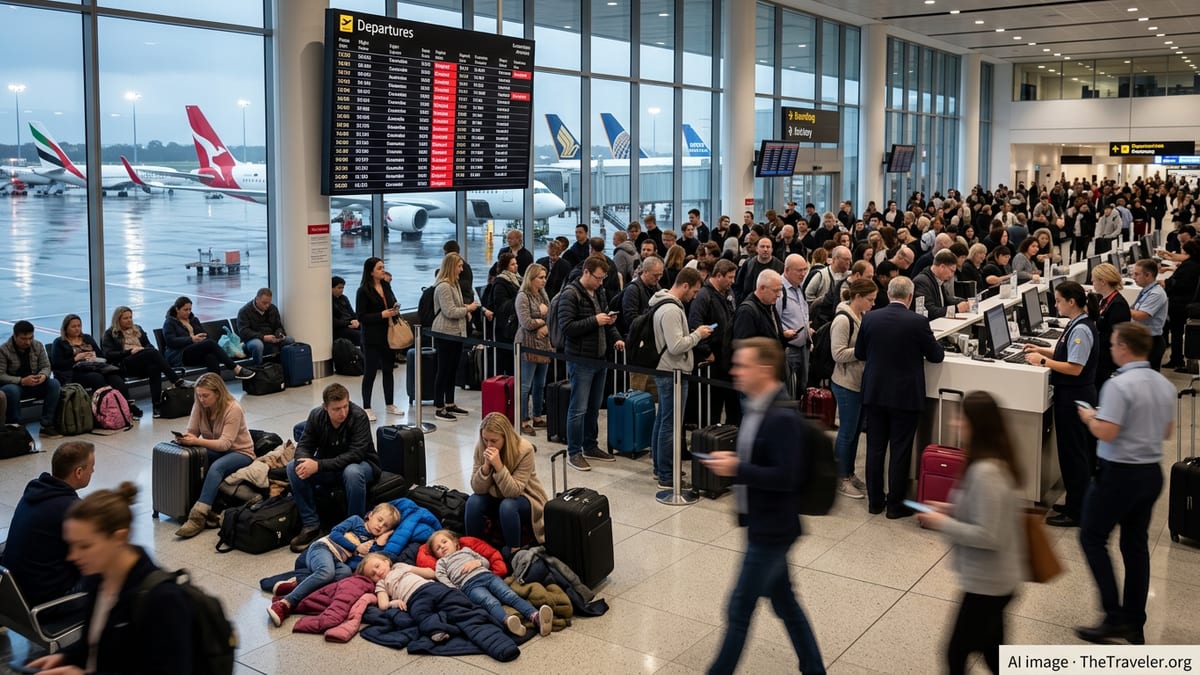
Fresh schedule disruptions involving United Airlines, Jetstar Airways and several partner carriers are rippling through Singapore this week, as a cluster of cancellations on four key routes to San Francisco, Melbourne, Bali and other high-demand destinations forces passengers into last-minute changes and extended journeys.
Get the latest news straight to your inbox!
Cluster of Cancellations at a Critical Asia Hub
Publicly available flight tracking data and airline notices indicate that at least four significant services touching Singapore have recently been removed from schedules or cancelled on the day of departure, affecting long haul and regional links. These include a United Airlines service between Singapore and San Francisco, Jetstar Airways operations connected to Melbourne and Bali, and selected Southeast Asia connections that ordinarily feed traffic through Changi Airport.
Singapore functions as one of the most important transfer hubs in the Asia Pacific region, meaning even a small number of cancellations can have a disproportionate impact. When a long haul flight to or from North America is withdrawn, passengers on multiple feeder services from Australia, Indonesia and other nearby markets often face missed connections, extended layovers or rerouting through alternative hubs such as Hong Kong, Tokyo or Bangkok.
Reports from aviation analytics platforms and traveller forums suggest that some of the affected services were cancelled close to departure, leaving limited same-day alternatives. Others appear to have been removed as part of short-notice schedule adjustments, including consolidation of flights on busy corridors and operational reshuffling in response to aircraft and crew availability.
United Airlines Link to San Francisco Under Strain
The most closely watched disruption involves United’s nonstop corridor between Singapore and San Francisco, one of the key transpacific links for business and technology travel. Recent flight history for the route shows at least one Singapore to San Francisco departure being cancelled after passengers had already boarded or shortly before they were due at the gate, with aircraft returning to the stand and journeys postponed or rebooked.
According to published coverage on U.S. aviation and travel sites, United has already been contending with congestion and weather-related delays at San Francisco International Airport this month, with a high volume of late-running flights and isolated cancellations across its network. When these pressures intersect with a long haul rotation starting in Singapore, the result can be a same-day cancellation if the airline cannot safely operate the flight within crew duty limits or due to technical checks.
For travelers, the impact is significant. Passengers bound for San Francisco or onward to other North American destinations such as Los Angeles, Seattle or New York often rely on this nonstop to make same-day connections. A cancelled departure from Singapore typically forces rerouting via Tokyo, Taipei or other partner hubs, turning a direct journey into a multi-stop itinerary and adding many hours to total travel time.
Jetstar Disruptions Affect Melbourne and Regional Links
Low-cost carrier Jetstar Airways, which operates key services between Singapore and Australian cities, has also been at the center of the latest disruption. Airline customer communications circulating online show that segments on the Perth–Singapore route have recently been cancelled, with some passengers shifted to alternative Qantas-operated flights instead. This has narrowed low-cost options for travelers using Singapore as a gateway between Western Australia and the broader region.
In addition, Jetstar’s Singapore–Melbourne services remain under close scrutiny from travelers. The route is one of the airline’s flagship international operations from Changi, linking Southeast Asia with a major Australian hub that itself feeds traffic to Bali and other holiday destinations. Any cancellation or consolidation on this corridor reverberates across school holiday and winter sun travel from Victoria, where demand for Bali trips traditionally spikes and many customers rely on Jetstar’s fares.
Regional connections are also feeling the strain. Public schedules and previous company statements highlight that Jetstar’s Singapore presence is used to distribute passengers into Southeast Asian leisure markets such as Bali, Bangkok and Jakarta. When flights are withdrawn or timings are shifted at short notice, passengers heading to island resorts around Denpasar or returning home from Indonesian holidays can find themselves facing longer transits, overnight stops or last-minute hotel costs.
Bali and Other Leisure Routes Face Knock-on Effects
The latest cancellations come against a backdrop of heightened sensitivity to reliability on Bali services. Local and regional media earlier this year reported waves of disrupted flights at Ngurah Rai International Airport, including dozens of cancellations in a single spell linked to weather and operational strain. Those events prompted renewed warnings from travel advisers about building more slack into itineraries that involve tight turnarounds in and out of Denpasar.
Singapore’s role as a convenient way-point to Bali means even a single cancelled sector can cause problems on both ends of a trip. Travelers originating in San Francisco or Melbourne and connecting through Changi to reach Bali may lose their onward leg if the long haul portion is delayed or cancelled, leading to bottlenecks at rebooking desks and pressure on remaining seats. Conversely, disruptions on Bali departures can cause passengers to miss their long haul connections back through Singapore on United, Qantas or other partner carriers.
Travel search data and fare trackers indicate that demand for Bali and other short-haul getaways from Australia has stayed strong into the Southern Hemisphere winter, even as prices have risen. This leaves limited capacity to absorb last-minute shifts; when a flight is cancelled, remaining options are often more expensive or involve indirect routings, especially for travelers who need to depart or return on specific dates.
What Passengers Using Singapore Should Do Now
Given the pattern of recent cancellations, publicly available guidance from airlines and consumer advocates converges on a few practical steps for anyone scheduled to transit through Singapore in the coming days. First, travelers are encouraged to monitor their booking directly on the airline’s website or app, rather than relying only on third-party booking confirmations, since day-of-operation changes can appear there first.
Second, passengers connecting from North America or Australia to regional destinations such as Bali are advised to allow more generous connection windows where possible. While Changi Airport typically handles transfers efficiently, disruption on long haul sectors can still jeopardize tight connections, particularly in peak periods or when weather and air traffic control restrictions are in play at departure or arrival airports.
Third, observers note that passengers affected by same-day cancellations should familiarize themselves in advance with their airline’s rebooking and compensation rules, which vary by carrier and ticket type. Some airlines have been offering waivers or free changes when operational issues force schedule alterations, while others provide vouchers, meal allowances or hotel support based on local regulations and internal policy.
Finally, travel planners suggest that those with time-sensitive commitments build contingency into itineraries that rely on the United Singapore–San Francisco service or Jetstar’s links between Singapore, Melbourne and Bali. In a period of elevated operational pressure, treating these flights as vital but not irreplaceable legs in a wider network may help travelers respond more calmly if plans change at short notice.