


More news on this day
More than 775 flights across the United States were delayed and at least 52 were canceled amid a fresh wave of travel disruptions, as severe weather, congested hubs, and ongoing operational strains continued to complicate peak summer air travel.
Get the latest news straight to your inbox!
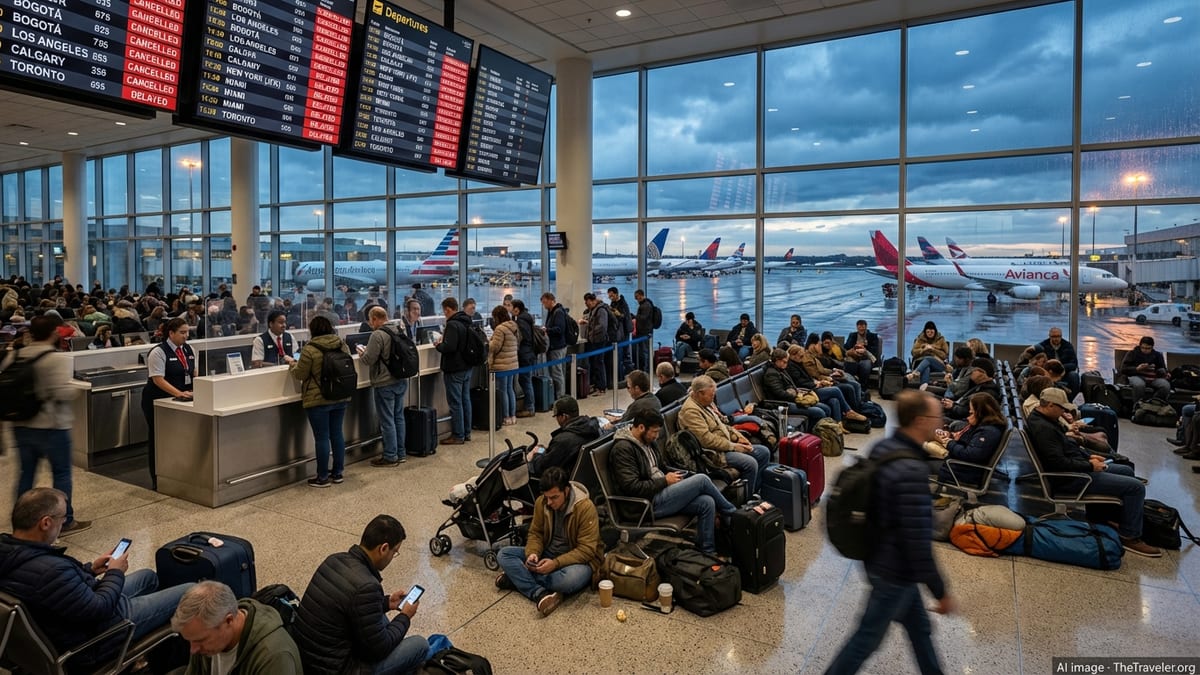
Latest Wave of Disruptions Hits Major U.S. Hubs
Real-time tracking data for flights within, into, and out of the United States shows hundreds of delays and dozens of cancellations concentrated at the country’s largest hubs, with disruption totals surpassing 775 delayed flights and crossing 50 canceled departures and arrivals over the course of the day. Aggregated figures from flight-status platforms indicate that the impact is most visible in major connection points, where a single local problem can quickly ripple nationwide.
According to published coverage of recent travel disruption patterns, airports such as Hartsfield-Jackson Atlanta International, Chicago O’Hare, and the three large New York City area airports have repeatedly appeared among the most affected facilities when storms or airspace constraints emerge. On one recent day of severe weather in mid-August, Atlanta alone reported more than 130 delays and over 50 cancellations, illustrating how quickly numbers can climb at a single hub when convective storms disrupt takeoffs and landings.
News reports also highlight how quickly systemwide figures can escalate once multiple hubs are affected at the same time. In a separate episode just days earlier, more than 1,600 flights across the country were delayed and over 150 were canceled, with New York’s John F. Kennedy International recording the highest totals among individual airports. Those earlier events underscore how today’s disruption totals, while lower, fit neatly into a broader summer pattern of unstable operations.
While the latest figures remain below some of the largest meltdowns seen in recent years, travelers are experiencing familiar symptoms: rolling departure-time changes, tight connection windows eroded by late arrivals, and late-night cancelations that leave limited options for same-day rebooking.
Weather, Air Traffic Constraints, and Staffing Pressures Converge
Publicly available information from aviation industry coverage points to a mix of thunderstorm activity, congestion in key corridors, and staffing-related constraints at air traffic control facilities as major drivers of the current round of disruptions. Thunderstorms affecting the Midwest and Northeast in recent weeks have repeatedly triggered ground delay programs, forcing aircraft to wait on the ground at departure airports in order to meter arrivals into constrained airspace.
In early August, a temporary outage at an air traffic control facility in Minnesota led to a ground stop across a wide swath of Midwestern airspace, causing hundreds of flight delays and cancellations and creating a backlog that took into the next day to resolve. Separate reports from East Coast hubs have described days when a significant share of local controllers were unavailable, resulting in intentional slowdowns to preserve safety margins and further tightening available capacity.
Severe thunderstorms and heat across the Eastern half of the country have also been a recurring theme. Industry analysis of this summer’s weather shows that storms stretching from Florida to the Northeast have repeatedly produced days with more than 500 cancellations and thousands of delays nationwide. Hotter temperatures can reduce aircraft performance, particularly at airports with shorter runways or during heavily loaded departures, which sometimes forces airlines to delay departures or offload passengers and cargo.
These operational headwinds are layered on top of longer-running staffing and scheduling challenges. Congressional and academic analyses of air travel disruptions in the years following the pandemic have documented a sustained increase in delay and cancellation rates compared with the late 2010s, linking the trend to tight labor markets, higher passenger volumes, and technology and infrastructure that has struggled to keep pace.
Knock-on Effects for Passengers Across the Network
Even when the headline numbers for delays and cancellations are concentrated at a handful of large airports, the practical impact often extends far beyond those cities. Published reports and traveler accounts from recent weeks describe smaller regional airports seeing early-morning or late-evening flights scrubbed when airlines attempt to preserve long-haul and international operations into a constrained hub.
Because many aircraft rotate through multiple segments over the course of a day, a single weather hold or maintenance delay at a hub can cascade into missed connections and schedule changes several legs down the line. Flight-tracking data and consumer reporting show patterns where passengers departing from relatively clear-weather locations face disruptions because their inbound aircraft was held at a storm-affected airport hours earlier.
These dynamics have contributed to what some analysts describe as a “summer of rolling disruptions,” in which no single failure dominates the narrative, but frequent localized problems combine to create an overall experience of unpredictability. Empirical studies of recent summer seasons cited by transportation researchers indicate that a significantly higher share of flights arrive 15 or more minutes late during June through August than during shoulder seasons, largely due to weather-related and volume-related constraints.
For passengers already en route, those network effects can translate into long holds on taxiways, diversions to alternate airports when arrival queues grow too long, or overnight stays after crews reach their legally mandated duty-time limits. With many peak-season flights departing near capacity, same-day reaccommodation options are often limited when a flight cancels outright.
What Today’s Numbers Reveal About Persistent System Strain
While more than 775 delayed flights and 52 cancellations represent only a fraction of the thousands of daily departures in the United States, the figures are significant when viewed against the broader backdrop of elevated disruption rates. Federal transportation statistics for recent years show that a higher percentage of flights are arriving late or being canceled compared with pre-pandemic summers, even as overall traffic volumes remain robust.
Recent government and research reports have argued that the national airspace system remains vulnerable to cascading disruptions from weather, technology outages, and concentrated airline schedules. A 2024 analysis of major disruption events, for example, chronicled how a single airline’s technology failure and a separate air traffic messaging outage led to tens of thousands of delayed flights and several thousand cancellations across only a few days.
Industry watchers note that demand for air travel has remained strong through this year’s peak season, putting additional pressure on carriers and airports to operate near the edge of available capacity. With load factors on many routes running high, there is limited slack in the system to absorb irregular operations. When delays accumulate early in the day, recovery often requires schedule thinning, rolling reassignments of aircraft and crews, and, in some cases, proactive cancellations.
Today’s disruption totals, therefore, may be modest compared with the largest meltdowns of the past few summers, but they reinforce an ongoing pattern in which routine thunderstorms or regional constraints quickly translate into nationwide knock-on effects for travelers.
How Travelers Can Navigate Ongoing Disruptions
Consumer advocates and travel analysts responding to this season’s disruptions emphasize a few consistent strategies for passengers flying during periods of elevated risk. Publicly available guidance from federal agencies and airlines underscores the importance of monitoring flight status through official apps or websites and enabling push alerts, since gate and departure-time changes can evolve quickly on days with active weather or air traffic programs.
Travel coverage focused on recent severe-weather events has encouraged passengers to build additional buffer time into itineraries, particularly when connecting through known congestion points such as Atlanta, Chicago, or the New York area. Early-morning departures are frequently cited as less vulnerable to same-day cascading delays, as aircraft and crews are more likely to be in place from overnight positioning.
Articles analyzing this summer’s storms also highlight the role of flexible tickets and trip-protection products. Many major airlines have issued change-fee waivers on days with severe weather or air traffic constraints, allowing travelers to move trips earlier or later within a defined window without additional charges, provided their tickets were purchased before the disruption period was announced. Separate travel insurance can sometimes provide compensation for lengthy delays, missed connections, or unexpected overnight stays, subject to policy terms.
For those planning upcoming trips, experts suggest keeping a close eye on both weather forecasts and broader industry trends. As long as summer heat and storm patterns persist, and key air traffic facilities remain stretched, travelers should anticipate the possibility of continued uneven operations and plan their routes, connections, and contingency options accordingly.
Geo News: Recent U.S. travel disruptions overview
Travel Market Report: Weather-driven delays at key hubs