


More news on this day
Europe’s already stretched air network is facing a fresh bout of turbulence as a tight squeeze of roughly 1,400 disrupted flights a day sends delays, cancellations and missed connections cascading across the continent’s busiest routes.
Get the latest news straight to your inbox!
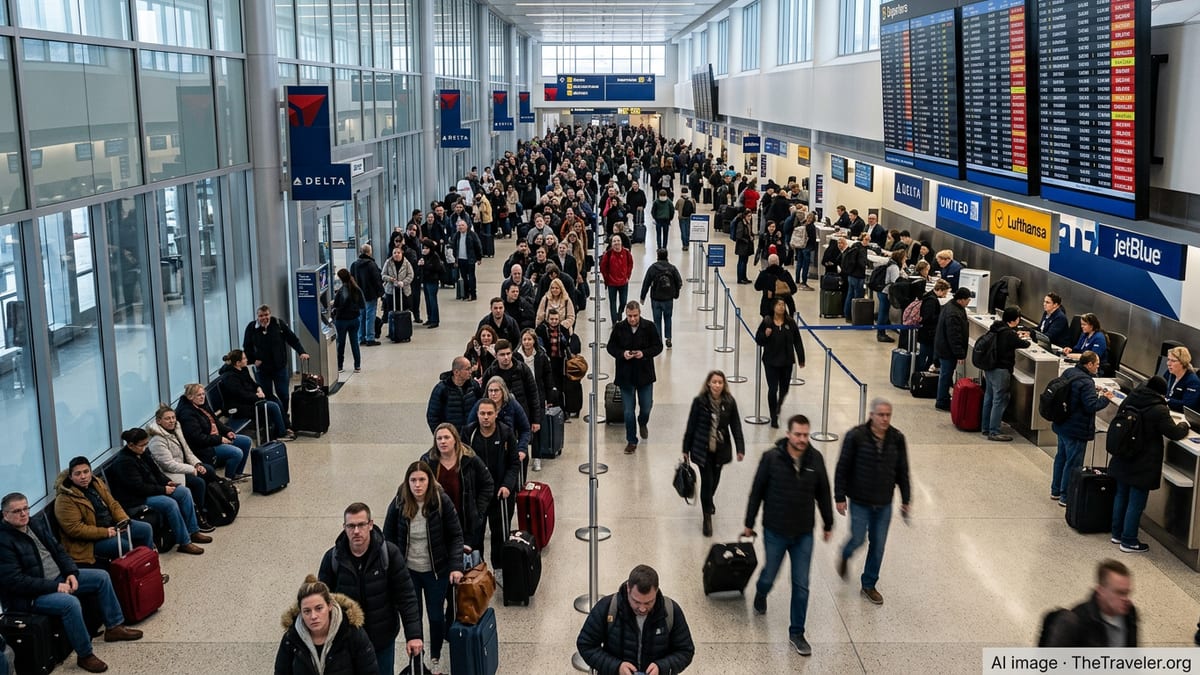
A Network Struggling to Absorb 1,400 Daily Disruptions
Data compiled in recent days from flight tracking dashboards and passenger rights platforms points to a sustained pattern of disruption across Europe, with the combined total of delayed and cancelled services routinely hovering around the 1,400 mark on some of the network’s busiest days. While these figures fluctuate hour by hour, they indicate a system operating with little spare capacity, where even modest disruptions can trigger widespread knock-on effects.
Recent snapshots of performance show European carriers and airports grappling with several consecutive days in which more than 1,300 flights were delayed and dozens cancelled, echoing earlier episodes this spring when similar numbers were recorded. The picture is not one of outright collapse but of a network repeatedly pushed to its limits, where rolling congestion and schedule changes are becoming a familiar feature of travel rather than an exception.
For passengers, the 1,400-flight squeeze manifests in longer queues at check in and security, tighter turnaround times for aircraft, and a higher likelihood that individual delays will cascade into missed connections. Publicly available disruption dashboards also show that while outright cancellations remain well below pandemic-era peaks, the volume of late arrivals and departures is enough to significantly disrupt itineraries, particularly for those relying on short transfer windows or multi leg journeys.
The cumulative effect is a form of “sky gridlock” in which Europe’s dense web of short haul routes, shared airspace and interconnected hub operations amplifies even localised problems. With average daily traffic across the European network running well above 30,000 flights, a disruption rate in the low single digits still translates into thousands of passengers stranded or rebooked each day.
Major Hubs Bear the Brunt of the Chaos
Recent disruption patterns show familiar pressure points. Large hub airports such as Amsterdam Schiphol, Frankfurt, Paris Charles de Gaulle, London Heathrow, Madrid Barajas and Rome Fiumicino feature prominently in daily tallies of delayed flights, reflecting their role as key transfer nodes and their exposure to capacity constraints both on the ground and in surrounding airspace.
On some days this week, publicly available flight status feeds have reported more than a hundred delayed departures at single hubs by mid afternoon, with late running morning waves feeding into congested early evening peaks. In Southern Europe, airports including Lisbon and Athens have also experienced elevated disruption levels, particularly on days with adverse weather or local operational bottlenecks.
The impact is not confined to any single airline group. Network carriers using large hubs to feed long haul connections face particular challenges when aircraft and crews fall out of position, but low cost operators that rely on tight turnarounds are also vulnerable when aircraft become stuck behind arrival or departure slot restrictions. Reporting from multiple aviation trackers suggests that on the most disrupted days, both categories of airline record double digit percentages of their schedules affected.
Regional airports, meanwhile, are feeling secondary effects as airlines attempt to re route traffic or position aircraft around congested hubs. This can mean sudden bursts of activity at alternates when flights are diverted, followed by gaps in service as carriers work through the backlog. For travellers using smaller gateways, the result can be an unpredictable mix of overcrowded terminals and last minute schedule changes.
Structural Strains: Staffing, Airspace and a Packed Timetable
Behind the latest wave of disruption lies a familiar set of structural issues. European aviation bodies and industry analyses have repeatedly highlighted air traffic control staffing constraints, airspace congestion and limited airport capacity as key drivers of delays. Studies drawing on pre pandemic and recovery period data show that a majority of network level air traffic flow management delays in Europe have been attributed to air traffic control capacity and staffing factors, rather than solely to weather or airline scheduling decisions.
The situation has been compounded by the rapid rebound in passenger demand and flight volumes. Recent overviews from European aviation authorities indicate that average daily traffic has climbed back towards or beyond pre pandemic levels on many routes, even as some parts of the system continue to work through staffing and infrastructure adjustments. With many control centres and airports operating close to their declared capacities during peak hours, there is limited room to absorb surges in demand or handle prolonged disruptions.
Airspace structure is another contributor. Routing constraints linked to military activity, overflight restrictions and environmental regulations have concentrated traffic along narrower corridors in parts of Europe, pushing more flights through already busy control sectors. Industry policy briefings in recent months have warned that, without further reforms, Europe’s fragmented airspace and varying national rules will continue to act as a brake on capacity and resilience.
These underlying pressures help explain why a 1,400-flight daily disruption burden can have such visible effects on the travelling public. In a system with ample slack, airlines and airports might be able to absorb that level of disturbance without significant passenger impact. In Europe’s tightly scheduled, highly interconnected network, however, each cancelled rotation or missed slot can ripple across multiple routes and days.
Passengers Face Tough Choices on Routes and Connections
For travellers currently navigating Europe’s skies, the 1,400-flight squeeze translates into a series of practical decisions and trade offs. Publicly available advisories from airlines and airports increasingly emphasise the importance of checking flight status repeatedly on the day of travel, building extra time into connections, and having a backup plan if a key leg is delayed or cancelled.
Passengers connecting through the most affected hubs are particularly exposed. Multi leg itineraries that were once considered routine, such as morning arrivals feeding afternoon departures to secondary cities, are now more likely to be disrupted by rolling delays. Travel experts monitoring the situation note that itineraries with very tight transfer windows have become notably riskier during periods of sustained congestion.
The situation is also influencing booking behaviour. Some travellers appear to be opting for direct flights, even at a premium, to avoid the most congested hubs. Others are shifting travel times away from traditional peak hours or choosing rail alternatives on shorter intra European routes where high speed trains offer competitive journey times. Demand for flexible tickets and comprehensive travel insurance products has also risen in step with heightened disruption awareness.
Despite the challenges, Europe’s aviation system continues to move large numbers of passengers each day, and many journeys are still completed broadly on time. Yet the persistence of a roughly 1,400-flight daily disruption burden underscores how finely balanced the network has become. With the main summer holiday period approaching and flight schedules set to thicken further, the current bout of sky gridlock may prove to be a warning sign of how fragile Europe’s air connectivity remains.