


More news on this day
A SkyWest Airlines flight operating as SKW5657 from Moline to Chicago O’Hare diverted back to Quad Cities International Airport on August 7, returning safely to its departure point after a short time in the air and prompting questions from travelers about what happened and what it signals about regional jet operations in the United States.
Get the latest news straight to your inbox!
What Is Known About SkyWest Flight SKW5657 on August 7
Publicly available flight-tracking data indicates that SkyWest flight SKW5657, operated with a Bombardier CRJ-700 regional jet, departed from Quad Cities International Airport in Moline, Illinois, on a scheduled service to Chicago O’Hare International Airport. Shortly after takeoff, the aircraft leveled off, remained in the vicinity of the departure area, and then turned back toward Moline instead of continuing on the brief hop to Chicago.
Data from flight-tracking platforms typically record this type of event as a diversion or return to origin. The pattern on August 7 shows a relatively short airborne time compared with the usual duration of the route, consistent with a precautionary decision to discontinue the flight and bring the aircraft back to its starting airport.
There were no immediate public reports of injuries or on-board emergencies tied to the event, and there is no indication from open sources of an evacuation or other emergency procedure after landing. In such cases, passengers normally disembark via standard jet bridge or stairs while the aircraft is inspected or repositioned.
The specific reason for the return of SKW5657 on August 7 has not been formally detailed in open reporting, but the operational profile aligns with a range of common scenarios in regional airline flying where crews decide that continuing to destination is less desirable than returning to a familiar airfield with maintenance and handling support.
Common Reasons Regional Flights Return to Their Departure Airport
When a flight like SKW5657 departs a smaller market such as Moline for a major hub like Chicago, a decision to turn back rather than divert elsewhere often reflects a combination of safety, logistics, and cost considerations. Industry experience shows that returns to origin are frequently linked to technical indications, minor mechanical issues, or system warnings that warrant checks on the ground even when the aircraft is fully controllable.
Weather can play a role, particularly in the Chicago area where low clouds, storms, and rapidly changing visibility are common. If arrival conditions at O’Hare deteriorate while a short-haul flight is already airborne, crews may decide that holding or diverting to a third airport is less efficient than simply returning to the departure field, especially when the airborne time back to origin is only a few minutes longer than continuing on a congested approach.
Operational factors such as air traffic control restrictions, runway configurations, and downstream scheduling pressures can also influence the choice. Regional carriers that operate under capacity-purchase or fee-for-departure agreements generally aim to preserve schedule integrity but will accept a return-to-origin when it best balances safety margins with the ability to reschedule passengers onto later services from the same airport.
Because SkyWest and other regional operators serve dense hub networks, returning to the departure airport can simplify customer recovery. At a station like Moline, airline partners can often rebook passengers onto later flights to Chicago or alternative hub routings, while maintenance teams assess the aircraft without the added complexity of being at an outstation with limited technical support.
The CRJ-700 and How Pilots Manage In-Flight Anomalies
The Bombardier CRJ-700 is a widely used regional jet across North America, typically seating around 65 to 70 passengers, depending on configuration. It is designed to operate short to medium routes feeding large hubs, including high-frequency services such as Moline to Chicago. The type has a long service history and is managed under the same Federal Aviation Administration oversight and safety regulations as larger mainline jets.
In practice, crews flying the CRJ-700 follow detailed checklists and standard operating procedures for any anomaly encountered after takeoff. If an instrument indication, pressurization concern, or system warning appears, the crew evaluates whether to continue, hold, divert, or return. For short sectors, returning to the departure airport often gives the flight crew the most predictable runway, weather picture, and ground support environment.
Reports from past regional operations show that landing gear indication problems, sensor discrepancies, or performance concerns can prompt extended low-altitude circuits or returns to origin while pilots run checklists and burn fuel to reach a suitable landing weight. These outcomes may look dramatic on tracking maps but are considered conservative decisions designed to keep risk as low as practicable.
From a passenger perspective, such events can feel unsettling, particularly when information during the flight is limited. However, precautionary returns like the one involving SKW5657 on August 7 typically point to the flight crew taking a cautious approach, opting for the airport they know best rather than pressing on toward a busy hub with evolving conditions.
Impact on Passengers and the Wider Chicago–Moline Route
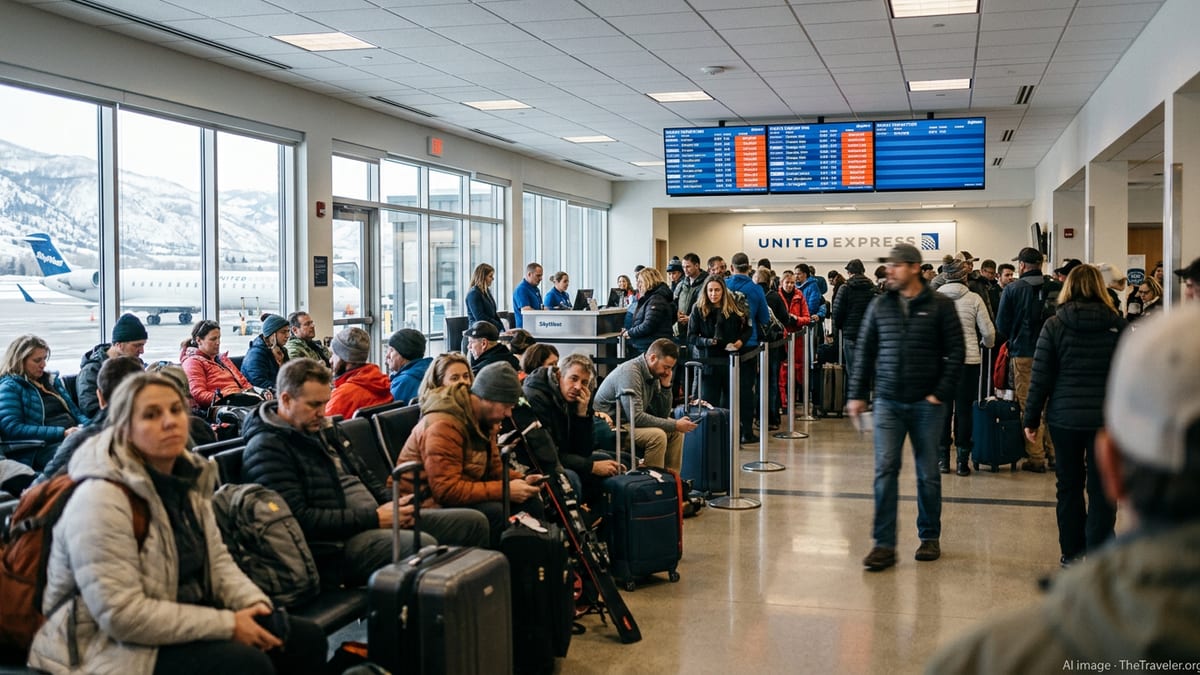
For travelers booked on SKW5657, the diversion back to Moline likely resulted in missed connections at Chicago O’Hare and the need for rebooking or overnight arrangements. O’Hare serves as a major transfer point in the United States, so even minor disruptions on short regional feeds can cascade through passenger itineraries that include onward domestic and international legs.
According to patterns seen on similar events, passengers are generally re-accommodated on later flights to the hub or, where capacity allows, shifted onto alternative routings via other cities. Compensation and assistance options vary depending on the airline’s policies, the underlying cause of the disruption, and applicable regulations, but travelers are usually offered schedule changes at no additional fare and, in some cases, hotel or meal support.
The Moline to Chicago corridor is served by multiple daily regional jet flights, which gives airlines some flexibility to absorb irregular operations. A single return to origin, as seen with SKW5657, rarely leads to long-term schedule changes, though it can temporarily tighten seat availability on later departures as disrupted passengers are moved onto subsequent services.
For frequent travelers who rely on the Moline–Chicago link to connect into national and international networks, events like this highlight the importance of building time buffers into itineraries, especially during peak travel seasons or in periods of active Midwestern weather when short-haul operations are more exposed to delays and diversions.
What Travelers Can Learn From the SKW5657 Diversion
The August 7 diversion of SkyWest flight SKW5657 underscores how quickly a routine regional hop can evolve into an unplanned return and how airlines manage these situations within established safety and operational frameworks. While the exact technical or operational trigger for the decision has not been publicly detailed, the sequence illustrates that returning to origin is often a measured response rather than an indication of imminent danger.
Travelers can draw several practical lessons from such events. Allowing extra connection time at large hubs, keeping essential items such as medications and chargers in carry-on bags, and maintaining flexible expectations around tight same-day connections can ease the impact of sudden schedule changes caused by returns or diversions.
Monitoring flight status through airline apps and flight-tracking services can also help passengers understand what is happening in real time, particularly when aircraft appear to level off, enter holding patterns, or turn back. Although these tools do not provide detailed technical explanations, they do offer context about route changes, altitude, and timing that align with later information from airline communications.
Ultimately, the SKW5657 incident fits into a wider pattern of modern commercial aviation in which conservative decision-making is prioritized. The aircraft’s safe return to Moline on August 7, with no publicly reported injuries, demonstrates how regional operators balance the need to keep complex hub-and-spoke schedules running with an overarching focus on safeguarding passengers and crews when anything out of the ordinary occurs in flight.